
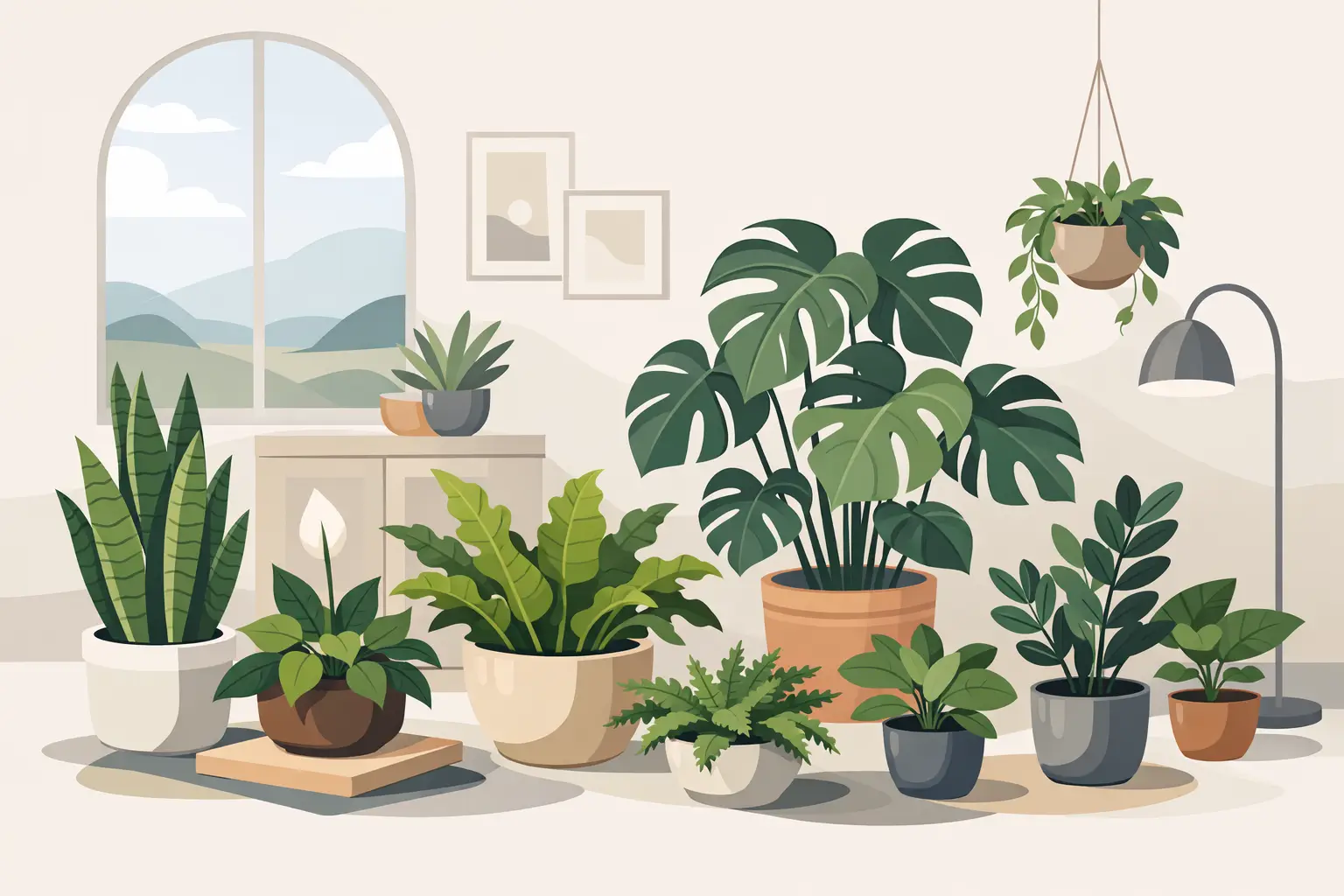
That darker corner beside the TV, the hallway with one small window, or the desk that sits well back from the glass can still earn its greenery. The best low light indoor plants bring shape, colour and life to rooms where sun-loving plants would quickly look thin and unhappy. The trick is choosing for the actual light you have, not the light you wish you had.
Low light does not mean no light. Every indoor plant needs enough daylight to see the sky, even if direct sun never reaches the leaves. If a room needs lights on all day and has no natural window light, treat plants as a rotating display or add a suitable grow light. For most Australian homes, though, a bright room away from the window, a shaded south-facing room, or a spot near filtered light can support plenty of forgiving options.
Choosing low light indoor plants that will last
Before buying, stand in the intended spot at different times of day. Is it bright enough to comfortably read a book without switching on a lamp? Is there a nearby window, even around a corner? Those are better conditions than a truly dark space.
Light changes with the season, too. A spot that feels dim in winter may be perfectly usable in summer, while harsh western sun can blast through a window in January. Keep low-light choices back from hot glass and away from air-conditioning vents, heaters and draughty doors. Stable conditions matter almost as much as the light level.
The other common mistake is overwatering. Plants growing in lower light use water more slowly, so soil stays wet for longer. Choose a pot with drainage, check the mix with a finger before watering, and empty any water that gathers in a saucer or decorative cover pot.
10 low light indoor plants worth buying
1. ZZ plant
The ZZ plant is a strong first choice for busy households, offices and renters who want a tidy plant with very little fuss. Its thick, glossy leaf stems hold water, so it copes with an occasional missed watering far better than most indoor plants. Let the potting mix dry substantially between drinks. It will grow faster in brighter indirect light, but remains presentable in lower-light rooms.
2. Snake plant
Snake plants are made for narrow spaces, bedrooms and corners where you want height without a wide footprint. Their upright leaves look clean and architectural, and they tolerate low light and dry soil well. The trade-off is slower growth in dim conditions. Water sparingly, especially through cooler months, as soggy soil is the quickest way to lose one.
3. Devil’s ivy
Devil’s ivy is an easy way to soften a bookshelf, trail from a hanging pot or add green to the top of a cabinet. It handles lower light, although the yellow or cream variegation may become less bold when light is very limited. Water when the top few centimetres of mix have dried, then trim long stems to encourage a fuller plant.
4. Heartleaf philodendron
With smaller, heart-shaped leaves and a relaxed trailing habit, heartleaf philodendron suits shelves, plant stands and hanging pots. It is a sensible pick for a room that gets moderate filtered light rather than sun. Give it something to climb if you want larger leaves over time, or let it spill naturally for a softer look.
5. Peace lily
A peace lily brings a lush, leafy feel to lower-light rooms and can produce white flowers in the right conditions. It is more expressive than a ZZ or snake plant: leaves may droop when thirsty, then recover after a proper drink. That makes it useful for new plant owners, but do not leave it dry for days on end. Keep its soil lightly moist rather than constantly wet.
6. Cast iron plant
The name says it all. Cast iron plants are slow-growing, tough and ideal where other foliage plants struggle, including shaded entryways and dim rooms with steady temperatures. Their long, deep-green leaves make a quiet statement rather than a dramatic one. Expect patience, not fast growth, and avoid overwatering.
7. Aglaonema
Aglaonema, often called Chinese evergreen, offers more pattern and colour than many low-light options. Depending on the variety, leaves can carry silver, cream, pink or red markings. Brighter indirect light generally keeps those markings more vivid, but green-leafed varieties are particularly good in lower light. Avoid cold windows in southern states during winter.
8. Dracaena
Dracaenas come in slim upright forms and fuller cane-style plants, making them useful when you need a taller floor plant. They prefer bright indirect light but cope with lower-light positions better than many statement plants. Allow the mix to dry partly before watering and turn the pot every few weeks so growth stays even.
9. Parlour palm
For a softer, more tropical look, the parlour palm is a reliable indoor choice. It can manage lower light, though it appreciates a little humidity and even moisture. Brown tips can appear in very dry, air-conditioned rooms or when salts build up in the potting mix. Wipe the leaves occasionally to remove dust and help the plant make the most of available light.
10. Bird’s nest fern
Bird’s nest ferns suit bathrooms and kitchens with filtered daylight, where extra humidity helps them look their best. Their fresh green fronds create a fuller look than trailing plants, even in a modest pot. Keep water out of the centre crown, where new fronds emerge, and water the soil instead. This is not the driest-room option, but it is a great match for a humid low-light spot.
Match the plant to the room, not just the look
For a low shelf or hanging pot, devil’s ivy and heartleaf philodendron are natural fits. If you need a tall, compact plant beside a sofa or in a home office, start with snake plant, ZZ plant or dracaena. Peace lilies, ferns and parlour palms work better where you can offer more regular watering and a little humidity.
Pet households need an extra layer of care. Several popular indoor choices, including devil’s ivy, philodendron, ZZ plant, snake plant, peace lily, aglaonema and dracaena, can cause problems if chewed by cats or dogs. Place them out of reach or choose carefully if your pet is known for sampling foliage. A plant being easy-care does not automatically make it pet-friendly.
Plant size matters as well. A small plant is easier to position on a desk and costs less to trial, but a more established floor plant creates an immediate finished look. If you are filling a large bare corner, buying a specimen with height can be more satisfying than waiting years for a tiny plant to get there.
Care habits that prevent low-light problems
The biggest care adjustment for low light is watering less often, not more. Check the soil rather than following a calendar. Push a finger a few centimetres into the potting mix: if it still feels moist, wait. When it is time, water thoroughly until excess drains from the base, then let it drain fully.
Dust is another quiet issue. Indoor leaves collect dust, particularly near roads, open windows and busy living spaces. A gentle wipe with a damp cloth every few weeks keeps foliage looking better and allows the plant to use the limited light it receives. Skip leaf-shine products, which can leave residue.
Do not rush to fertilise a plant that is struggling. In low light, growth is naturally slower, and fertiliser will not replace daylight. Feed lightly during active growing months only if the plant is healthy. If leaves are yellowing, inspect watering, drainage and the light position before adding anything to the pot.
Finally, give your plant permission to move. If it becomes leggy, loses variegation, or stops producing new growth for months, shift it a metre closer to a window where it still avoids direct afternoon sun. Small changes can make a bigger difference than buying a new plant.
A dim corner does not need to stay empty. Choose one plant that suits the spot, give it drainage and a realistic watering routine, then let it settle in. Buy My Plants makes it easier to choose greenery for the way Australians actually live – apartments, family homes, rental spaces and all.