

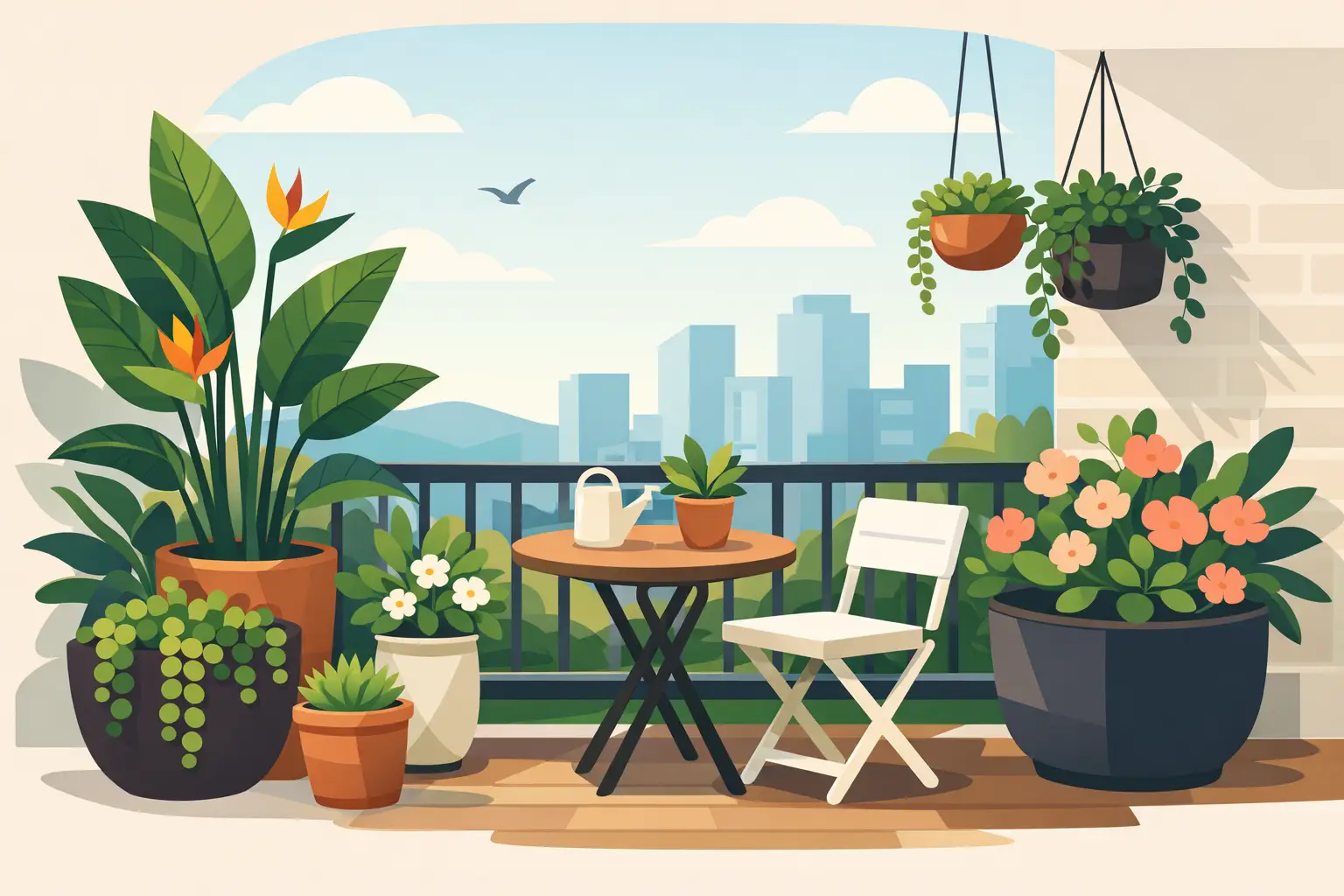
A balcony can be a hot concrete box, a breezy shaded nook or a surprisingly productive little garden. That is why choosing balcony plants Australia shoppers can actually keep alive starts with your conditions, not just what looks good in a photo. Get the light, wind and pot size right, and even a rental balcony can feel greener, cooler and far more like home.
Start with your balcony conditions
Before buying plants, spend a day noticing what happens outside your door. Does the balcony get gentle morning light, harsh afternoon sun or almost no direct sun? Is it protected by walls and glass, or does wind whip through every time the weather changes? These details narrow your choices quickly.
North- and west-facing balconies can become extremely hot in an Australian summer, particularly in apartments where reflected heat comes off windows, brick and paving. Plants in small pots dry out fast here. Choose sun-loving varieties, use larger containers where possible, and expect to water more often during heatwaves.
East-facing balconies are often the easiest place to start. Morning sun suits a wide range of flowering plants, herbs and foliage, without the punishing late-afternoon heat. South-facing balconies generally receive the least direct light, so they are better for shade-tolerant foliage than sun-hungry flowers or vegetables.
Wind matters just as much as light. Constant wind dries potting mix, snaps soft stems and can make tall plants lean. If your balcony is exposed, favour sturdy, compact plants and heavier pots. Put taller specimens close to a wall or screen rather than along the outer edge. Always check your strata or rental rules too, especially around balcony weight limits, water runoff and the use of rail-mounted planters.
Balcony plants Australia buyers can match to light
The best balcony plants are the ones that suit the site you already have. Trying to force a full-sun flowering plant into deep shade usually ends in disappointment. Start with a simple light category, then build a mix of foliage, flowers and useful edibles around it.
For hot, sunny balconies
Full-sun balconies suit tough plants that cope with heat and drying conditions. Lavender brings fragrance and soft purple flowers, while rosemary is useful in the kitchen and handles sunny spots well once established. Dwarf citrus can also work in a large pot, offering glossy leaves, scented flowers and fruit, but it needs regular feeding, reliable water and plenty of sun.
Succulents are a practical choice for people who want a low-fuss look. Aloe, jade plants, echeveria and many crassulas store water in their leaves, so they are more forgiving if you miss a watering. They still need drainage, though. A succulent sitting in soggy mix can rot just as quickly as any other plant.
For colour, consider compact geraniums, petunias or calibrachoa in the right season. These can create an instant flower-filled balcony, but they are not set-and-forget. They look best with regular watering, feeding and the occasional tidy-up of spent blooms.
For balconies with morning sun
Morning light gives you plenty of options. Herbs such as basil, parsley, chives and mint can thrive in bright conditions, although mint is best kept in its own pot because it spreads enthusiastically. A small herb collection near the kitchen makes everyday meals feel more rewarding and gives your balcony a job beyond looking nice.
Peace lilies, dwarf gardenias and flowering begonias can also suit filtered or morning light, depending on your local climate. Gardenias offer beautiful perfume but are a little more particular about water and feeding. If you want an easier first plant, start with hardy herbs or a compact leafy plant, then add the more demanding favourites once you have a watering routine.
For shaded or low-light balconies
A shaded balcony does not need to be bare. It is the right setting for lush, leafy plants that would scorch in full sun. Bird’s nest ferns, peace lilies, cast iron plants, pothos and some philodendrons can all create a fuller look in bright indirect light.
For more structure, try a kentia palm or a lady palm if space allows. These make a strong statement in a larger pot, but they need room to grow and should not be left in a cold, wind-blasted position. On a darker balcony, avoid expecting heavy flowering or a bumper crop of tomatoes. Green foliage is often the smarter, better-looking choice.
Choose pots that make plant care easier
The pot is not just decoration. It determines how much root room, moisture and stability your plant has. Small pots are tempting on tight balconies, but they heat up and dry out quickly. Going one size larger can make a real difference, especially for thirsty plants, citrus and taller feature plants.
Every pot needs a drainage hole. Decorative cover pots are fine, but do not let water pool in the bottom after watering or rain. Use a quality potting mix suited to container growing rather than digging up soil from the garden. Garden soil compacts in pots, reducing airflow around roots and making watering harder to manage.
Material has trade-offs. Terracotta looks great and allows mix to dry faster, which suits succulents but means more frequent watering in summer. Plastic and lightweight composite pots hold moisture longer and are easier to move, making them handy for renters. Ceramic pots can be heavy, so check what your balcony can safely hold before creating a forest of large containers.
Make a small balcony feel layered, not crowded
A good balcony planting usually has different heights. Put a taller plant in a back corner, add medium-sized pots around it, then let a trailing plant soften an edge or shelf. This creates depth without covering every square metre of floor space.
Think about how you use the balcony as well. If it is where you drink coffee, keep the seating area clear and use one or two feature plants rather than crowding it with pots. If it is mostly viewed from indoors, a fuller arrangement may be worth it. Vertical space can help: a sturdy plant stand, wall-mounted system approved by your building, or slim trellis can add greenery without taking over the floor.
Do not buy every plant at the same size. One established statement plant paired with smaller fillers gives an arrangement some shape and lets you enjoy the process as the collection grows. Just leave gaps for airflow. Tight clusters can look lush, but wet leaves and poor ventilation can encourage fungal problems.
Watering is the difference between surviving and thriving
Most balcony plant problems come back to watering. There is no fixed schedule that works year-round because heat, wind, rain, pot size and plant type all change how quickly the mix dries. Check the top few centimetres of potting mix with your finger. If it feels dry, water thoroughly until it drains from the base. If it is still damp, wait.
In summer, exposed balconies may need checking daily. In winter, especially on a shaded balcony, plants can stay wet for much longer. Water in the morning where possible, and empty saucers after heavy rain if plants are sitting in them.
A simple watering can may be enough for a few pots. For a bigger collection, self-watering pots can reduce the pressure during busy weeks, though they are not a free pass to ignore the plants. They work best when you understand which plants prefer consistently moist mix and which prefer to dry out between drinks.
Feed container plants during their active growing period because nutrients wash out with watering. A controlled-release fertiliser is an easy option for many flowering plants, herbs and foliage varieties. Follow the label rate rather than assuming more fertiliser means faster growth. Too much can damage roots and create weak, leggy growth.
Buy for your routine, not your ideal routine
The right plant should fit the care you can realistically give. If you travel often or regularly forget to water, choose tougher foliage plants, succulents or hardy herbs instead of thirsty annual flowers. If you enjoy pottering outside each weekend, flowering plants, edibles and a dwarf citrus tree can be a satisfying project.
Also consider pets and children. Some popular foliage plants can be irritating or toxic if chewed, so place plants thoughtfully and check suitability before bringing them home. For renters, lightweight pots and portable plant stands make it easier to take your balcony garden with you when you move.
At Buyy Plants, the simplest way to shop is to begin with your light level, then choose plants that match the space and the attention you can give them. A balcony does not need dozens of pots to work. Start with a few well-chosen plants, learn how your outdoor space behaves across the seasons, and add to it when you are ready.