

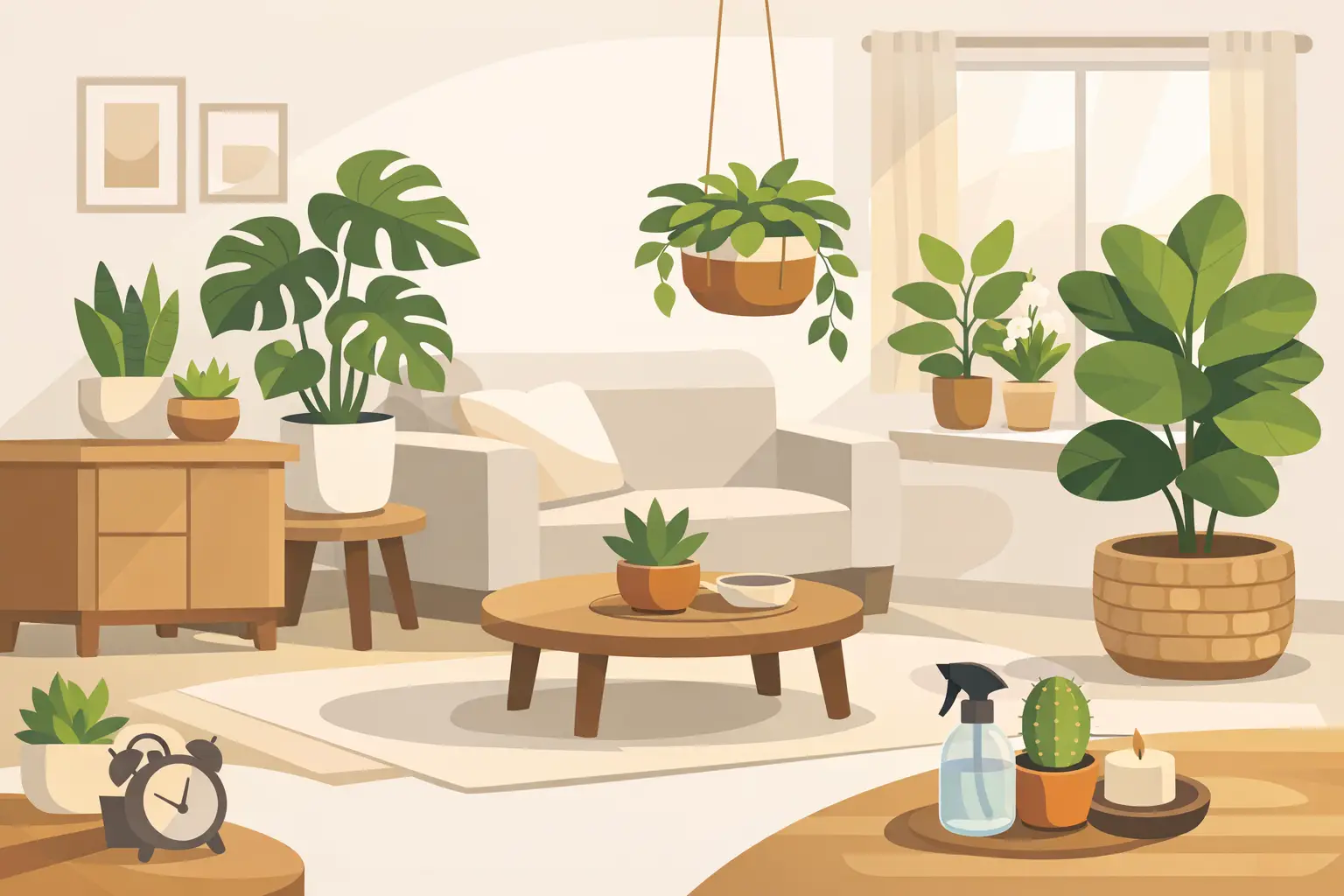
A plant can look perfect on your mobile, then struggle within a week if it lands in the wrong corner of the house. The best indoor plants are not necessarily the biggest, trendiest or most dramatic ones. They are the plants that suit the light you have, the room you live in and the amount of care you can realistically give them.
For Australian homes, that can mean a tough leafy plant for a bright rental apartment, a sculptural specimen for a sunlit living room, or a forgiving desk plant for an air-conditioned office. Start with the conditions, then choose the plant. It is the easiest way to buy with confidence and enjoy greener rooms for longer.
Start with the light in your home
Light is the first decision, and it is more useful than guessing whether a room feels bright. Watch the area where you want to place your plant at different times of day. Does direct sun hit the floor or wall? Is the space close to a window but shaded by a balcony, tree or neighbouring building? Or is it several metres from natural light?
A bright, indirect-light spot is common in Australian homes. It might be beside an east-facing window, or back from a larger north-facing window where harsh midday sun is softened by a sheer curtain. This suits a wide range of popular foliage plants, including monstera, philodendron, peace lilies and many varieties of ficus.
Direct sun is stronger and more selective. Morning sun is generally gentler, while hot afternoon sun through glass can scorch foliage quickly, particularly in summer. Succulents, cacti, ponytail palms and some colourful-leaf varieties can handle more light, but even sun-lovers need a gradual introduction rather than being moved straight into a blazing window.
Low-light areas need a realistic approach. No living plant thrives in a dark internal hallway with no natural light at all. If there is enough daylight to comfortably read nearby, you can consider tougher choices such as snake plants, ZZ plants, cast iron plants or aglaonemas. Growth will be slower in dimmer conditions, so watering must be lighter too.
Choose indoor plants for how you actually live
The right plant should fit the room and your routine, not create another job on an already busy week. If you travel often, work long hours or are new to plant care, choose plants that tolerate a little neglect. Snake plants, ZZ plants, dracaenas and pothos are popular because they do not need constant checking.
If you enjoy tending plants and want visible growth, climbing aroids such as monstera and philodendron can be satisfying choices. Give them space to spread, a pole or support if needed, and regular attention during warmer growing months. They make an impact quickly, but a small apartment may be better served by a compact variety rather than a plant that will soon take over the lounge room.
For shelves, bedside tables and work-from-home desks, look for plants that stay manageable. Peperomias, smaller trailing pothos, hoyas and compact ferns can add colour and texture without demanding floor space. Hanging plants are useful where bench space is limited, but remember that elevated pots dry out differently and can be awkward to water.
Households with pets or young children have another consideration. Some common houseplants can cause irritation or illness if chewed. Position plants out of reach where possible, and check the suitability of each plant before buying if curious pets share the home. A beautiful plant is not a good purchase if it creates a daily worry.
Match the pot to the plant, not the décor alone
A decorative pot can lift a room, but drainage matters more than a matching colour scheme. Most indoor plants prefer a pot with drainage holes, allowing excess water to escape rather than sitting around the roots. A nursery pot placed inside a cover pot is a simple option: remove it for watering, let it drain properly, then return it to the decorative pot.
Avoid moving a new plant into a much larger pot just because it looks more generous. Too much wet potting mix around a small root system stays damp for longer, increasing the risk of root rot. Move up one pot size only when roots are circling heavily, pushing through drainage holes or the plant is drying out far faster than usual.
Potting mix also matters. Indoor plants need a mix that holds some moisture while allowing air around the roots. Dense garden soil is not a shortcut for potted plants. It compacts easily and makes it harder to manage watering indoors.
Water with a check, not a calendar
The most common indoor plant problem is overwatering. It usually comes from good intentions: a plant is watered every Sunday whether it needs it or not. Conditions change with the weather, season, pot size, heating, air conditioning and how much light the plant receives, so a fixed schedule rarely works year-round.
Check the potting mix first. For many common indoor foliage plants, let the top few centimetres dry before watering again. Water thoroughly until it runs through the drainage hole, then discard any water collected in the cover pot or saucer. This encourages roots to use the whole pot rather than sitting in constantly soggy soil.
There are exceptions. Ferns and peace lilies usually prefer more even moisture, while snake plants, ZZ plants and succulents need the mix to dry much further between drinks. Learn the habit of the plant you buy instead of treating every pot the same.
Yellow leaves can mean overwatering, but they can also be caused by low light, cold draughts or a plant adjusting after transport. Brown, crisp leaf edges may point to dry air, underwatering or too much direct sun. Look at the whole situation before changing everything at once.
Place plants away from hidden stress points
That empty spot next to a window may look ideal, but check what happens around it. A plant placed directly under an air-conditioning vent can dry out and develop damaged leaves. One beside a heater may struggle through winter. Cold glass, draughty doors and sudden temperature swings can also affect tropical indoor plants.
Kitchens and bathrooms can work well because they are often warmer and more humid, but only if there is adequate light. A bright bathroom is a good home for many ferns and trailing plants. A windowless bathroom is not. Similarly, a kitchen bench can be practical, provided the plant is away from heat, oil splatter and constant bumps from everyday cooking.
Turn potted plants occasionally if they lean strongly towards the window. A quarter turn every week or two helps growth stay more even. Wipe broad leaves with a damp cloth when dust builds up, especially on plants near busy roads or open windows. Clean leaves look better and can use available light more effectively.
Buy for the room you have now
It is easy to buy an impressive plant for the version of your home you are planning, then find it does not suit your current light or space. Start with one or two reliable plants in the rooms you use most. Once they are settled, add height with a floor plant, texture with a trailing plant, or colour with foliage that stands out against your walls.
For renters, indoor plants are one of the quickest ways to make a space feel personal without permanent changes. Use plant stands, grouped pots and larger floor specimens to fill blank corners, but keep access clear around doors, walkways and windows. A well-placed plant can change a room more than a crowded collection ever will.
When you are ready to buy, use the plant description as a practical checklist: light preference, mature size, watering needs and pet suitability. Buy My Plants makes it easier to compare choices before committing, so you can select plants that are likely to thrive rather than simply look good on delivery day.
Give a new plant a stable spot, a pot with drainage and a few weeks to adjust before making big care changes. The goal is not a perfect indoor jungle overnight. It is a home filled, one good plant choice at a time, with greenery you are genuinely happy to keep.