
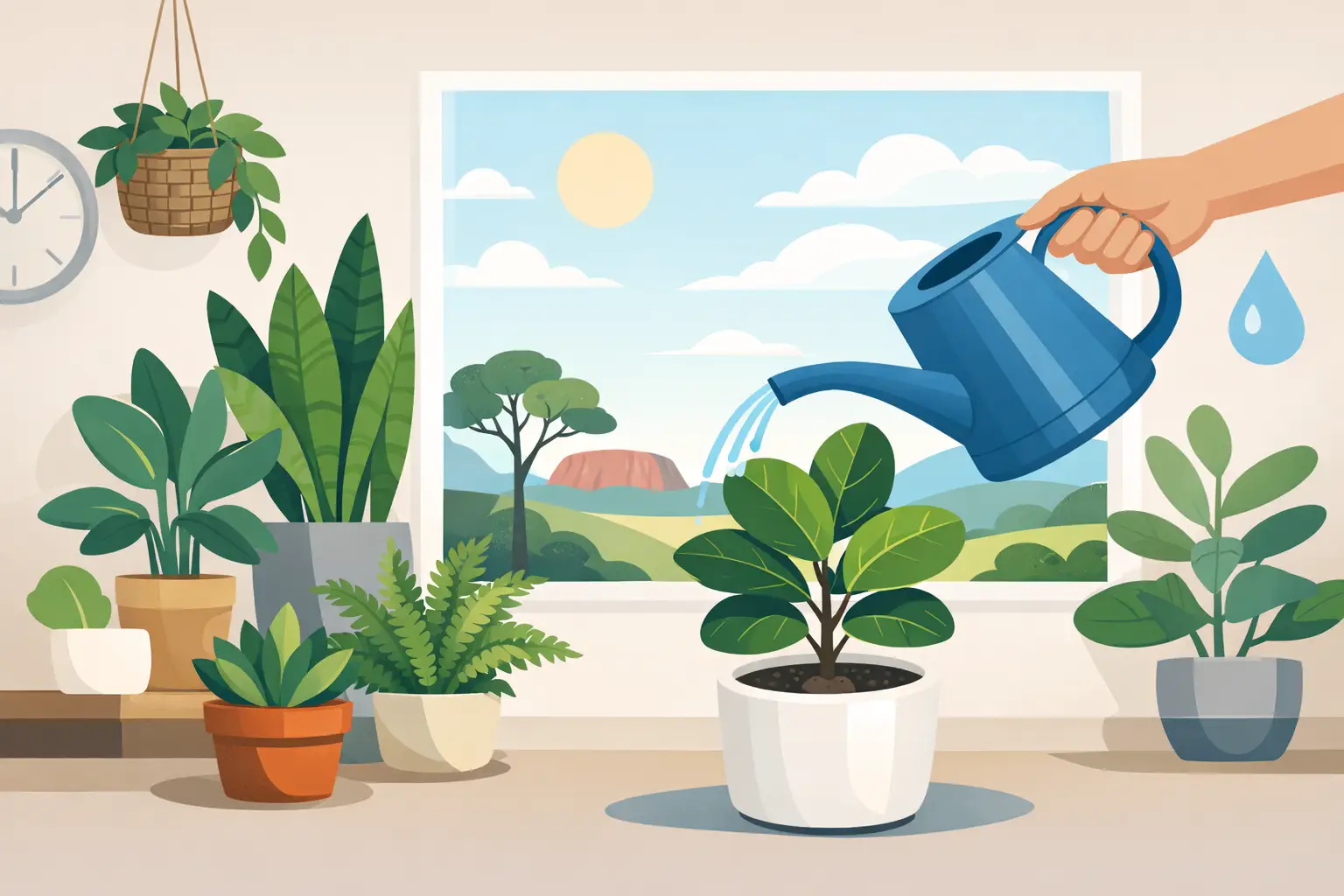
A plant can look perfectly fine on Monday and be sitting in soggy soil by Friday. That is why there is no one calendar answer to how often to water indoor plants. Your home’s light, temperature, pot and the plant itself all change how quickly moisture is used. The reliable approach is simple: check the potting mix before you reach for the watering can.
For most indoor plants in Australian homes, watering happens somewhere between once a week and once a fortnight during active growth. But that is a starting point, not a rule. A sunny Brisbane living room, a heated Melbourne apartment and a cool Hobart bedroom can all produce very different results.
How often to water indoor plants: start with the soil
The top layer of soil is your best everyday guide. Push a finger about 2 to 4 centimetres into the potting mix. If it feels dry at that depth, most common foliage plants are ready for a thorough drink. If it is still cool and damp, leave it alone and check again in a few days.
Do not water just because the surface looks pale. Potting mix can dry on top while remaining wet around the roots, especially in a large pot or one without enough light. A bamboo skewer is handy for deeper pots: insert it into the mix, pull it out, and check whether damp soil sticks to it.
When the soil has dried to the right point, water slowly until a little runs from the drainage holes. This wets the full root ball rather than leaving roots dry at the bottom of the pot. Empty excess water from saucers and decorative cache pots after 10 to 15 minutes. Roots should get moisture and air, not sit in a puddle.
Your plant type changes the schedule
Indoor plants do not all drink at the same pace. Lush, leafy tropical plants generally prefer evenly moist soil, while plants that store water in their leaves or stems need much longer dry periods.
Peace lilies, calatheas, ferns and maidenhair ferns are usually the thirstier group. Letting them dry out completely can lead to crisp edges, drooping or leaf loss. They still need drainage, though. Constantly wet soil is not the same thing as healthy moisture.
Monstera, philodendron, pothos, rubber plants and fiddle leaf figs prefer soil to partly dry between watering. For these plants, waiting until the upper few centimetres are dry is usually a good call. Bigger plants may look dramatic when thirsty, but check the soil before assuming a drooping leaf means water is needed.
Snake plants, ZZ plants, hoyas, cacti and most succulents need the lightest touch. Let the potting mix dry out almost completely, or completely, before watering again. In a low-light room through winter, that might mean only every three to four weeks. Too much love is the quickest way to lose these easy-care favourites.
Light, season and room temperature matter
A plant near a bright north-facing window will use water much faster than the same variety on a dim shelf. More light encourages growth, and growth uses water. Warm rooms, airflow from air conditioning and dry indoor heat can also speed up drying.
Australian summers can be especially drying, even indoors. You may find yourself checking plants twice a week during a hot spell, particularly those close to bright windows. That does not mean they automatically need watering twice a week. Check first, then water only when the mix has reached the right dryness for that plant.
In autumn and winter, growth slows and pots stay wet longer. Reduce frequency rather than reducing the amount of water dramatically. When a plant needs a drink, water it properly. Simply waiting longer between drinks is safer than adding tiny splashes that only moisten the topsoil.
Pot size and pot material can catch you out
A small nursery pot dries quickly because it holds less mix. A large pot can hold moisture for weeks, particularly when the plant’s root system has not yet filled it. This is one reason oversized pots can cause trouble: there is too much wet soil around too few roots.
Terracotta pots are porous and allow moisture to evaporate through their sides, so they usually dry faster than glazed ceramic or plastic pots. Plastic nursery pots hold water longer. Both can work well, provided the pot has drainage holes and you adjust your watering habits accordingly.
If your plant sits inside a decorative cover pot, lift the inner pot out before watering when possible. It is easier to let the plant drain properly and avoids a hidden pool of water at the bottom. This small step prevents plenty of avoidable root problems.
Learn the signs before the leaves complain
Soil checks are more accurate than reading leaves alone, but your plant will still give useful clues. Watch for patterns rather than reacting to one yellow leaf or a single droop.
- Underwatering often shows as dry potting mix, limp leaves, crispy brown edges and a pot that feels very light when lifted.
- Overwatering can show as yellowing lower leaves, soft stems, a musty smell, fungus gnats and soil that remains wet for days.
- Root rot may cause leaves to wilt even though the soil is wet. Roots can no longer take up water effectively, so adding more water makes the problem worse.
- Low light slows water use. If the pot is staying damp for a long time, moving the plant to brighter suitable light may help more than changing your watering routine.
Yellow leaves are not always an overwatering verdict. Older leaves naturally age, and plants can react to cold drafts, a recent move or inconsistent care. Look at the soil condition and the newest growth before making a change.
A simple watering routine that works
Choose one or two days each week as plant-check days rather than watering days. Walk around, feel the soil and lift lighter pots. Water only the plants that need it. This keeps the routine manageable while stopping the common habit of giving every plant the same drink.
Use room-temperature water where practical, especially for tropical foliage plants. Water around the soil surface rather than repeatedly pouring into the centre crown of plants such as bromeliads or tightly clustered foliage. If your tap water is heavily chlorinated or mineral-rich and you notice persistent brown tips on sensitive plants, letting water stand overnight can help, though dry air and inconsistent watering are often the bigger culprits.
Freshly bought or repotted plants deserve a little extra attention. Check their mix and water if needed, but do not assume they are thirsty after transport. A plant settling into a new position may use less water for a week or two while it adjusts to changed light and temperature.
When the usual advice does not apply
Some plants arrive in self-watering pots, semi-hydro setups or very chunky aroid mixes. These need a different check-in method. A chunky mix can look dry on top while still holding enough moisture lower down, while a self-watering reservoir should be refilled according to the system and plant type rather than kept full every day.
Bathrooms can be humid but not necessarily bright. Humidity may slow moisture loss, while low light slows it further. Likewise, an office plant near a bright window may dry quickly during the work week but slow down over a cool long weekend. Your conditions always matter more than an online schedule.
The goal is not to water on perfect dates. It is to notice what your plant, pot and room are telling you. Start with a plant suited to your space, give it proper drainage, and let the soil guide the next drink. That is how a new indoor plant becomes an easy, lasting part of the home rather than another item on the to-do list.