

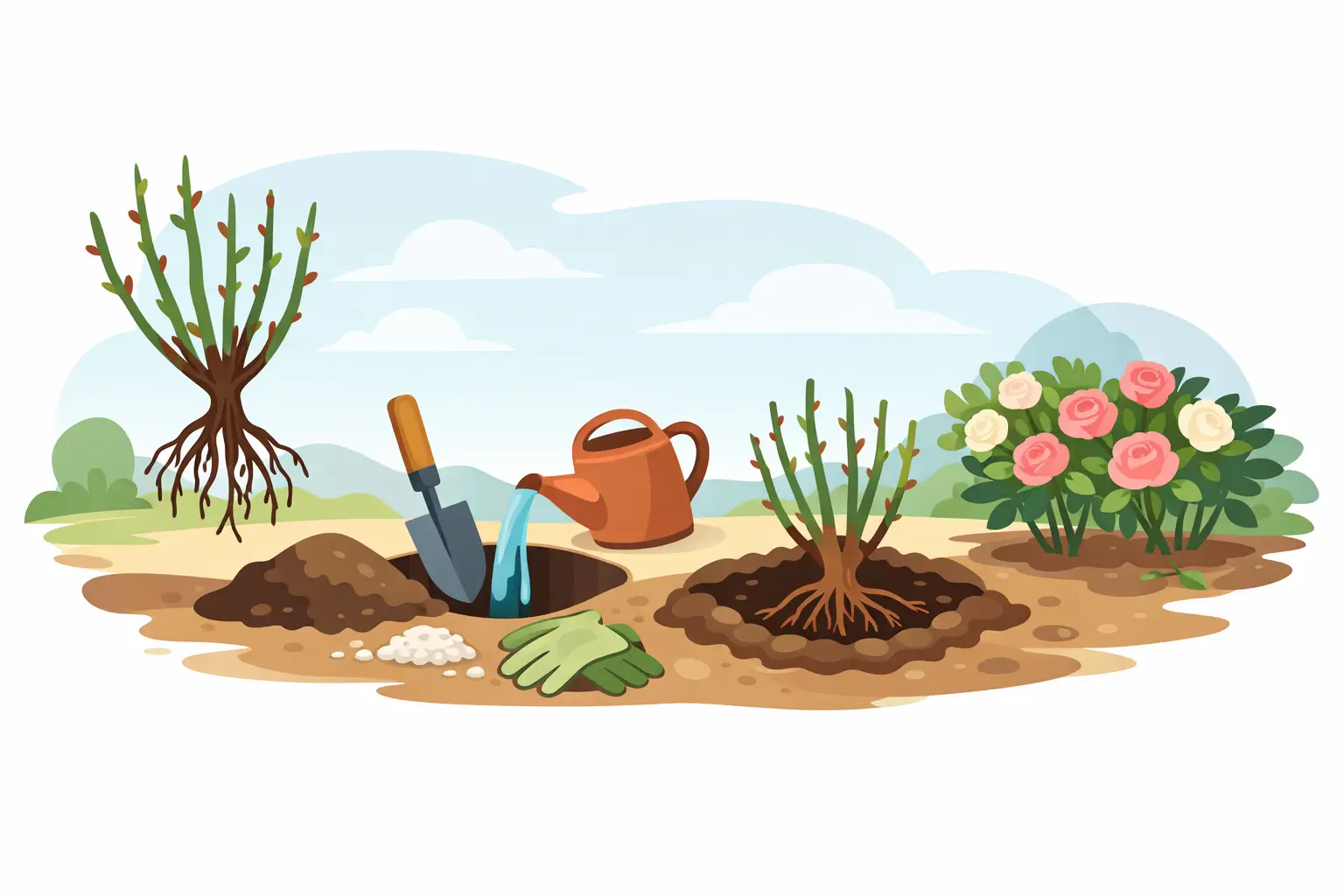
Bare root roses can look a bit underwhelming when they arrive: leafless stems, exposed roots and no pot full of glossy foliage to show off. But that dormant, no-frills form is exactly why they are a smart winter buy. Planted at the right time, bare root roses settle in quickly and put their energy into building a strong root system before spring growth begins.
For Australian gardeners, the key is treating planting day as the start of a season, not a quick hole-and-hope job. Give your rose sun, decent soil and consistent moisture through its first warm months, and it will reward you with years of flowers.
What are bare root roses?
Bare root roses are dormant rose plants sold without a container or surrounding potting mix. They are lifted from the ground while resting over winter, with their roots kept moist and protected for transport and planting. You will usually find them available from late autumn through winter, although timing varies between states and local growing conditions.
This is a practical way to buy roses because plants are lighter to handle, easier to inspect and often available in a broader range of classic varieties. It also gives you a chance to start with the roots directly in your garden soil, rather than asking a pot-grown plant to adjust later.
The trade-off is that bare root plants need to be planted promptly. Unlike a rose in a nursery pot, they cannot sit around waiting for the perfect weekend. Check the roots as soon as they arrive and keep them damp, cool and out of direct sun until planting.
Choose the right spot before you buy
Roses are generous plants, but they are not shade lovers. Aim for at least six hours of direct sun a day, ideally morning and early afternoon sun. In very hot inland areas, some light late-afternoon protection can prevent blooms from scorching, but deep shade will mean fewer flowers and softer, disease-prone growth.
Air movement matters too. A crowded corner beside a fence may look like a handy spare space, but still, humid air encourages fungal problems. Leave enough room around each plant for the variety’s mature size. Bush roses generally need more breathing room than their compact nursery appearance suggests, while climbers need a sturdy support with space between the stems and the wall or fence.
Avoid spots where roses, raspberries or stone fruit have struggled repeatedly. Soil-borne issues can build up where related plants have grown for years. If you are replacing an old rose in the same position, remove as much of the old soil as practical and refresh the planting area with new garden soil and compost.
When to plant bare root roses in Australia
Winter is the main planting window, when roses are dormant and the soil is still workable. In cooler parts of Victoria, Tasmania, the ACT and the southern highlands of New South Wales, planting can run through much of winter before buds swell in late winter or early spring.
In warmer regions, the window can be earlier and shorter. Gardeners in coastal Queensland, northern NSW and other mild areas should plant as soon as bare root stock is available and avoid delaying into hot weather. The plant may already be waking up, and dry conditions make early establishment harder.
Do not plant into waterlogged ground. If winter rain has turned your bed into a puddle, wait until excess water has drained or improve the site first. Roses like moisture, but roots sitting in cold, saturated soil can rot before they get going.
How to plant bare root roses
Start by soaking the roots in a bucket of water for a few hours before planting. If the roots feel dry, this step is especially worthwhile. Do not leave them submerged for days, and do not let them dry out while you prepare the bed.
Dig a hole wider than the spread of the roots and deep enough for them to sit naturally without bending sharply upward. Break up compacted soil at the base and sides of the hole. In heavy clay, work in compost and consider raising the planting area slightly to improve drainage. In sandy soil, compost helps hold moisture and gives the roots a better start.
Make a small mound of soil in the centre of the hole, then spread the roots around it. The graft union – the knobbly join near the base of most cultivated roses – should sit just above soil level in many Australian gardens. In colder, frost-prone districts, gardeners may set it slightly lower for protection. If you are unsure, follow the label supplied with your particular rose.
Backfill with the original soil mixed with compost, firming gently as you go so there are no large air pockets. Do not compact it like a footpath. Water deeply to settle the soil around the roots, then add a layer of organic mulch such as sugarcane, pea straw or bark. Keep mulch a few centimetres away from the stems to reduce the chance of rot.
A newly planted rose does not need a heavy dose of fertiliser in the hole. Too much concentrated fertiliser can stress new roots. Compost and good soil structure are more useful at planting time, with a rose fertiliser added later once active growth is underway.
Watering and early care make the difference
Winter rain is not always enough, particularly in dry parts of Australia or under wide eaves where little rain reaches the bed. Check the soil beneath the mulch rather than judging by the surface. It should feel cool and slightly moist, not dusty or sodden.
As spring arrives and leaves begin to appear, increase watering during dry spells. A deep soak at the base is better than frequent light sprinkling, which encourages shallow roots. Watering early in the day also gives foliage time to dry, helping reduce black spot and other fungal diseases.
Keep the area free of weeds, which compete for water and nutrients. Check ties on climbers as growth takes off, using soft material that will not cut into stems. For bush roses, remove any shoots coming from below the graft union. These are rootstock suckers and can take energy away from the flowering variety.
You may see bare root rose stems pruned back quite hard when purchased. That is normal. The plant is balancing its top growth with a root system that has been lifted and replanted. Resist the urge to judge success too early. Depending on weather and variety, it can take several weeks for buds to break and fresh shoots to appear.
Common mistakes to avoid
The biggest mistake is letting exposed roots dry out. Plant on the day you receive your roses where possible. If conditions force a delay, keep roots wrapped in their packing material, damp but not waterlogged, and stored somewhere cool. For a longer delay, temporarily heel the plant into loose soil in a sheltered spot.
Planting too shallowly is another common issue. Roots exposed near the surface dry out quickly, while a poorly supported plant can rock in wind and struggle to establish. Check the soil level after watering, as it may settle, and top it up if needed.
Finally, do not treat all yellowing or marked leaves in spring as an emergency. Some adjustment after planting is normal. Focus first on the basics: sun, deep watering, mulch, airflow and a sensible feeding routine. If problems persist, inspect the underside of leaves for pests and remove badly affected foliage from the garden rather than leaving it on the soil.
Picking a rose that suits your space
The best rose is not always the most fragrant or the one with the biggest flower in the catalogue. Start with how you want to use it. A compact floribunda works well in a sunny border or large pot, a climbing rose can soften a fence or pergola, and a shrub rose suits gardeners after a fuller, more relaxed look.
For balconies and courtyards, choose compact varieties and use a generously sized pot with quality potting mix and reliable drainage. Roses in containers dry out faster than roses in the ground, especially during an Australian summer, so they need closer attention. If watering is likely to be hit-and-miss, a garden bed may be the easier option.
Buying bare root roses is a chance to plant with purpose. Choose a variety that suits the space you actually have, get it into the ground during dormancy, and make watering a regular habit through its first summer. The bare stems will not stay bare for long.