

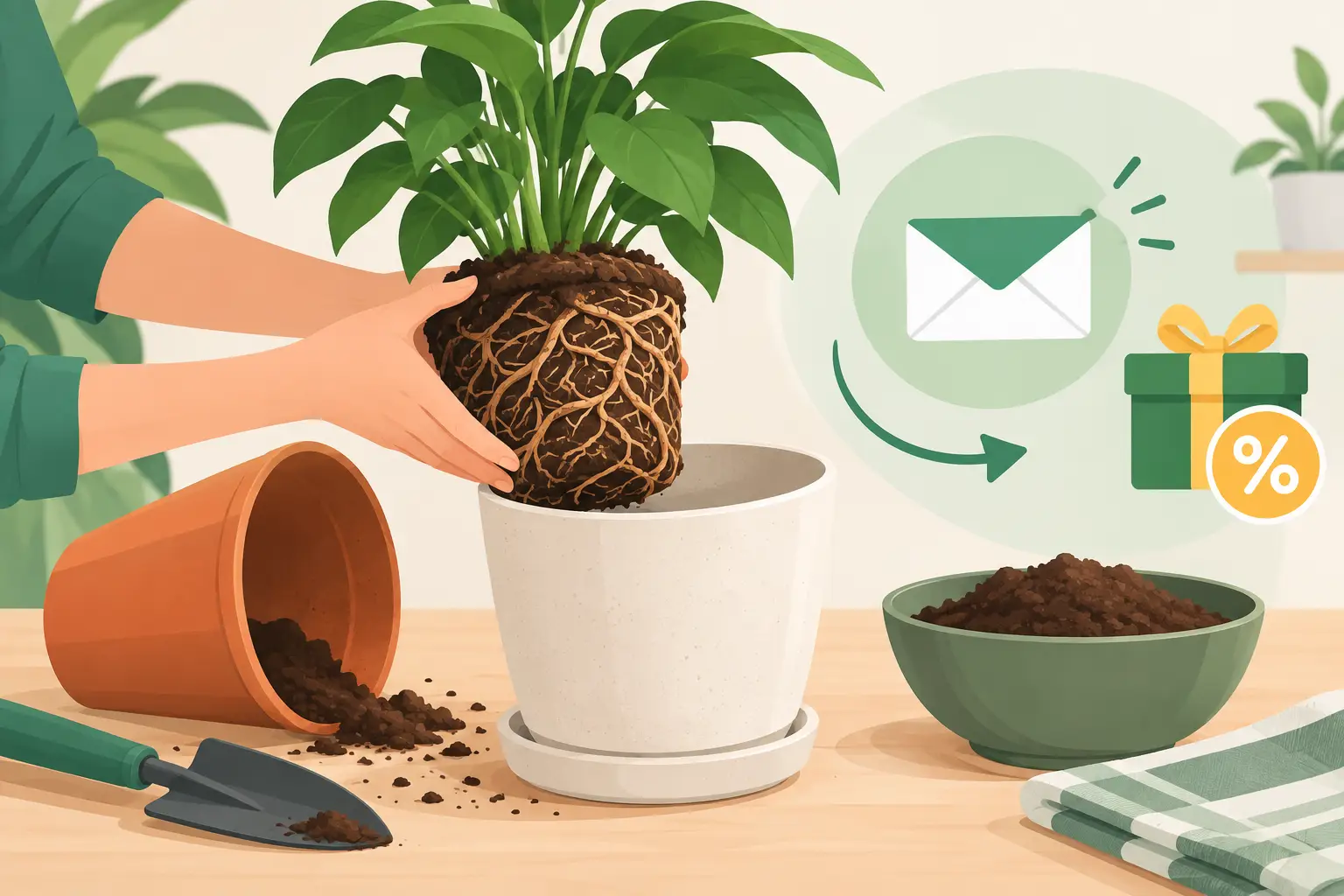
A plant can look perfectly happy above the soil while its roots are doing laps underneath it. If water runs straight through the pot, growth has stalled, or roots are pushing from the drainage holes, repotting root bound plants is usually the next sensible move. Done at the right time, it gives your plant more room to drink, feed and put on fresh growth without turning plant care into a major project.
What does root bound actually mean?
A plant becomes root bound when its roots have filled most of the available potting mix and started circling around the inside of the pot. This is common with fast-growing indoor favourites such as monstera, peace lilies, pothos and rubber plants, but it happens to outdoor plants too. Shrubs, citrus, natives and herbs can all outgrow containers, particularly through Perth’s warm growing months.
A few roots visible at the bottom of a pot are not automatically a problem. Many healthy plants naturally send roots towards drainage holes. The concern starts when there is very little soil left, the root ball is tightly packed, or the roots have formed a dense spiral that prevents new roots from spreading outward.
Being slightly snug can even suit some plants. Snake plants, ZZ plants, hoyas and many succulents often tolerate a tighter pot for longer than thirsty, leafy plants. The goal is not to move every plant into a bigger pot the moment a root appears. It is to respond when the current pot is limiting its health or growth.
Signs your plant needs a bigger pot
The clearest sign is a root mass that holds the shape of the pot when you slide the plant out. If you can barely see potting mix around the roots, it is time to act. Roots growing through drainage holes, cracking a plastic nursery pot or lifting the plant above the soil line are also good clues.
Look at what is happening above the pot as well. A root bound plant may dry out far faster than normal because there is not enough mix left to retain water. You might find yourself watering every couple of days, only for the leaves to droop again quickly. Slow growth during the active season, pale new leaves and repeated wilting can also point to crowded roots.
That said, do not assume every sad-looking plant needs repotting. Overwatering, poor light, pests and cold stress can cause similar symptoms. Check the moisture in the potting mix and assess the plant’s position before reaching for a new pot. A larger pot will not fix roots that are already rotting from consistently wet soil.
The best time for repotting root bound plants
For most houseplants, spring and early summer are ideal. Plants are naturally producing new roots and leaves then, so they recover quickly from the disturbance. In Perth, this often means repotting from September through to early summer, before the harshest heat arrives.
You can repot at other times if the plant is severely cramped, unstable or drying out constantly. Just avoid doing it during a heatwave, when a plant is flowering heavily, or immediately after it has been moved into a new home. It already has enough to adjust to.
Outdoor container plants need a little more judgement. Repot evergreen shrubs and foliage plants before strong seasonal growth begins. For fruiting plants, avoid disturbing roots when they are carrying a heavy crop unless the situation is urgent. A stressed plant may drop flowers or fruit after repotting, so timing is a worthwhile trade-off.
Choose the next pot carefully
The common mistake is jumping to a pot that is far too large. More room sounds helpful, but excess wet mix around a small root ball can stay damp for too long and increase the chance of root rot. For most plants, choose a pot one size up, roughly 2 to 5 cm wider in diameter than the current pot.
Drainage matters more than the pot material. A pot needs proper drainage holes, especially for indoor plants kept in decorative cover pots. Terracotta dries faster and can suit succulents, cacti and plants that dislike wet feet. Plastic nursery pots hold moisture longer, are lighter to move and work well inside a decorative planter. Neither option is automatically better – match it to how often you water and where the plant lives.
Use fresh potting mix suited to the plant. A quality indoor plant mix is a useful all-round choice for foliage plants, while orchids, succulents and citrus need blends with different drainage and nutrition. Garden soil from the backyard is usually too dense for pots and can compact around roots.
How to repot a root bound plant
Water the plant lightly a day before repotting if its mix is very dry. Slightly moist soil is easier to remove from the pot and creates less stress for fine roots. Set up your new pot, fresh mix and a clean pair of secateurs before you begin.
Gently ease the plant from its old pot. Support the base of the stems with one hand and tip the pot sideways, rather than pulling hard on foliage. If it is stuck, squeeze a flexible plastic pot or run a knife carefully around the inner edge. For a ceramic pot with a narrow opening, patience is better than force.
Once the root ball is out, inspect it closely. Healthy roots are usually firm and pale, tan or reddish depending on the plant. Black, mushy or foul-smelling roots should be trimmed away with clean secateurs. If the roots are circling densely, loosen the outer layer with your fingers. For a severely matted root ball, make two or three shallow vertical cuts through the outer roots. This sounds drastic, but it encourages roots to grow into the new mix instead of continuing to circle.
Add enough fresh mix to the bottom of the new pot so the plant sits at the same soil level as before. Planting it too deeply can cause stem rot, while placing it too high leaves the roots exposed. Centre the plant, fill around the sides with mix, then press it in gently. Firm enough to hold the plant upright is plenty. Compacting the mix hard makes it difficult for water and air to move through the root zone.
Water slowly until excess runs out of the drainage holes. This settles the fresh mix around the roots. If the potting mix has shrunk after watering, top it up lightly, keeping clear of the stems.
Aftercare: give roots time to settle
Repotting causes a small amount of stress, even when you do everything right. Place the plant in bright, indirect light for a week or two rather than direct afternoon sun. For outdoor pots, give newly repotted plants protection from hot, drying winds where possible.
Keep the mix lightly and evenly moist during the settling period, but do not water on a schedule. Check the soil with a finger a few centimetres below the surface. The new pot has more mix than the old one, so it will probably dry more slowly than you are used to.
Hold off on fertiliser for around four to six weeks. Fresh potting mix often contains nutrients, and fertilising too soon can irritate newly disturbed roots. Once you see fresh growth, return to a feeding routine that suits the plant and season.
Some leaf droop or a dropped older leaf can happen after repotting. Persistent yellowing, wilting in wet soil or stem collapse is not normal. Remove the plant from the pot and check for soggy roots or a pot without adequate drainage if it is declining quickly.
When not to size up
Sometimes repotting means refreshing the plant in the same pot instead of buying a larger one. This works well for a mature indoor plant that has reached the maximum practical size for your space, or for a large outdoor tub that is difficult to move.
Take the plant out, trim away a small amount of the outer root mass and replace as much exhausted potting mix as you can. Do not remove more than about one-third of the roots at once unless you have experience with that particular plant. Root pruning keeps a plant manageable, but it is more stressful than simply moving it up one pot size.
If you are adding a new plant to your home, balcony or backyard, choose a pot with its next stage of growth in mind. A well-sized nursery pot, good drainage and the right mix make future repotting far easier. Give the roots room when they need it, then let the plant do what you bought it for: make your space greener, fuller and more enjoyable.