
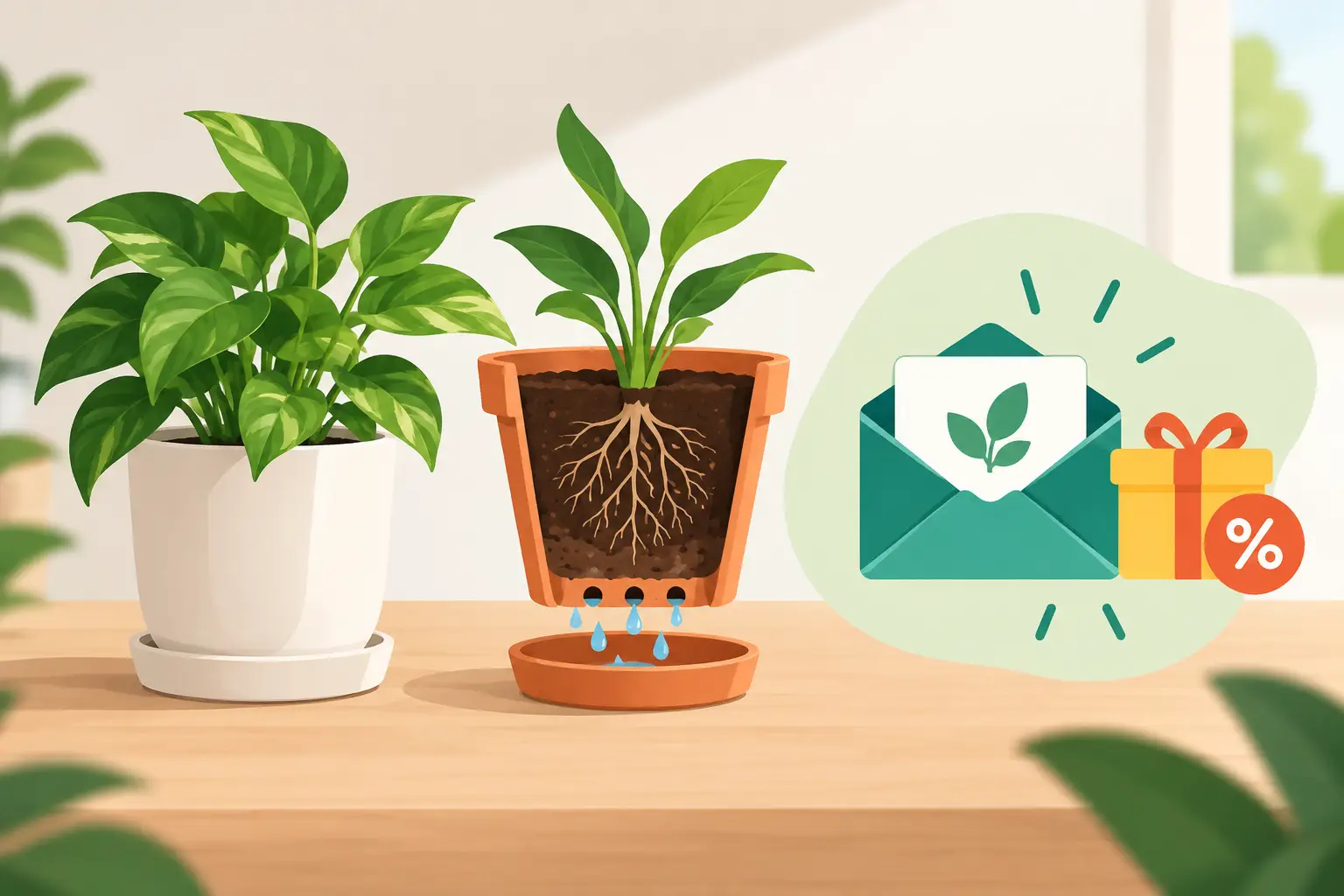
A beautiful pot can be the reason you bring a plant home, but one small detail can decide whether it thrives or slowly gives up: where does the excess water go? So, do plants need drainage holes? For most plants, yes. A drainage hole is the simplest, most reliable way to stop roots sitting in water after a drink.
That does not mean every decorative pot needs a hole drilled into its base. It means the plant itself needs a sensible drainage plan. Once you understand the difference, choosing pots for an indoor corner, balcony or backyard becomes much easier.
Why drainage holes matter for healthy roots
Plant roots need more than water. They also need air spaces in the potting mix. When water cannot drain away, those spaces fill up and roots struggle to breathe. Over time, roots can rot, leaves may yellow, and the plant can look thirsty even though the mix is wet.
This is why overwatering is not always about pouring in too much water at once. It is often about water staying trapped around the roots for too long. A pot with a drainage hole gives excess water a way out, helping the potting mix return to the moist-but-airy condition most plants prefer.
Drainage is particularly useful for common indoor favourites such as monstera, fiddle leaf figs, peace lilies, philodendrons and rubber plants. It is essential for succulents and cacti, which are built for dry periods and can decline quickly in constantly damp mix.
Do plants need drainage holes in every pot?
Most plants are safest in a pot with at least one drainage hole, especially if you are still getting confident with watering. It gives you a margin for error. You can water thoroughly, let the excess run through, then empty the saucer rather than hoping you have judged the exact amount perfectly.
There are a few exceptions, but they are more about the set-up than the plant. A plant can live in a pot without holes if you use a nursery pot inside it, or if you are prepared to water with real care. The risk is higher because there is nowhere for a heavy-handed watering session to escape.
Outdoor plants should nearly always be in containers with drainage holes. Rain is outside your control. In Perth, a pot may dry quickly through warm weather, then receive a solid soaking from winter rain. Without drainage, that water can pool at the bottom for days, particularly in larger decorative planters.
The easiest option: use a cover pot
Want the look of a ceramic, metal or woven pot with no hole? Use it as a cover pot, sometimes called a cachepot. Keep your plant in its plastic nursery pot, then place that inside the decorative container.
When it is time to water, take the nursery pot out, water it over the sink, outdoors or on the lawn, and allow it to drain properly before putting it back. This approach is ideal for renters, apartment dwellers and anyone who wants a tidy indoor display without taking a drill to a favourite pot.
Check the bottom of the cover pot before returning the plant. If water has collected there, tip it out. Leaving even a shallow pool beneath the nursery pot defeats the purpose of having drainage in the first place.
For larger plants that are awkward to lift, use a lightweight plastic pot inside the decorative planter and water slowly. Stop before water reaches the base, then check the potting mix again a few days later. It takes more attention, but it can work.
Why a layer of rocks does not fix a pot without holes
A popular bit of plant advice is to place pebbles, gravel or broken pot pieces at the bottom of a pot with no drainage. It sounds logical, but it does not create drainage. Water still has nowhere to leave the container.
Instead, the water collects beneath the potting mix and raises the level of saturation closer to the roots. You also lose valuable space that could hold quality potting mix and healthy roots. If your pot has no hole, a nursery pot inside it is a far better solution than a rock layer.
Match drainage to the type of plant
Plants have different moisture needs, so the goal is not to make every pot dry at the same speed. The aim is to avoid waterlogging while choosing a mix and pot that suit the plant.
Succulents, cacti, snake plants and ZZ plants need fast-draining mix and pots with holes. Terracotta is often a practical choice because its porous sides help mix dry out. These plants are more likely to tolerate being a little dry than being wet for too long.
Tropical indoor plants such as calatheas, ferns and peace lilies like more consistent moisture, but that does not mean soggy roots. Give them a pot with drainage and a good-quality indoor potting mix. Water when the top layer begins to dry, rather than keeping the pot constantly wet.
Outdoor flowering plants, herbs, citrus and fruiting plants also need drainage, but they may use water more quickly in warm weather. A generously sized pot with several holes can help prevent both waterlogging and rapid drying. Small pots dry out fast, so size matters as much as the holes underneath.
Choosing a pot with the right drainage
One hole can be enough for a small indoor pot, provided it is not blocked. Larger pots benefit from several holes, particularly if they will live outdoors. Raised feet or pot stands are useful too, as they stop the base sitting flat against paving and allow water to escape freely.
Always use a saucer under indoor pots to protect floors, shelves and furniture. Empty it after watering rather than letting the plant sit in runoff. For outdoor pots on balconies, make sure the water can drain without staining surfaces or dripping onto a neighbour below.
Avoid moving a plant into a vastly oversized pot just because it has great drainage. Too much unused potting mix stays wet longer, which can create the same root problems. When repotting, choose a container only a little larger than the current root ball, with proper drainage holes and fresh potting mix.
How to water plants in pots with drainage holes
Drainage holes work best when you water deeply rather than giving the surface a daily splash. Water until a small amount runs from the bottom, then let the pot drain. This encourages roots to grow through the mix rather than clustering near the surface.
The timing depends on light, temperature, pot size, season and the plant itself. Push a finger a few centimetres into the mix or lift the pot to judge its weight. A light pot and dry top layer usually signal it is time to water; a heavy pot and damp mix mean wait.
If water rushes straight down the sides and out the hole, the mix may have become very dry or compacted. Water slowly in stages, allowing the mix to absorb moisture between pours. If it keeps happening, repotting into fresh mix may be the better fix.
Can you drill drainage holes yourself?
Often, yes. Plastic and lightweight resin pots are usually straightforward to drill with the right bit. Ceramic, terracotta and glazed pots can crack if drilled carelessly, so use a tile or masonry bit, work slowly and support the pot well. Wear eye protection, and do not drill a pot that you would be devastated to lose.
If drilling feels like a hassle, skip it. Choose the cover-pot method instead. It is low-risk, flexible and makes it easy to swap plants around when you refresh a room.
A quick decision before you buy
If you are buying a plant and pot together, choose a pot with drainage holes whenever possible. It is the easiest way to protect your new plant from one of the most common care mistakes. If the pot you love has no hole, make sure the plant stays in a draining nursery pot inside it.
Good drainage will not replace the right light, potting mix or watering routine, but it makes all of those jobs more forgiving. Start with a pot that lets roots breathe, then enjoy the far more satisfying part: choosing the next plant for your space.