
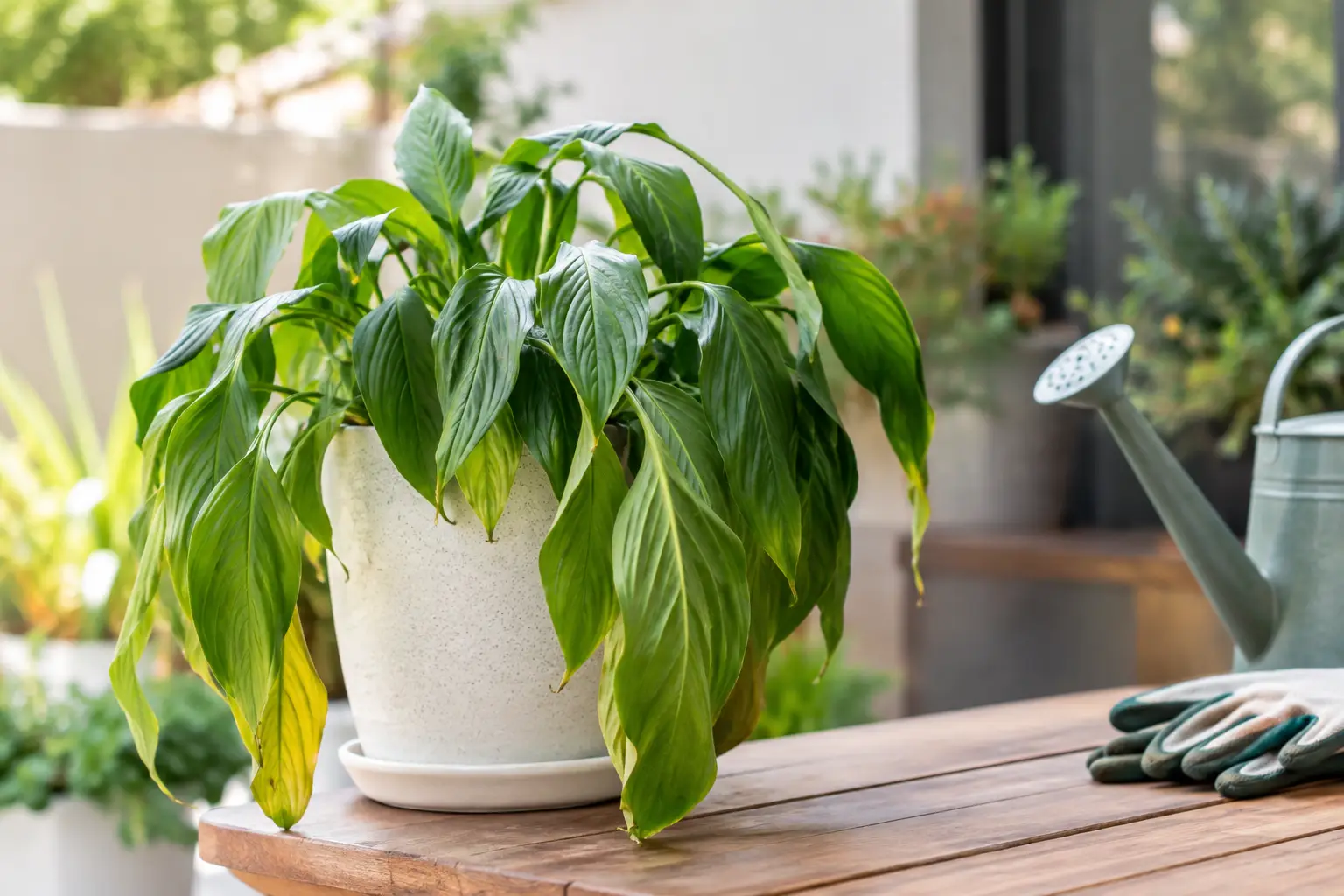
A plant can look perfectly fine at breakfast and distinctly sad by late afternoon, especially through a Perth warm spell. If you are asking, why is my plant drooping, resist the urge to immediately add water. Drooping is a stress signal, not a diagnosis. The quickest recovery comes from working out whether the plant is thirsty, waterlogged, overheated, root-bound or simply adjusting to a new spot.
Why Is My Plant Drooping? Start With the Soil
The soil tells you more than the leaves do. Push a finger a few centimetres below the surface, away from the plant’s stem. If the mix is dry at that depth and the pot feels unusually light, the plant probably needs a thorough drink. Water slowly until moisture runs through the drainage holes, then let the pot drain fully.
If the soil is wet, heavy or has a sour smell, do not water again. A plant sitting in constantly wet potting mix cannot get enough oxygen around its roots. The leaves droop because damaged or suffocated roots cannot move water up to the foliage, even though there is plenty of water in the pot.
This is a common problem with decorative pots that have no drainage holes, saucers that stay full after watering, and dense garden soil. Take indoor pots out of their cover pots before watering and empty any standing water after 10 to 15 minutes. Outdoors, check that the pot has open drainage holes and is not sitting flat in a place where water cannot escape.
Heat Stress Is a Big Factor in Perth
Perth’s dry heat, strong sun and hot easterly winds can make plants droop quickly. This is often most noticeable on new fruit trees, flowering shrubs, leafy indoor plants placed near bright windows, and plants in small black nursery pots. Their roots heat up fast and the foliage loses moisture faster than the plant can replace it.
A plant that perks up in the evening but droops again during the hottest part of the next day is usually dealing with heat stress rather than a serious root problem. Give it temporary protection from harsh afternoon sun. For potted plants, move them to bright shade or a spot with morning sun and afternoon cover. For plants in the ground, a temporary shade cloth screen can help while roots establish.
Do not assume every plant needs deep shade. Many Australian natives, succulents, citrus and fruit trees need plenty of sunlight to grow well and fruit properly. The better fix is often protecting the root zone, watering deeply when needed and giving young plants time to establish, rather than moving a full-sun plant into a dark corner.
Mulch makes a real difference in Perth gardens. A layer around the root zone helps keep the soil cooler and slows moisture loss. Keep it clear of the trunk or main stem so moisture is not trapped against the plant.
Underwatering and Overwatering Can Look Similar
Both problems can create limp leaves, which is why watering on a schedule alone can be risky. A small pot in summer may need water very often, while a larger pot in a sheltered spot may stay wet for much longer. Plants growing in the ground need less frequent watering once established, but they need water to soak down to the roots rather than a quick surface sprinkle.
Look for the supporting signs. Underwatered plants often have dry mix, crisp brown edges, curling leaves and a lightweight pot. Overwatered plants are more likely to have yellowing leaves, soft growth, leaf drop and wet mix that stays damp for days.
For most container plants, water thoroughly, then wait until the upper layer of mix has dried to the level that suits that plant before watering again. Succulents need a much drier cycle than leafy tropical-style indoor plants. Young grape vines, citrus and other fruiting plants need consistent moisture while they establish, but they should never remain boggy.
Check the Roots Before You Blame the Leaves
When watering seems right but the plant still wilts, inspect the root system. Slide a potted plant carefully from its pot. Healthy roots are generally firm and pale, tan or reddish depending on the plant. Roots that are black, mushy or foul-smelling point to rot. Trim away badly damaged roots with clean secateurs, repot into fresh free-draining mix and reduce watering while the plant recovers.
A tight coil of roots circling the pot means the plant is root-bound. The pot may dry out surprisingly fast because there is little potting mix left to hold water. Choose a pot only one size larger, loosen the outer roots gently and refill with a suitable quality potting mix. Moving straight into an oversized pot can leave excess wet mix around a small root ball, increasing the risk of rot.
For plants in the garden, poor drainage can be harder to see. If water pools around the base after irrigation or rain, consider whether the site needs improved drainage, a raised planting area or a better-suited plant choice. Matching the plant to the position is usually easier than constantly trying to correct a difficult site.
Recent Changes Can Cause a Temporary Droop
Plants often droop after coming home from the nursery, being repotted, planted into the garden or moved between light levels. This is transplant stress. Fine roots are disturbed, the leaves are exposed to different conditions, and the plant needs time to settle in.
Water the root ball in well at planting, but do not keep adding water every day unless the soil is drying. Keep new plants out of severe afternoon conditions for the first week or two where practical. Avoid heavy fertiliser while a stressed plant is trying to rebuild roots. A gentle, consistent routine works better than trying several fixes at once.
Indoor plants can react when moved from a bright nursery position into a low-light room, or from a sheltered room to a hot patio. Place them where light matches their needs and make changes gradually. A sudden shift can lead to drooping or leaf drop even when the plant is otherwise healthy.
Rule Out Pests, Disease and Physical Damage
Look underneath leaves and along stems for signs of sap-sucking pests. Aphids, scale, mealybugs and spider mites can weaken fresh growth and cause leaves to curl or droop. Fine webbing, sticky residue, small raised bumps or clusters of insects are useful clues. Isolate badly affected indoor plants from others while you treat the issue.
Also check for broken stems, a chewed trunk, stem rot near soil level, or a plant that has been knocked loose in its pot. If only one branch is drooping while the rest of the plant looks normal, the issue may be local damage rather than watering. Prune back to healthy tissue with clean secateurs where needed.
Disease is less common than watering or heat issues, but wilt combined with dark stems, spreading spots or rapid collapse needs prompt attention. Remove badly affected foliage, improve airflow and avoid wetting leaves late in the day. If the whole plant is declining quickly, isolate it from nearby plants and inspect the roots.
A Quick Check Before You Water Again
When a plant is drooping, run through these four checks before doing anything drastic:
- Feel the soil below the surface, not just the dry-looking top layer.
- Check whether the pot drains freely and is not standing in water.
- Notice when drooping happens, particularly during hot afternoon weather.
- Inspect leaves, stems and roots for pests, damage or rot.
This takes only a few minutes and stops the most common mistake: watering a plant that is already too wet.
A drooping plant is not always a lost plant. In Perth, a sensible change to watering, drainage or afternoon protection is often enough to bring it back. If you are choosing a replacement or adding more plants, start with varieties that suit your light, pot size and watering routine. The right plant in the right spot is far easier to keep looking good.