
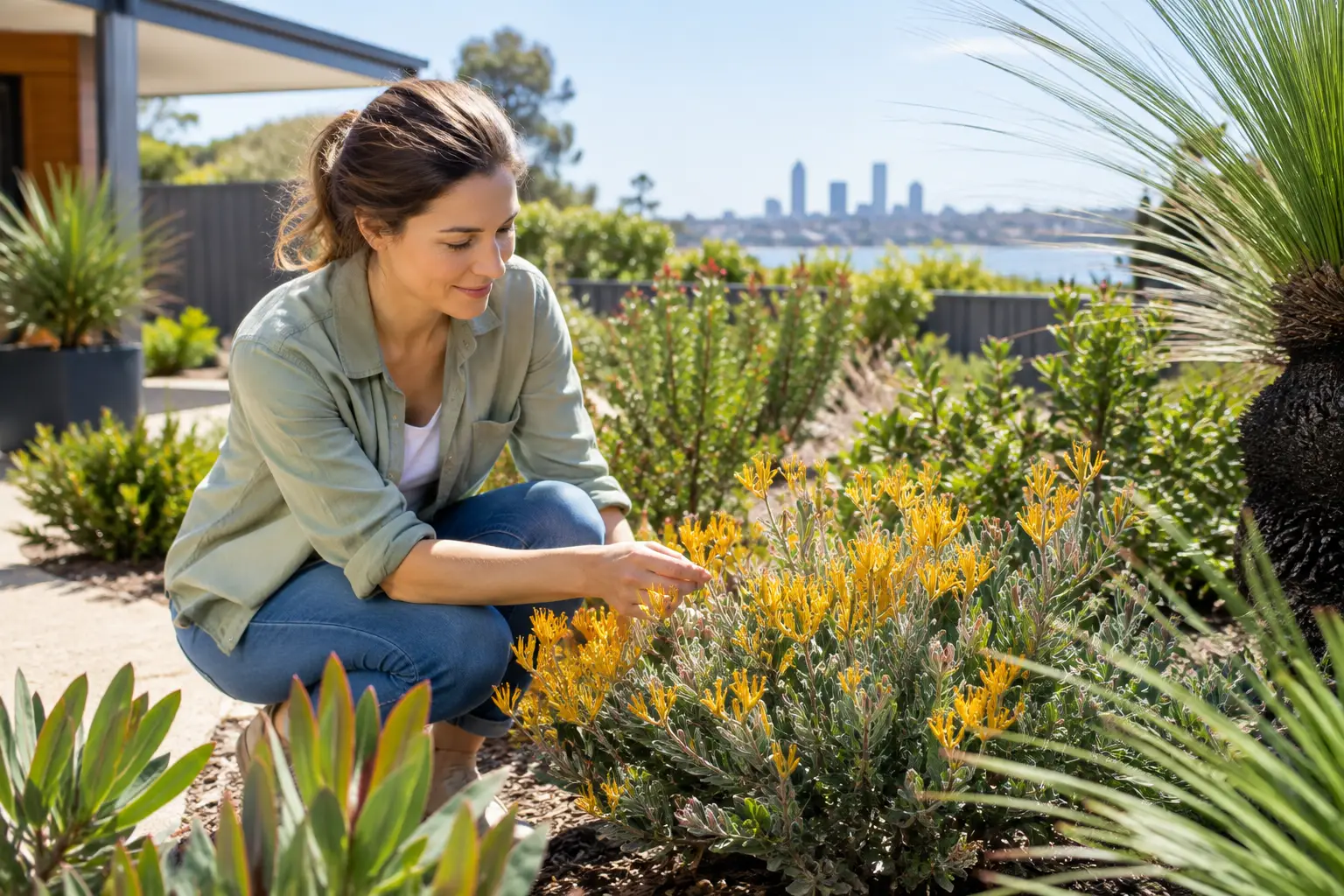
A plant can look perfect in a nursery pot and still be the wrong choice for your place. Perth gardens deal with hot, dry summers, sandy soils, strong afternoon sun and the occasional cold, wet winter patch. Knowing how to choose plants before you buy means fewer disappointing losses and a garden that gets better with every season.
The easiest place to start is not with the plant. Start with the spot where it will live. A sunny front verge, a sheltered courtyard, a balcony in pots and a bright indoor corner all call for different plants. Once you understand your conditions, choosing becomes much simpler.
How to choose plants by looking at your space first
Before browsing fruit trees, flowering shrubs or indoor plants, take a quick look at the area you want to fill. Notice how much direct sun it receives, whether it gets hot afternoon light, how exposed it is to wind and whether water drains away quickly after a soak.
In Perth, “full sun” can mean something quite different from a few mild morning hours. A position that receives relentless summer sun needs plants that can cope with heat and dry conditions once established. Australian natives, succulents and many Mediterranean-style shrubs are often better suited to these exposed areas than thirsty, shade-loving plants.
A protected spot with morning sun and afternoon shade gives you more options. It can suit flowering plants, edible plants and leafy shrubs that may scorch in a western-facing position. If the area stays shaded for most of the day, choose for shade rather than hoping a sun-loving plant will adapt. Plants can survive in the wrong light, but they rarely grow well or flower as expected.
For indoor plants, check the light from the plant’s point of view. A metre back from a bright window is not the same as sitting beside it. Bright indirect light suits many popular indoor choices, while a dim hallway may need a genuinely low-light-tolerant plant. Air-conditioning vents, heaters and hot glass can also cause trouble.
Match the plant to Perth soil and water conditions
Much of Perth has sandy soil that drains quickly and holds little moisture or nutrition. That does not rule out growing a productive garden, but it does change what you need to buy and how you prepare the site.
If you are planting directly into sand, choose plants that are comfortable with free-draining conditions or be ready to improve the soil with organic matter and mulch. Fruit trees and other hungry, productive plants usually need more preparation than hardy natives. They benefit from a well-prepared planting area, regular watering while establishing and ongoing feeding appropriate to the plant.
Water is the other practical question. Be honest about how often you can water through summer. A newly planted tree, shrub or vine needs regular attention while its roots establish, even if it is considered drought tolerant later on. Pots dry out even faster, especially terracotta pots and containers facing west.
If you want a lower-maintenance garden, select plants with similar water needs and group them together. Put thirstier flowering or edible plants near a convenient tap or irrigation line. Save the toughest plants for the furthest, hottest parts of the block. This is more effective than trying to make every plant cope with the same watering routine.
Decide what you want the plant to do
Buying becomes easier when each plant has a job. You may want privacy from a neighbouring property, flowers near the entry, a feature plant in a pot, herbs and fruit close to the kitchen, or greenery that softens a bare fence.
Screening plants need enough mature height and width to do the job. Check the expected size rather than planting small shrubs too close together and hoping for an instant hedge. Tight spacing can lead to poor airflow, competition for water and plants that become thin at the base. For a narrow side passage, a naturally upright grower may make more sense than a broad shrub that will constantly need pruning.
Fruit trees and grape vines are rewarding choices, but they need a little planning. Consider sun, access for harvesting and the room required as the plant matures. A grape vine needs a suitable structure to climb over, while a fruit tree needs enough open space for its canopy and roots. Some fruiting plants may also have pollination requirements, so check whether you need more than one variety or a compatible pollinator nearby.
Flowering plants are often chosen for colour, but their flowering season matters too. A mix of plants that perform at different times of year keeps the garden interesting for longer. If your priority is foliage, texture or year-round structure, look at shrubs, natives and succulents rather than choosing only for a short burst of flowers.
Think about mature size, not nursery size
Small plants are easier to transport and plant, but a compact nursery pot does not tell you where that plant will finish. Always ask how high and wide it is likely to grow in your conditions, then allow enough space for its roots and branches.
This matters around paths, driveways, pools, powerlines and windows. A plant that will grow large can be a great investment when placed well, providing shade, screening or a strong garden feature. In the wrong position, it becomes an ongoing pruning job.
Containers give you more control, particularly for courtyards, rentals and small patios. They also come with more responsibility. Choose a pot with drainage holes, use a quality potting mix and select plants that suit container growing. Dwarf fruit trees, compact shrubs, succulents and many indoor plants can work well, provided you can keep up with watering and repotting when needed.
Choose a care level you can actually maintain
The best plant is not necessarily the rarest or most demanding one. It is the one that fits the time you have available. A low-fuss garden can still be full of colour, edible plants and personality, but it should be built around realistic care.
If you travel often or are setting up your first garden, start with hardy plants that suit your site. Add more hands-on plants once you have established a watering routine and know how your space behaves through summer. Australian natives, resilient shrubs and succulents can provide a reliable base, while fruit trees, vines and flowering plants can become the higher-reward areas you tend more closely.
Consider maintenance beyond watering. Some plants need regular pruning to stay neat, while others shed leaves, fruit or flowers in places where that may be inconvenient. Thorny plants can be useful as a boundary but are not ideal beside a busy path. Fast growers can create privacy quickly, yet they may need more frequent trimming than slower-growing alternatives.
Buy healthy plants and plan the first week
When choosing plants, look for healthy leaves, firm stems and a plant that is growing steadily rather than severely stressed. A few marks or older leaves are not always a concern, but avoid plants with obvious pest damage, widespread yellowing or roots tightly circling out of the pot.
Think about the trip home as well. Protect plants from wind in the car, particularly taller shrubs and leafy indoor plants. If you are buying several plants or a larger specimen, arranging collection or local delivery can make the process much easier.
Plant as soon as practical, water thoroughly after planting and add mulch around outdoor plants while keeping it clear of the stem or trunk. The first few weeks are when good planting and consistent watering make the biggest difference. Do not judge a plant too quickly after moving it – some adjustment is normal.
At Buy My Plants, the most useful question is often simple: “What conditions does this spot get?” Bring a photo, rough measurements or details about sun and soil when you are ready to shop. A plant chosen for the right place gives you more than a good-looking purchase – it gives you a garden you will want to keep adding to.