
Those tiny black flies that lift off a pot when you water are usually fungus gnats, not fruit flies. Knowing how to treat fungus gnats starts with the potting mix, because the adults are annoying but their larvae are living below the surface. In Perth homes, they are especially common in indoor plants and shaded patio pots that stay damp through spring.
A few fungus gnats rarely cause major harm to a healthy, established plant. A persistent cloud of them, however, is a sign that the mix is staying wet for too long. Their larvae feed on fungi, algae and decaying organic matter, and can nibble fine roots when numbers build up. That is more of a problem for seedlings, cuttings and plants already struggling with poor drainage.
First, make sure they are fungus gnats
Adult fungus gnats are small, dark, delicate flies with long legs. They tend to hover slowly around pots, sit on the soil surface, or appear when the pot is moved or watered. Fruit flies are generally more tan or brown and are drawn to ripe fruit, kitchen scraps and drains rather than potting mix.
You may also spot pale, almost transparent larvae with shiny black heads in the top few centimetres of wet mix. They need moisture to survive, which gives you a useful advantage: change the conditions in the pot and the problem becomes much easier to control.
How to treat fungus gnats at the source
The most effective approach combines drier potting mix with a treatment that catches adults or controls larvae. Treating only the flies you can see is rarely enough. New adults will keep emerging if larvae remain in wet soil.
Let the upper potting mix dry properly
Before watering again, allow the top 2 to 4 cm of potting mix to dry. For many indoor plants, this means checking with a finger rather than watering because the calendar says it is time. The mix beneath can remain lightly moist for plants that dislike drying out, but the surface should not be constantly wet.
This is the key step for most common houseplants. It is not a licence to dehydrate every plant, though. Ferns, peace lilies, calatheas and fresh cuttings can be less forgiving than a snake plant, succulent or established rubber plant. For moisture-loving plants, reduce surface moisture where possible rather than allowing the whole root ball to become bone dry.
Perth’s spring weather can make watering deceptive. A warm, breezy day dries the top of a pot quickly, while a cool indoor room or shaded courtyard may keep the lower mix wet for days. Lift the pot if you can. A noticeably heavy pot usually has plenty of water left.
Check drainage before adding any treatment
A pot without a drainage hole is a common fungus gnat factory. So is a nursery pot sitting in a decorative cover pot with water collected at the bottom. Empty saucers and cover pots after watering, and make sure excess water can escape freely.
If the potting mix has become dense, sour-smelling or permanently soggy, repotting may be the better answer. Use fresh, good-quality potting mix and a pot with drainage. There is little point trying to rescue a pest problem while leaving the plant’s roots in waterlogged mix.
For outdoor containers, check that mulch, fallen leaves or dense groundcover are not holding moisture right against the pot surface. This matters in shaded Perth gardens, particularly where pots receive winter rain but very little drying sun.
Use yellow sticky traps to reduce adults
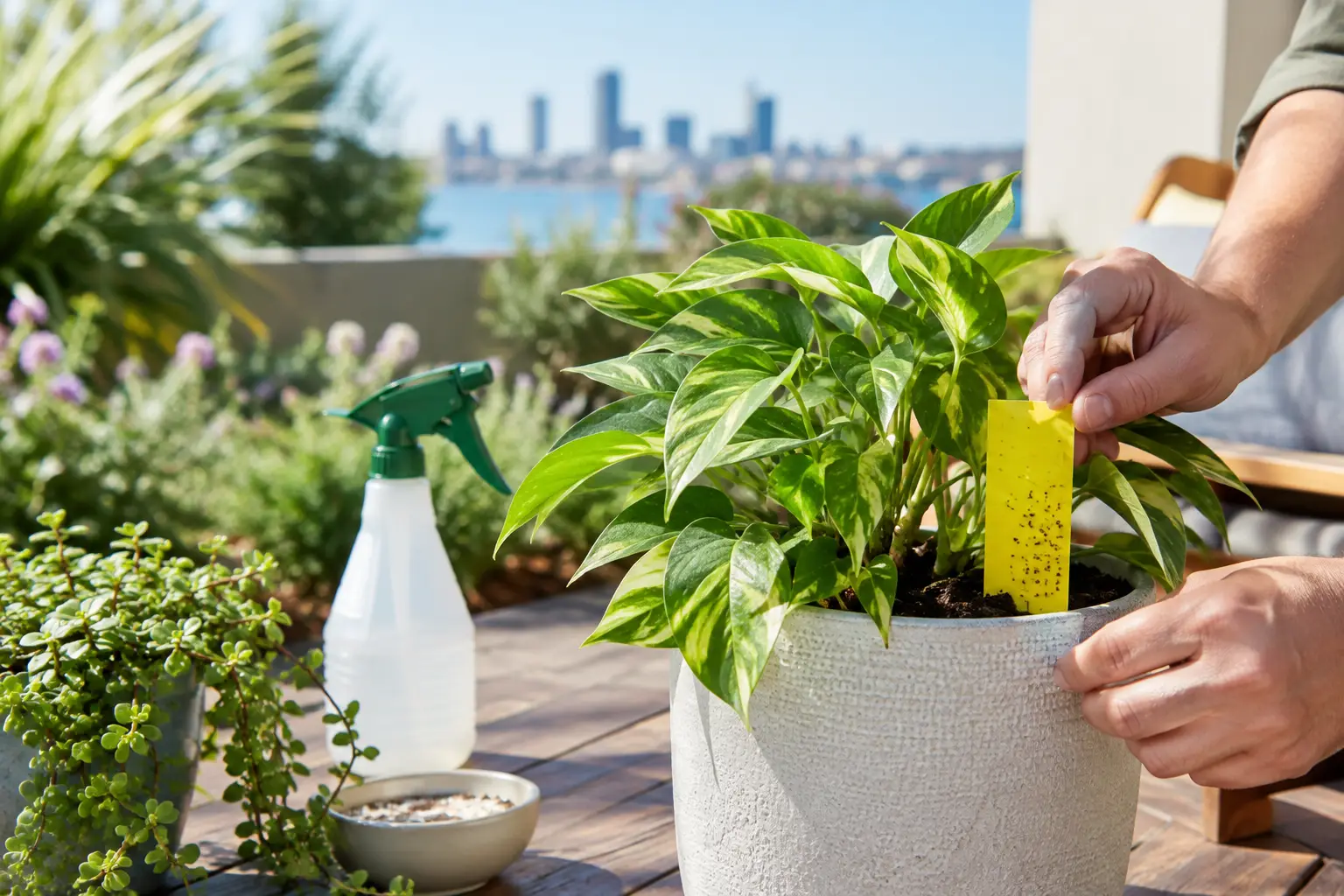
Yellow sticky traps are a simple way to catch adult fungus gnats and confirm whether your efforts are working. Place one just above the potting mix or near the foliage. They will not deal with larvae by themselves, but they reduce egg-laying adults and give you a clear read on the infestation.
Replace traps once they are covered in insects or dust. Keep them away from open windows and outdoor flowering plants where they could catch beneficial insects. They are best used indoors or close to affected pots, not scattered around the whole garden.
Treat larvae if the infestation is established
If gnats continue emerging after you have adjusted watering, use a biological larval treatment containing Bacillus thuringiensis israelensis, often shortened to Bti, where available. Applied as directed to the potting mix, it targets the larval stage without relying on a broad insecticide spray.
Follow the label carefully and repeat only at the stated interval. Biological treatments work best when you also stop overwatering. If the pot remains constantly wet, new eggs and larvae can keep the cycle going.
Avoid reaching first for household remedies. Strong peroxide mixes, oils, detergents and other social-media fixes can damage fine roots, alter the potting mix or leave a stressed plant worse off. A mild solution may appear to solve the issue because it kills some larvae on contact, but it does not correct poor drainage or watering habits.
A simple treatment timetable
Start by removing dead leaves and organic debris from the soil surface, then let the top layer of mix dry before the next water. Put up a yellow sticky trap the same day. If there are lots of adults, or larvae are visible, apply a suitable Bti product according to its label.
Over the next two to three weeks, keep checking moisture before watering and replace traps as needed. Fungus gnats have overlapping life stages, so you may still see a few adults after the first treatment. What you want is a steady drop in numbers, not necessarily zero flies overnight.
If adult numbers are unchanged after several weeks, inspect the plant more closely. Water may be trapped in the outer pot, the mix may be compacted, or another nearby pot may be acting as the breeding site. Check every pot in the same room or sheltered outdoor area, including propagation trays.
Prevent fungus gnats in new plants and cuttings
Freshly purchased plants, seedlings and cuttings need regular moisture, so they are more vulnerable than established plants. Use clean pots and fresh potting mix, and avoid leaving trays sitting in water. Bottom watering can be useful for some plants because it keeps the soil surface drier, but only if the pot is allowed to drain afterwards.
Quarantine is not necessary for every new plant, but it is sensible to inspect the mix before placing a new pot among a large indoor collection. Look for adult gnats, algae on the surface and a mix that feels soaked. A small sticky trap can provide an early warning without much fuss.
A thin mineral layer on the surface, such as coarse horticultural grit, can make the top of the mix less welcoming for egg-laying adults. It is a supporting measure, not a cure. It can also make it harder to judge soil moisture, so use it only if you are comfortable checking deeper into the pot.
When repotting is the right call
Repot if the plant is declining, the mix smells musty, roots are dark and soft, or the pot remains wet long after watering. Remove as much old, sodden mix as practical without aggressively tearing healthy roots, then move the plant into fresh mix suited to its needs.
Do not repot a healthy plant solely because you saw two gnats. Repotting creates stress and is best reserved for a drainage issue, exhausted potting mix or a serious infestation. For a sturdy indoor plant with only a few adults, drying the surface and using traps is often enough.
Perth conditions make watering the deciding factor
Perth’s dry summers mean many plant owners get used to watering often, then carry the same routine into cooler months or shaded indoor spaces. That is when fungus gnats tend to take over. Plants use less water in winter, and a pot near an air-conditioned room, sheltered patio or south-facing wall may dry much more slowly than expected.
In hotter inland areas such as Toodyay, outdoor pots can dry rapidly in summer, yet indoor plants and protected shadehouses may still hold moisture for too long. Local conditions around each pot matter more than a fixed watering schedule.
A healthy plant should not have to share its pot with a small flying circus. Check the mix before each water, deal with dampness early, and your plants will have a much better chance to put their energy into new roots and growth instead.