
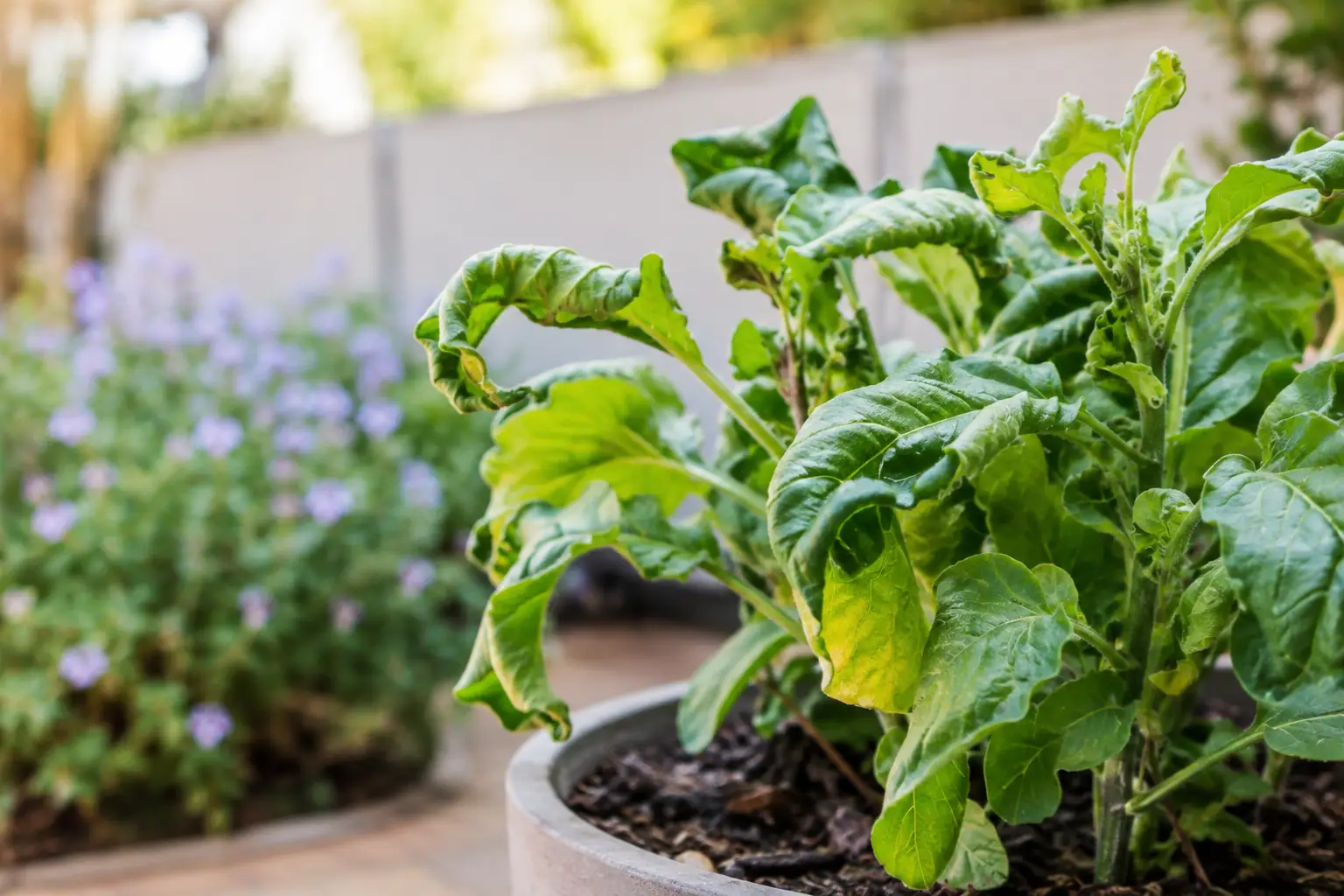
A plant can look perfectly healthy one week, then develop curled, puckered or tightly rolled leaves after a run of warm spring weather. Plant leaves curling is not one diagnosis. It is the plant’s response to stress, and the pattern of that curl is your best clue to what needs changing.
In Perth, the most common causes are inconsistent watering, heat and hot wind, sap-sucking pests, root problems and sudden changes in light. The right fix depends on the plant and where it is growing. A citrus in full sun, a sheltered indoor plant and a newly planted native may all curl leaves for different reasons.
Start by looking at the curl
Before reaching for fertiliser, insect spray or more water, inspect the newest growth, the underside of leaves and the soil. Leaves curled upwards at the edges often point to heat, dry soil or wind. Leaves curling downwards, looking dark and soft, can indicate overly wet soil or stressed roots.
Crinkled new leaves, sticky residue, tiny insects or black sooty mould suggest pests. Pale leaves with green veins may indicate a nutrient issue, but nutrients are rarely the first thing to blame when a plant has recently been moved, repotted or exposed to a hot spell.
Also check whether the problem is limited to a few leaves. Older leaves can curl and age naturally, especially after transplanting. Widespread curling on fresh growth needs closer attention.
Watering problems are common in Perth gardens
A dry pot can go from damp to bone dry quickly in Perth’s spring and summer sun. When the root ball dries out, many plants reduce moisture loss by rolling or curling their leaves. Fruiting plants, young shrubs, grape vines and container-grown plants can all do this during hot weather.
Give the soil a proper check rather than watering by habit. Push a finger a few centimetres below the surface or use a small hand trowel near the edge of the pot. If the mix is dry at root level, water slowly and deeply until moisture runs from the drainage holes. Very dry potting mix can repel water at first, so apply it in two or three passes rather than flooding it once.
Overwatering causes similar-looking trouble. Roots need air as well as water. A pot sitting in a saucer of water, heavy garden soil that stays wet, or a pot without clear drainage can lead to drooping, downward curling and yellowing. Do not keep adding water because the leaves look unhappy. Check the root zone first.
For established plants in the ground, a deep soak less often is usually more useful than a light daily sprinkle. The exact schedule changes with soil type, weather, mulch and plant size. Sandy coastal Perth soils drain rapidly, while heavier soils can hold water longer. Adjust for your garden rather than copying a timetable from another suburb.
Newly planted plants need a different approach
New plants have a small root system compared with their top growth. For the first weeks after planting, they need consistent moisture around the original root ball while they establish into surrounding soil. A layer of mulch helps, but keep it clear of the stem to avoid trapping moisture against the bark.
Do not plant into a dry hole and assume the reticulation will sort it out. Water the plant in thoroughly, then monitor it through its first warm days. This small step prevents many cases of leaf curl and leaf scorch.
Heat, sun and wind can curl healthy leaves
October is a changeable month in Perth. Warm afternoons, bright sun and dry easterly winds can stress plants that were comfortable through winter. Leaves may curl at the margins, feel dry or develop brown, crisp patches, particularly on tender new growth.
A plant labelled as full sun still needs time to adapt if it has been growing under shade cloth or in a protected nursery area. Move potted plants into stronger light gradually over a week or two where possible. For garden planting, avoid putting shade-loving indoor plants, young camellias or other soft-leaved plants into an exposed western position.
Coastal gardens have the extra challenge of salt-laden wind and fast-drying sand. Inland areas such as Toodyay can experience more intense heat and colder winter nights, including frost in suitable low-lying spots. A plant that copes near the coast may need more shelter, mulch and careful position selection inland.
If heat is the likely cause, water the root zone early in the day, provide temporary afternoon shade for vulnerable new plants and protect them from strong wind. Avoid heavy pruning during a hot period. Removing foliage can expose stems and remaining leaves to even more stress.
Check for aphids, mites and leaf curl pests
Pests often target soft new growth, which is why curling can appear suddenly at the tips while older leaves look fine. Aphids are usually visible in clusters on new stems or leaf undersides. They can cause distorted leaves and leave sticky honeydew behind.
Spider mites are much smaller and more likely during hot, dry weather. Look for fine webbing, speckled or bronzed leaves and a dull appearance. Shake a suspect leaf over white paper and look closely for tiny moving dots if you are unsure.
Citrus leaf miner is another familiar cause of distorted young citrus leaves. Rather than simple curling, look for pale, squiggly tunnels through fresh leaves. The damage is mostly cosmetic on an established tree, but severe attacks can slow young trees.
Start with the least aggressive option. A firm spray of water can dislodge aphids from sturdy plants. Remove badly affected tips if the infestation is localised, and improve air movement where plants are crowded. For a persistent pest problem, choose a treatment suited to the pest and plant, then follow the label carefully. Do not spray in heat or full sun, and avoid broad-spectrum products when beneficial insects are active.
Root stress is easy to miss
A plant may be watered correctly and still have curling leaves because the roots cannot take up moisture properly. Rootbound plants dry out quickly and may have a dense mass of roots circling inside the pot. Plants in old, compacted potting mix can show the same symptoms.
When repotting, choose a container only modestly larger than the existing one, with drainage holes and fresh quality potting mix. Jumping straight to an oversized pot can leave too much wet mix around a small root ball. That increases the risk of root rot.
In the garden, compaction, poor drainage and recent digging near the plant can damage roots. If water pools around the base after irrigation, improve drainage before applying more fertiliser. Fertiliser cannot repair suffocated roots and may make a stressed plant worse.
Fertiliser is not always the answer
Curled leaves can tempt gardeners to feed a plant immediately. Sometimes a nutrient deficiency is involved, especially in hungry fruiting plants grown in pots, but applying fertiliser to a dry or root-stressed plant can burn roots and add another problem.
Water first, inspect for pests and assess whether the plant has adequate light and drainage. Once it is stable, use a suitable fertiliser at the recommended rate for that plant type. Slow-release products can be practical for containers, while garden plants may benefit from seasonal feeding based on their needs. Avoid treating every plant in the yard with the same product.
When leaf curl is normal and when to act
Some plants naturally have curled foliage or fold leaves in bright sun and reopen later. A mild temporary curl on a very hot afternoon is often a water-saving response. If leaves recover by evening or the next morning and the soil moisture is reasonable, there may be no urgent problem.
Act promptly when curling is paired with yellowing, browning, spots, wilting, pests, leaf drop or slow growth. Take a few clear photos of the whole plant, the affected leaves and the soil surface. This makes it easier to compare changes over a few days and get useful advice when selecting a replacement or a better-suited plant.
Choose plants for the position, not just the look
The best way to avoid recurring plant leaves curling is to match the plant to its future home. Before buying, consider morning versus afternoon sun, reflected heat from paving or walls, wind exposure, soil drainage, available watering and whether the plant will stay in a pot.
A tough screening shrub or native suited to an exposed sunny spot has different needs from a fruit tree, grape vine or indoor foliage plant. Asking these questions before planting saves disappointment and makes the garden easier to maintain. If you are unsure what will suit your space, contact Buy My Plants to discuss current plant options and collection or Perth delivery arrangements.
A curled leaf is a useful warning, not necessarily a lost cause. Check the roots, soil, weather and new growth before making changes, then give the plant a little time to respond. Small, targeted adjustments usually work better than throwing every treatment at it at once.