
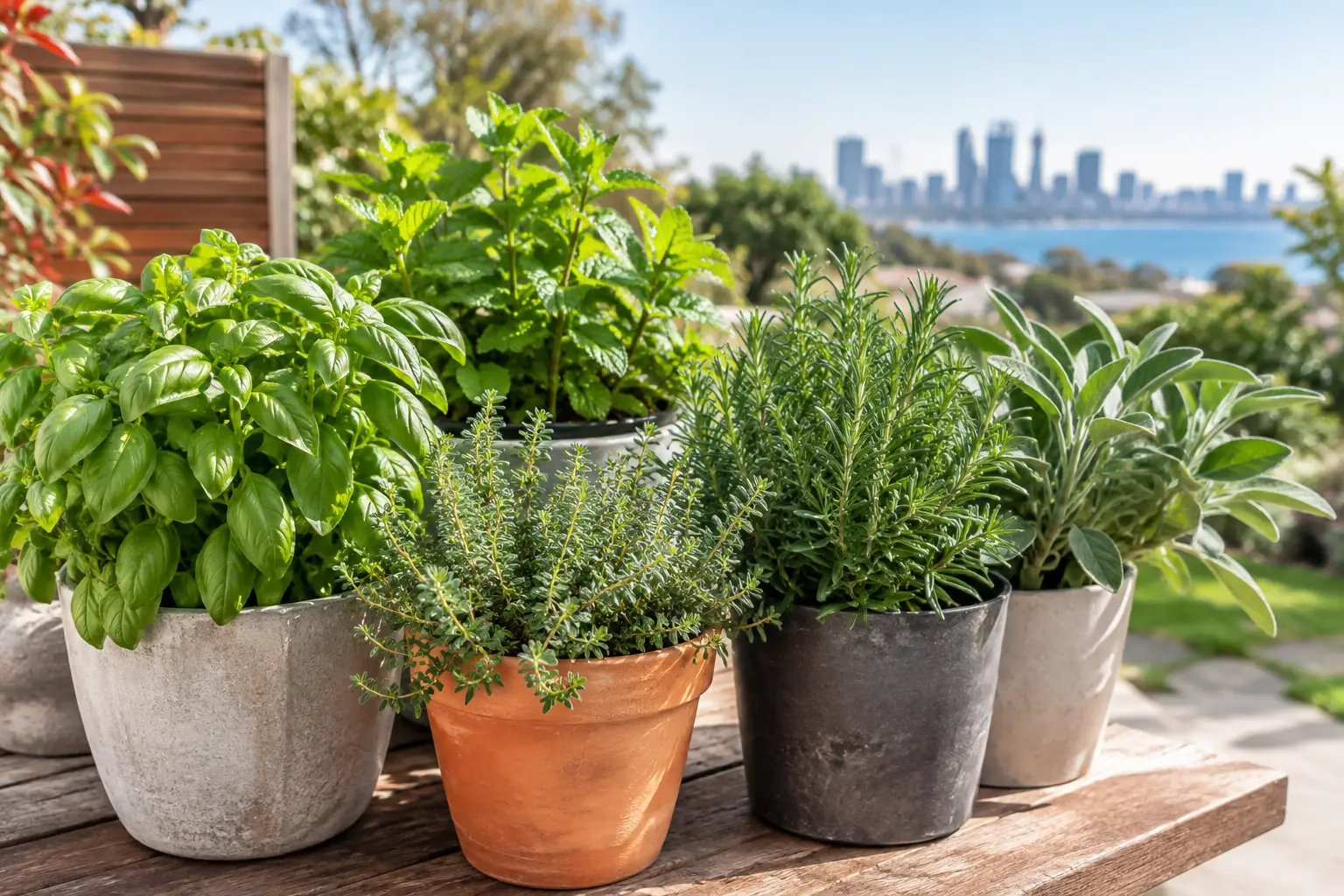
A Perth herb garden can be brilliantly productive, but it needs to cope with more than a sunny windowsill. Hot, dry summers, sandy soil, salty coastal air and wet winter spells all influence which plants keep producing and which ones give up early. The best herbs for Perth are the ones that suit your available light, watering routine and the way you actually cook.
For most gardens, start with a few reliable herbs rather than filling every pot at once. A healthy plant in the right position will give you far more than a crowded collection of herbs that all need different treatment.
The best herbs for Perth conditions
Rosemary
Rosemary is one of the easiest herbs for a sunny Perth garden. Once established, it handles dry conditions well and is a sensible choice for exposed spots, garden borders and large pots. Its woody growth also makes it useful where you want an edible plant that has some structure all year.
Give rosemary full sun and free-draining soil. The common mistake is not underwatering but planting it in a spot that stays wet through winter. If your soil is heavy or you are growing in a pot, improve drainage and avoid leaving a saucer full of water beneath it. Prune lightly after flowering or harvest regularly to keep it neat, but avoid cutting hard back into old bare wood.
Thyme
Thyme suits Perth’s dry warmth particularly well. It is compact, fragrant and ideal for a sunny pot close to the kitchen, where it is easy to snip for roast vegetables, chicken and slow-cooked meals. It also works near the edge of a raised bed, provided the soil drains freely.
Like rosemary, thyme dislikes wet feet. It needs less water than leafy herbs such as parsley and basil, especially once it has settled in. Coastal gardeners should place it where it receives plenty of sun but is not constantly blasted by strong wind. A protected patio can be a very good spot.
Oregano
Oregano is a practical choice for Perth gardens because it enjoys heat and sun once established. It is a spreading herb, so allow it room in a bed or choose a wider pot rather than a narrow one. The leaves are most flavoursome before the plant flowers heavily, although the flowers are useful for attracting beneficial insects.
Grow oregano in a sunny, open position and let the top layer of soil dry slightly between waterings. In a rich, heavily watered herb bed, it can become leafy but less strongly flavoured. It pairs well with thyme and rosemary because their basic needs are similar.
Sage
Sage brings silver-green foliage, a strong savoury flavour and good tolerance of Perth’s dry season. It is best treated as a small shrub rather than a soft leafy herb. Put it in full sun with room for air movement, especially if you are planting several herbs together.
Avoid overfeeding sage. Too much fertiliser can produce soft growth that is more likely to struggle in humid or wet weather. A light trim after flowering helps keep the plant bushy. In frost-prone inland areas around Toodyay, protect young sage plants during severe cold snaps until they are established.
Parsley
Parsley earns its place because it is useful almost every day, but it needs a little more care than the Mediterranean herbs. In Perth, it performs best with morning sun and some afternoon protection during the hottest part of summer. A spot that gets bright light without baking all day is ideal.
Keep parsley evenly moist, especially in pots. Sandy Perth soil dries quickly, so add compost before planting and mulch lightly around the plant without burying the crown. Harvest outside stems first, leaving the centre to continue growing. Parsley is usually more productive through the cooler months, although it can grow year-round with enough water and shade in summer.
Chives
Chives are an easy, tidy option for pots and smaller courtyards. Their upright leaves do not take much room, and regular cutting encourages fresh growth. They prefer more consistent moisture than rosemary or thyme, so keep them grouped with parsley rather than with the driest herbs.
Give chives sun in winter and some protection from harsh afternoon heat in summer. If the clump becomes crowded after a season or two, divide it and replant sections into fresh potting mix. This is a simple way to refresh a plant that has slowed down.
Basil
Basil is a Perth summer favourite, but it is not built for cold soil or winter rain. Plant it once the weather has warmed properly in spring, and choose a warm position with morning sun and shelter from fierce late-afternoon heat. It needs regular water, particularly in pots, but it should not sit in soggy soil.
Pinch out growing tips often and remove flower spikes if your priority is leafy harvests. In a heatwave, basil can wilt dramatically by afternoon even when it has been watered. Check the soil before adding more water, then give temporary shade if needed. Basil is generally a warm-season annual here, so expect to replace it when cooler weather arrives.
Mint
Mint is generous, useful and determined to take over if it gets the chance. For Perth gardens, it is usually best grown in its own pot. This keeps the roots contained and makes it easier to meet its preference for reliably moist soil.
Place mint where it gets morning light and protection from extreme afternoon sun. It can cope with brighter conditions if watered well, but a pot left on hot paving all day will dry out quickly. Cut it back regularly and refresh the potting mix when growth becomes tired or woody.
Coriander
Coriander is worth growing, but timing matters. It is better suited to Perth’s cooler months than the peak of summer, when heat sends it to flower quickly. Sow or buy plants from autumn through spring, give them morning sun, and keep the soil moist without overwatering.
Coriander does not always love having its roots disturbed, so choose a pot or garden position where it can stay put. Plant small batches every few weeks during the cooler season if you use it regularly. That gives you new leafy plants coming along as older ones begin to bolt.
Vietnamese mint
Vietnamese mint is a useful alternative for gardeners who want a leafy, punchy herb during warm weather. It prefers moisture and benefits from afternoon shade in Perth. Unlike common mint, it is not a true mint, but it has a similarly vigorous habit and is also best managed in a pot.
Keep it protected from cold. It may slow down considerably in winter and can be damaged by frost, so Toodyay gardeners should grow it in a movable pot or a very sheltered position.
Match herbs to your garden, not just your shopping list
A single herb bed is not always the best plan. Rosemary, thyme, oregano and sage want sun, leaner soil and less frequent watering. Parsley, chives, basil, mint and Vietnamese mint need more regular moisture. Separating these groups into different pots or parts of the garden makes watering much simpler.
Coastal Perth gardens can be warmer at night but more exposed to drying wind and salt. Use a sheltered position near a wall, fence or larger planting for tender leafy herbs. Inland gardens, including around Toodyay, can experience more intense summer heat and winter frosts. Movable pots make it easier to shift basil, Vietnamese mint and young plants out of trouble when conditions turn.
Choosing healthy herb plants
When buying herbs, look for firm stems, clean leaves and growth that is compact rather than stretched and floppy. A plant with a few roots visible at the bottom of a pot is usually fine, but avoid one that is severely root-bound or drying out repeatedly. Check for pests under leaves, particularly on soft growth.
Do not be tempted to plant a small herb straight into a huge pot full of damp mix. Oversized pots stay wet for too long, which is risky for rosemary, thyme and sage. Move up a pot size gradually, use a quality free-draining potting mix, and make sure every container has clear drainage holes.
Seasonal care for Perth herb gardens
October is a good time in Perth to prepare for the warmer months. Trim back woody herbs lightly, refresh tired potting mix where needed, and make sure irrigation reaches the root zone rather than just wetting the surface. It is also a good time to add basil as nights warm up.
Through summer, water early in the morning and mulch garden-grown herbs to slow moisture loss. Pots may need checking daily during heatwaves, especially terracotta pots and plants near brick walls or paving. In autumn, coriander and parsley become easier to grow, while basil begins to slow.
Winter is when drainage matters most. Raise pots slightly so water can escape, reduce watering when rain is regular, and do not feed herbs heavily when growth is slow. This quieter season is also a good chance to plan where you want sun-loving herbs to sit next summer.
If you are choosing herbs for a new Perth garden, start with rosemary, thyme, parsley and chives, then add basil or coriander when the season suits them. Contact Buy My Plants to ask about current herb plant availability and arrange collection or Perth delivery if available. A few well-placed herbs that you use every week will always beat a crowded pot of plants you forget to pick.