

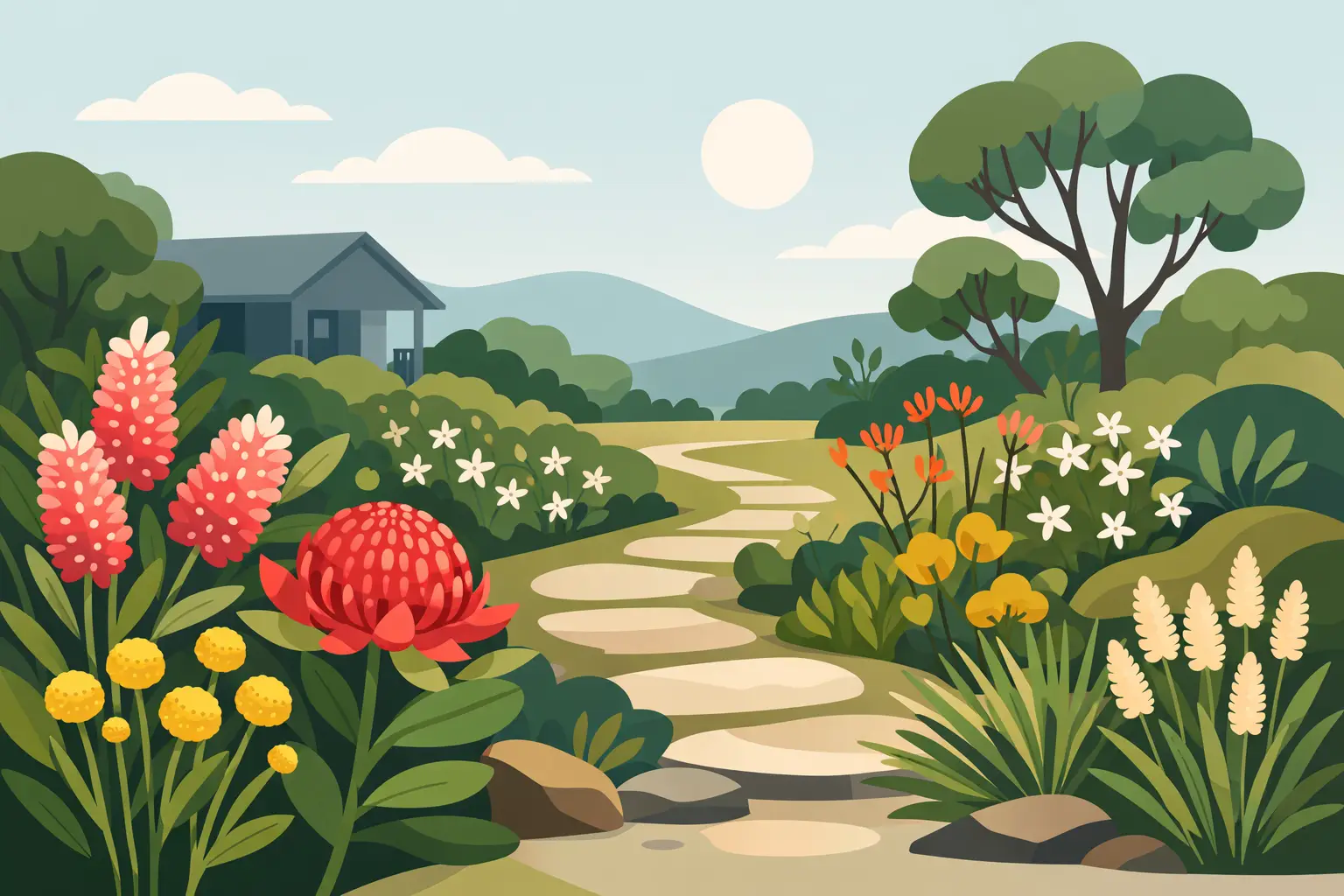
A hot western fence, a windy balcony or a bare patch beside the driveway can make plant shopping feel harder than it should. Australian native plants are often the right answer, but only when the plant suits the actual conditions at your place. “Native” does not automatically mean it will thrive in every Australian garden, nor does it mean you can plant it and forget it.
The best choice starts with your space: how much direct sun it gets, how freely the soil drains, how much room the plant has to grow and how often you genuinely want to water. Get those basics right and natives can bring colour, texture and bird-friendly planting to a backyard, courtyard, balcony or front verge without turning care into a second job.
Why Australian native plants work so well at home
Native plants offer more than a recognisably Australian look. Many cope well with intense sunshine, dry periods and variable weather once established. Their foliage can be fine and silvery, glossy and deep green, architectural or soft and grassy, so they work just as well in a neat contemporary courtyard as they do in a relaxed cottage-style garden.
Flowers are another reason to choose them. Grevilleas, bottlebrushes, correas and kangaroo paws can provide standout colour, often at times when a garden needs it most. Nectar-rich flowers may also attract local birds and insects. That is a welcome bonus, but it is not a reason to ignore placement, pruning or soil preparation.
There is a useful range of sizes too. You can buy a compact lomandra for a pot, a low-growing grevillea for a sunny bank, a screening lilly pilly for privacy or a small eucalyptus as a feature tree. The key is buying for the mature size, not the size of the pot sitting on your patio today.
Choose natives for the conditions, not the label
Australia has vastly different climates and soils. A plant native to a cool, damp part of Victoria may struggle through a humid Queensland summer. A species from sandy coastal ground may resent heavy clay in western Sydney. Ask where the plant is happiest, rather than assuming every native is tough in every situation.
Start by checking four practical details before you buy:
- Light: full sun, part shade or bright shade.
- Soil: sandy and free-draining, loamy, or heavy clay.
- Space: mature height and width, including room around paths and windows.
- Water: regular watering while establishing, then low, moderate or ongoing needs.
For a full-sun position with good drainage, kangaroo paws, many grevilleas, westringia and lomandra are reliable places to start. Kangaroo paws make a strong statement in pots and beds, though they need airflow and should not be crowded. Grevilleas range from groundcovers to shrubs, so read the expected size carefully. Westringia gives a tidy, hardy hedge-like look and responds well to light shaping.
Part-shade gardens have options as well. Correas are valued for their bell-shaped flowers and can suit sheltered positions. Native violet can soften the edge of a shaded bed or container, provided it does not dry out completely. Some lilly pillies also handle part shade, but their final size and water needs vary widely between varieties.
For exposed balconies and courtyards, low-growing grasses and compact shrubs are often easier than a thirsty feature tree. Lomandra and dianella bring movement without needing constant fuss, while a dwarf grevillea can add flowers where there is enough sun. Choose a substantial pot with drainage holes, because lightweight containers dry quickly and can blow over in a storm.
Good Australian native plants for common spaces
Small courtyards and balconies
Small spaces need plants that stay in proportion. A mass of one or two varieties often looks better and is simpler to manage than a collection of unrelated plants with completely different care needs. Compact kangaroo paw varieties, lomandra, dianella, native violet and selected small grevilleas are practical choices depending on light.
Use premium potting mix rather than garden soil in containers. Garden soil can compact, making it harder for roots to get the air and drainage they need. Raise pots slightly off the ground so excess water can escape, especially on tiled balconies where water may pool beneath them.
Sunny front gardens
A sunny front garden benefits from plants that can handle reflected heat from driveways, brickwork and fences. Westringia creates formal structure, while grevilleas and callistemons add flowers and a more relaxed look. Low mounding forms near the footpath keep sightlines clear and reduce the chance of a plant swallowing the path within a season or two.
If you are planting near a house, avoid choosing a tree simply because it looks appealing when young. Check the mature canopy, root behaviour and clearance from gutters, pipes and powerlines. A smaller grafted or naturally compact tree can be the more sensible buy.
Backyards with room to grow
Larger gardens can accommodate layered planting: groundcovers at the front, shrubs through the middle and small trees behind. This creates depth and gives wildlife more places to move and shelter. Bottlebrushes, now commonly grouped botanically with melaleucas, are popular for their flower spikes and adaptable garden presence. Lilly pillies can make effective screens, but choose a variety matched to your intended hedge height and keep an eye out for psyllid-prone foliage.
A feature gum can be beautiful, but it is a long-term decision. Consider leaf litter, shade, limbs, underground services and the amount of space it needs. In a standard suburban backyard, a compact ornamental tree is often more manageable than a large eucalyptus species.
Planting natives properly makes the difference
Even tough plants need a good start. Plant in mild weather where possible, and avoid putting new plants into very dry soil just before a run of extreme heat. Water the plant in its nursery pot first, then dig a hole roughly twice as wide as the root ball and no deeper. The top of the root ball should sit level with, or just above, the surrounding soil once backfilled.
Backfill with the existing soil unless it is severely compacted or unsuitable. The goal is to encourage roots to move out into the garden, not stay in a pocket of dramatically different material. Water deeply after planting to settle soil around the roots, then keep moisture consistent while the plant establishes.
Mulch is useful for retaining moisture and reducing weeds, but keep it clear of the stem. A small gap helps prevent moisture sitting against the base of the plant. In heavy clay, improving drainage or planting slightly raised may be more useful than adding extra fertiliser.
Feeding, watering and pruning without overdoing it
The biggest mistake with Australian natives is treating every plant the same. Many are adapted to lower-phosphorus soils and can react badly to fertilisers designed for hungry lawns, roses or exotic flowering plants. If feeding is needed, use a fertiliser labelled as suitable for native plants and follow the rate on the pack. More fertiliser is not better.
Watering also changes over time. New plants need regular attention because their roots are still close to the original root ball. Once established, many natives cope with less frequent deep watering than shallow daily splashes. However, pots dry out much faster than garden beds, and flowering plants may need extra water through hot, dry spells.
Prune lightly and at the right time for the plant. Tip pruning can help some shrubs stay bushy, while removing spent kangaroo paw flower stems keeps the plant tidy. Avoid cutting hard into old bare wood unless you know the species responds well. A few minutes spent checking the plant tag before pruning can save a favourite shrub.
Buy with the next season in mind
A plant should fit your life as much as it fits your garden. If you travel often, choose a lower-water option in the ground rather than filling a balcony with small pots. If you want privacy quickly, buy enough plants to achieve the spacing you need instead of expecting one shrub to do the work of a hedge. If you are new to gardening, begin with two or three plants that share the same light and watering needs.
At Buyy Plants, the simplest way to shop is to filter your choices through your position first, then choose the colour, form and size you like. That approach makes it easier to buy plants with confidence rather than trying to rescue a poor match later.
A well-chosen native does not need to look wild or complicated. Pick one that belongs in your particular patch of Australia, give it room to settle in, and it can make the space outside your door feel more alive every time you come home.