
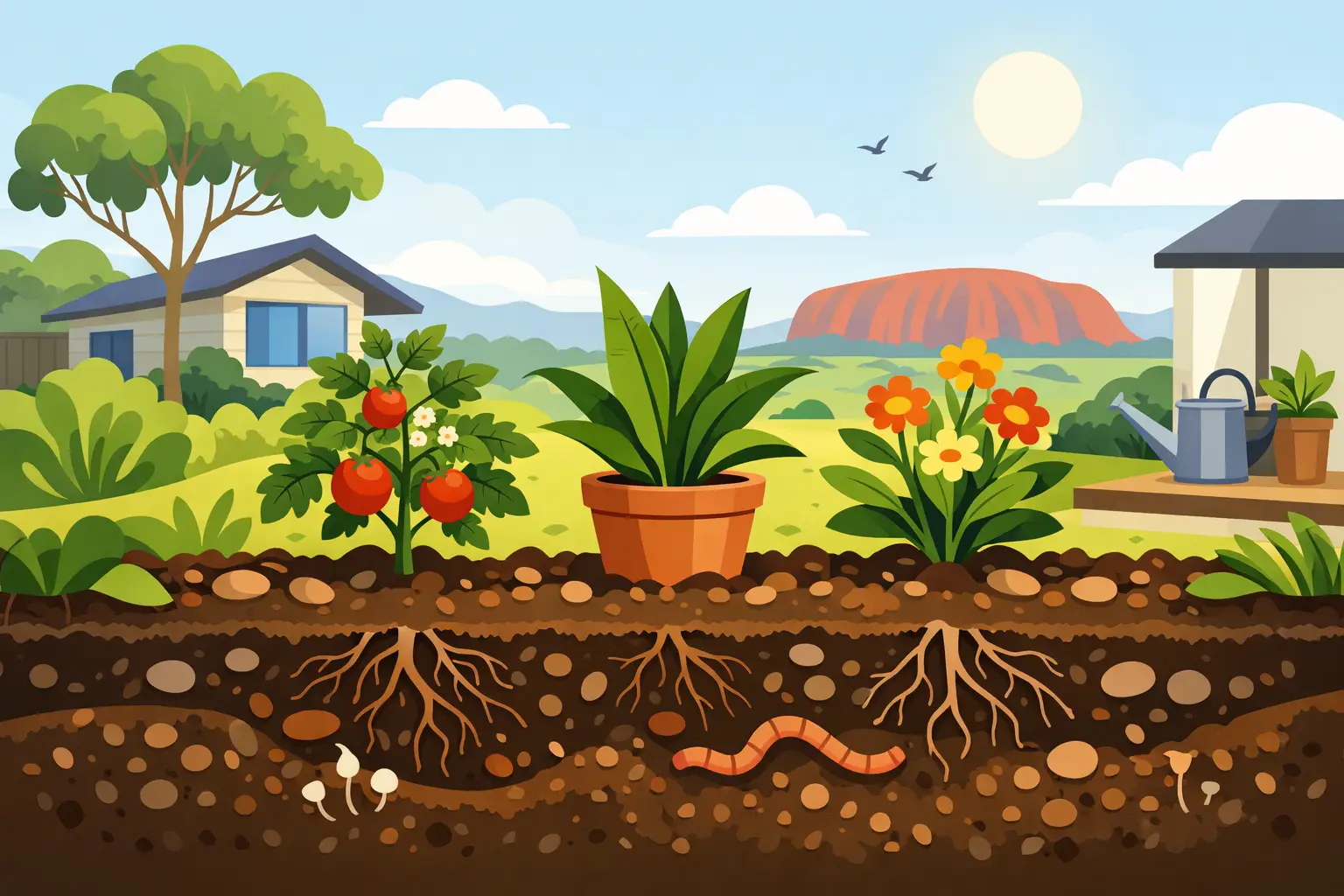
A new plant can look perfect on arrival, then stall, yellow or drop leaves a few weeks later. Often, the issue is not the plant itself. Soil health determines how well roots can access water, air and nutrients, whether you are growing a fiddle leaf fig in a bright lounge room or tomatoes in a sunny backyard bed.
Good soil is not simply dark, expensive or packed with fertiliser. It is a living, balanced growing environment. Get that right and plants establish faster, cope better with hot spells and reward you with stronger growth, better flowers and more reliable harvests.
What soil health actually means
Healthy soil has three jobs. It needs to hold enough moisture for roots without staying soggy, provide air spaces so roots can breathe, and contain nutrients in forms plants can use. It also needs organic matter and beneficial organisms, from tiny microbes to earthworms, that help break down material and keep nutrients moving through the soil.
This matters because roots do far more than anchor a plant in place. Roots take up water and minerals, communicate with soil microbes and respond quickly when conditions are too wet, compacted, dry or salty. A healthy-looking top layer can still hide a hard, waterlogged or nutrient-poor root zone below.
Australian gardens make this especially relevant. Many suburban soils are sandy and quick-draining, while others are heavy clay that can set hard in summer and become sticky in winter. New estates may have compacted fill rather than true topsoil. Potting mix has its own limits too: after repeated watering, it breaks down, compacts and loses its ability to hold both air and moisture.
Start with the soil you have
Before buying bags of amendments, work out what you are dealing with. Pick up a handful after watering. Sandy soil feels gritty and falls apart easily. Clay-rich soil feels smooth or sticky and can be rolled into a rough ribbon. Loam sits in the useful middle ground, holding together lightly while still crumbling apart.
Drainage is the next check. Water a patch of garden soil deeply and watch what happens. If water disappears almost immediately, the bed may need more organic matter to retain moisture. If puddles remain for hours or the ground smells sour, drainage and compaction are likely the bigger problem.
For potted plants, inspect the mix rather than the garden. Water that rushes straight down the side of the pot can mean dry, water-repellent mix. Water sitting on top for too long can mean the mix has collapsed or the drainage holes are blocked. Neither problem is fixed by adding more fertiliser.
Build soil health with organic matter
Organic matter is the practical starting point for most home gardens. Compost, aged animal manure, leaf litter and well-rotted plant material improve the structure of sandy and clay soils in different ways. In sand, they help hold moisture and nutrients. In clay, they create more pore space so water and air can move through.
Spread compost or aged manure over a garden bed, then gently work it through the upper layer before planting. You do not need to turn the whole bed upside down every season. Heavy digging can damage soil structure and disturb the organisms doing useful work below ground. A light fork-through, followed by a mulch layer, is usually enough for established beds.
Fresh manure is a different story. It can be too strong for tender roots and may contain weed seeds. Use properly aged products, follow the label directions and keep rich amendments away from the stems of newly planted shrubs, natives and indoor plants.
Compost is valuable, but it is not a complete answer for every situation. It improves the soil over time, while a nutrient-hungry vegetable crop may also need a suitable fertiliser. Think of compost as building the pantry and fertiliser as topping up specific ingredients.
Mulch does more than make a bed look tidy
A 5 to 8 cm layer of mulch helps keep soil temperatures steadier, slows evaporation and reduces weed competition. That is a major advantage through Australian summers, particularly for young plants that have not developed deep roots yet.
Keep mulch a few centimetres clear of stems and trunks. Piling it against the base of a plant can trap moisture where it should not be and encourage rot or pest problems. Organic mulches such as bark, straw, leaves and sugarcane mulch gradually break down and contribute to the soil beneath them. The trade-off is that they need topping up as they decompose or blow away.
Feed plants without overfeeding them
More fertiliser does not automatically mean better growth. Overfeeding can scorch roots, encourage soft leafy growth that attracts pests, and allow nutrients to wash out of the pot or garden bed. It can also be a poor fit for many Australian native plants, particularly species sensitive to high phosphorus.
Choose fertiliser according to the plant and where it is growing. A flowering annual, citrus tree, lawn and native shrub have different needs. Slow-release fertiliser is convenient for many pots and garden beds because it supplies nutrients gradually. Liquid feeds are useful for a quick boost, but they are not a substitute for a good potting mix or healthy garden soil.
Always apply fertiliser to damp soil and water it in as directed. Never fertilise a plant that is badly wilted, heat-stressed or sitting in waterlogged soil. Solve the moisture issue first, then feed when roots are active again.
Soil health in pots needs a different approach
Pots are small, controlled ecosystems. They have limited room for roots, limited nutrients and no natural access to deeper soil moisture. Even the best premium potting mix will not last forever.
Use a quality potting mix made for containers, not soil dug from the backyard. Garden soil becomes dense in pots and often drains poorly. Match the mix to the plant where possible: orchids, succulents and cacti need a more open, fast-draining blend than moisture-loving indoor foliage plants.
Repot when roots are circling heavily, water behaviour has changed, or the plant dries out far faster than it used to. Usually, moving up one pot size is enough. A huge pot full of wet mix around a small root ball can stay damp for too long and increase the risk of root rot.
Refresh the top few centimetres of mix for larger containers that are hard to repot. Remove the old surface layer carefully, add fresh potting mix and resume a sensible feeding routine during the active growing season. For many indoor plants, that is spring through early autumn, though light and indoor temperatures matter more than a strict calendar.
Protect the life below the surface
Earthworms, fungi, bacteria and other tiny organisms are not something you need to manage individually. They thrive when you give them organic matter, avoid unnecessary chemical use and keep soil covered where possible.
Try not to walk repeatedly on garden beds. Compacted soil has fewer air spaces, making it harder for water to soak in and for roots to spread. If a bed is wide, add stepping stones or create access from both sides rather than standing in the growing area.
Avoid leaving bare soil exposed for long periods. Mulch, low-growing plants or a seasonal green manure crop can protect it from pounding rain, harsh sun and erosion. In a small home garden, even planting a quick crop of herbs, lettuce or beans between larger plants can keep the bed working rather than sitting empty.
Signs your plants are asking for a soil check
Yellow leaves, slow growth and wilting are not always caused by lack of water. Check the soil before reaching for the hose or fertiliser. Constantly wet mix, a sour smell, pale growth despite regular feeding, surface crusting and water that will not soak in all point to a root-zone problem.
Look at the whole plant and its conditions. A plant in a dim corner may not use water quickly, while the same plant near a hot west-facing window may dry out rapidly. Soil health works alongside light, pot size, plant choice and watering habits. It is not a magic fix for a plant growing in the wrong spot.
When choosing new plants, give their roots a head start. Select varieties suited to your light, space and local conditions, prepare the soil before planting, then mulch and water deeply while they establish. At Buy My Plants, the easiest wins usually come from matching the plant to the spot and giving it a healthy base from day one.
Healthy soil is built through small, repeatable habits rather than one big weekend project. Add organic matter, keep beds covered, water with purpose and pay attention to what happens below the surface. Your plants will give you the evidence soon enough – stronger roots, steadier growth and a garden that is easier to enjoy.