
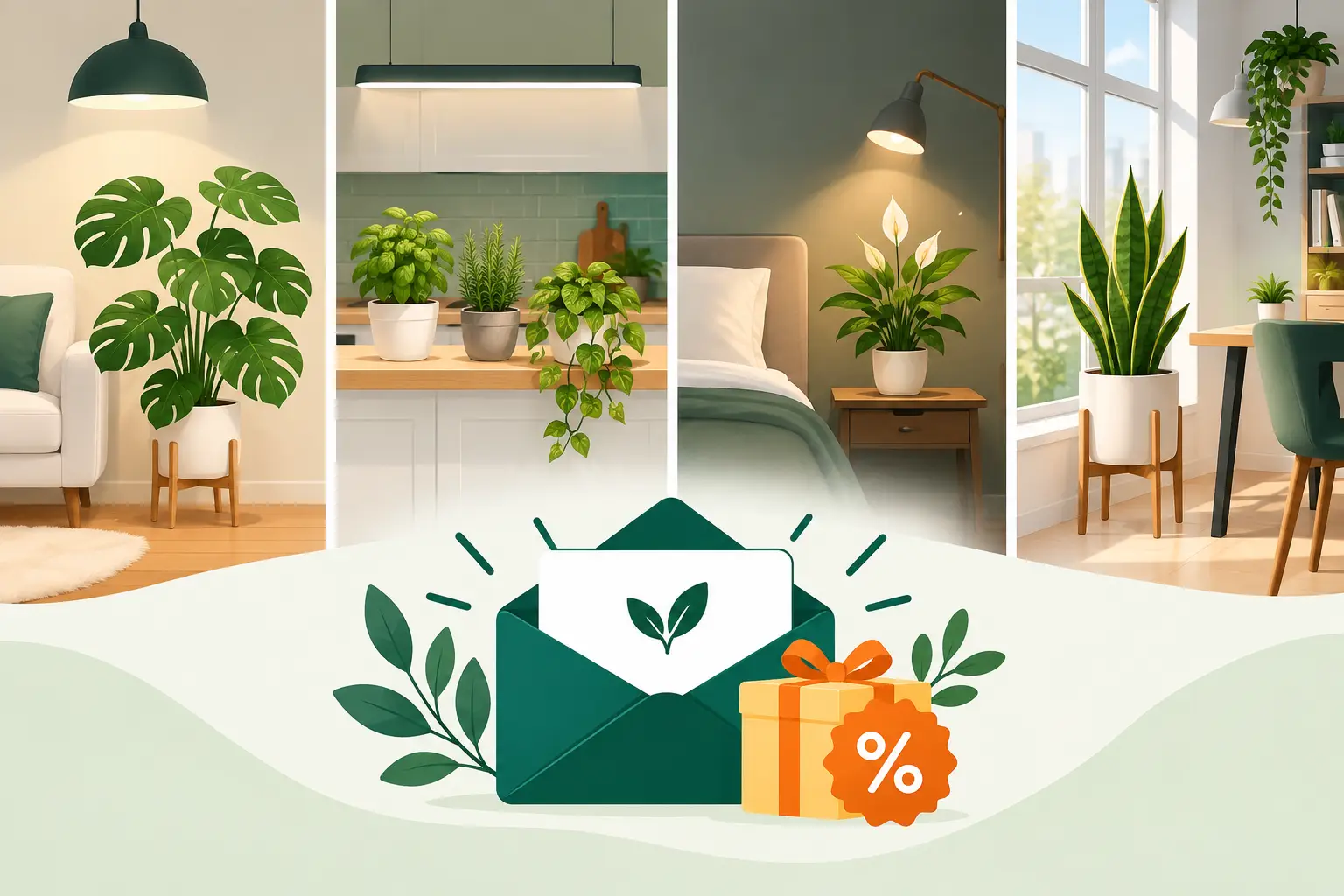
A bright-looking room is not always a bright room for a plant. A lounge can feel full of daylight while the spot beside the TV receives very little usable light, especially once the sun moves across the house. This guide to indoor plant lighting helps you choose plants for the position you actually have, rather than buying for a perfect window that does not exist.
Getting the light right is one of the quickest ways to make indoor plants feel easy. It affects growth, leaf colour, watering needs and whether a new plant settles in or slowly declines. Before adding another pot to your cart, take a proper look at the window, the direction it faces and where the plant will sit.
Start with the light in your home
Plant labels often use terms such as bright indirect light, medium light and low light. They are useful, but they can feel vague until you see how they work in a real home. Think less about the room name and more about the exact position. A plant on a table directly beside a large window gets a completely different amount of light from one three metres away on a shelf.
Bright indirect light is strong daylight without harsh sun hitting the foliage for hours. It is the sweet spot for many popular indoor plants, including monsteras, philodendrons, fiddle leaf figs, rubber plants, peace lilies and hoyas. A sheer curtain, a covered patio outside the window or a position just back from the glass can create this condition.
Medium light means the room is naturally lit for much of the day, but the plant is not close to the window or does not receive intense sun. ZZ plants, snake plants, aglaonemas, dracaenas and many pothos varieties are practical choices here. They will generally grow more slowly than they would in brighter conditions, but can still look excellent.
Low light does not mean no light. Every plant needs light to stay alive. It usually means a position well away from direct sun, such as a bright hallway, office corner or bathroom with a modest window. Choose genuinely tolerant plants for these spots and keep expectations realistic. A low-light plant will survive and hold its shape, but it may not put out lots of new growth.
How window direction changes indoor plant lighting
In Perth and across Australia, window direction matters because we are in the Southern Hemisphere. If you are working out where to put a new plant, this is a far more useful starting point than guessing from a room photo.
North-facing windows
North-facing windows usually deliver the strongest and most consistent light. They suit sun-loving indoor plants, but direct summer sun can still scorch leaves through glass. Succulents, cacti, bird of paradise, ponytail palms and many ficus plants can work well close to these windows. For foliage plants that prefer indirect light, move them back from the glass or soften the sun with a sheer blind.
East-facing windows
East-facing windows offer gentler morning sun and are often one of the easiest places for indoor plants. The light is bright enough for a wide range of foliage plants, but less punishing than hot afternoon exposure. Calatheas, prayer plants, philodendrons and peace lilies often appreciate this position, provided they are not pressed against cold glass in winter.
West-facing windows
West-facing windows can be brilliant in winter and fierce in summer. The afternoon sun is hot, particularly in Perth homes, and leaves can burn quickly behind glass. Hardy, sun-tolerant plants may cope near the window, while softer-leaved plants are safer a metre or two back, behind a curtain or in a neighbouring bright position.
South-facing windows
South-facing windows tend to receive the least direct sun, making them suitable for low- to medium-light plants. This is where snake plants, ZZ plants, cast iron plants and aglaonemas earn their reputation as easy indoor options. Do not assume every south-facing room is dim, though. A large unobstructed window can still provide plenty of ambient daylight.
Read the signs your plant is giving you
Plants are honest about poor placement, but their signals can be confused with watering problems. Look at the pattern rather than reacting to one yellow leaf.
A plant stretching towards the window, developing long gaps between leaves or producing smaller new leaves usually needs more light. Variegated plants may lose some of their cream, pink or white pattern in dim conditions because they need stronger light to maintain it. Slow-drying soil is another clue. When light is low, plants use less water, so a pot that stays wet for ages can lead to root problems.
Too much light looks different. Bleached patches, papery brown areas and sudden curling on the window-facing side can point to sun scorch. This is common when a nursery-grown plant is moved straight into direct sun without time to adjust. Move it out of the harshest rays, remove only badly damaged leaves and let new growth show you whether the position is working.
Yellow leaves are less clear-cut. They can come from ageing, overwatering, underwatering, poor drainage or low light. Check the soil before changing anything. If it is consistently wet and the plant is in a dark corner, better light and less frequent watering may solve both issues.
Match the plant to the spot before you buy
The simplest way to build a successful indoor collection is to buy for your existing conditions. A statement plant is only a good buy if it can live where you want to display it.
For bright rooms, consider monsteras, rubber plants, bird of paradise, fiddle leaf figs, ficus, hoyas and string-of-things plants. These options reward decent light with fuller growth and larger leaves. They are ideal near windows, in open-plan living areas and beside bright sliding doors, as long as intense direct sun is managed.
For medium-light homes, pothos, heartleaf philodendrons, dracaenas, parlour palms, peace lilies and many indoor palms offer a good balance of impact and flexibility. They suit apartments and rentals where the best light may be limited to one or two windows.
For lower-light positions, choose snake plants, ZZ plants, aglaonemas, cast iron plants and some dracaenas. They are sensible choices for offices, entryways and bedrooms that do not receive direct sun. A plant marketed as low-light tolerant still deserves the brightest place available within that category.
Be cautious with plants chosen mainly for their colour. Calatheas, colourful aglaonemas and variegated monsteras can be beautiful purchases, but they tend to be less forgiving of a dark room. Their care is not necessarily difficult, but the right light matters more than it does for a plain green ZZ plant.
Use grow lights when natural light falls short
A grow light is useful when your preferred plant position is too far from a window, when winter light drops off or when your home has limited natural daylight. It is not only for serious collectors. A small full-spectrum LED light can make a desk plant, bathroom shelf or shaded apartment corner much more workable.
Choose a full-spectrum LED designed for plant growth, rather than relying on an ordinary lamp. Place it above or in front of the plant, following the product guidance for distance. Too far away and it will have little effect. Too close and sensitive leaves can become stressed. Most indoor plants respond well to a consistent daily schedule of roughly 10 to 12 hours, ideally managed with a timer.
Grow lights add another consideration: watering. A plant receiving more light will often use water faster, so check the potting mix rather than sticking to a fixed weekly routine. Keep the light clean as well. Dust reduces output, just as dust on leaves reduces the light a plant can use.
Make small adjustments before replacing a plant
You do not always need to give up on a plant that looks unhappy. Moving it closer to a window, rotating it every week or two, opening blinds earlier or using a sheer curtain can make a meaningful difference. Rotation is especially useful for plants that lean, but do not turn a plant so often that one side never has time to adapt.
Seasonal changes count too. A spot that is safe in winter may become too hot in summer, while a winter position near a west-facing window might be perfect for a sun-loving plant. Watch conditions through the year, particularly during Perth heatwaves, and move pots before leaves start to burn.
The best indoor plant setup is not the one that looks most impressive online. It is the one that matches your windows, your routine and the amount of care you genuinely want to give. Choose for the spot first, then enjoy finding the plant that makes it feel like home.