
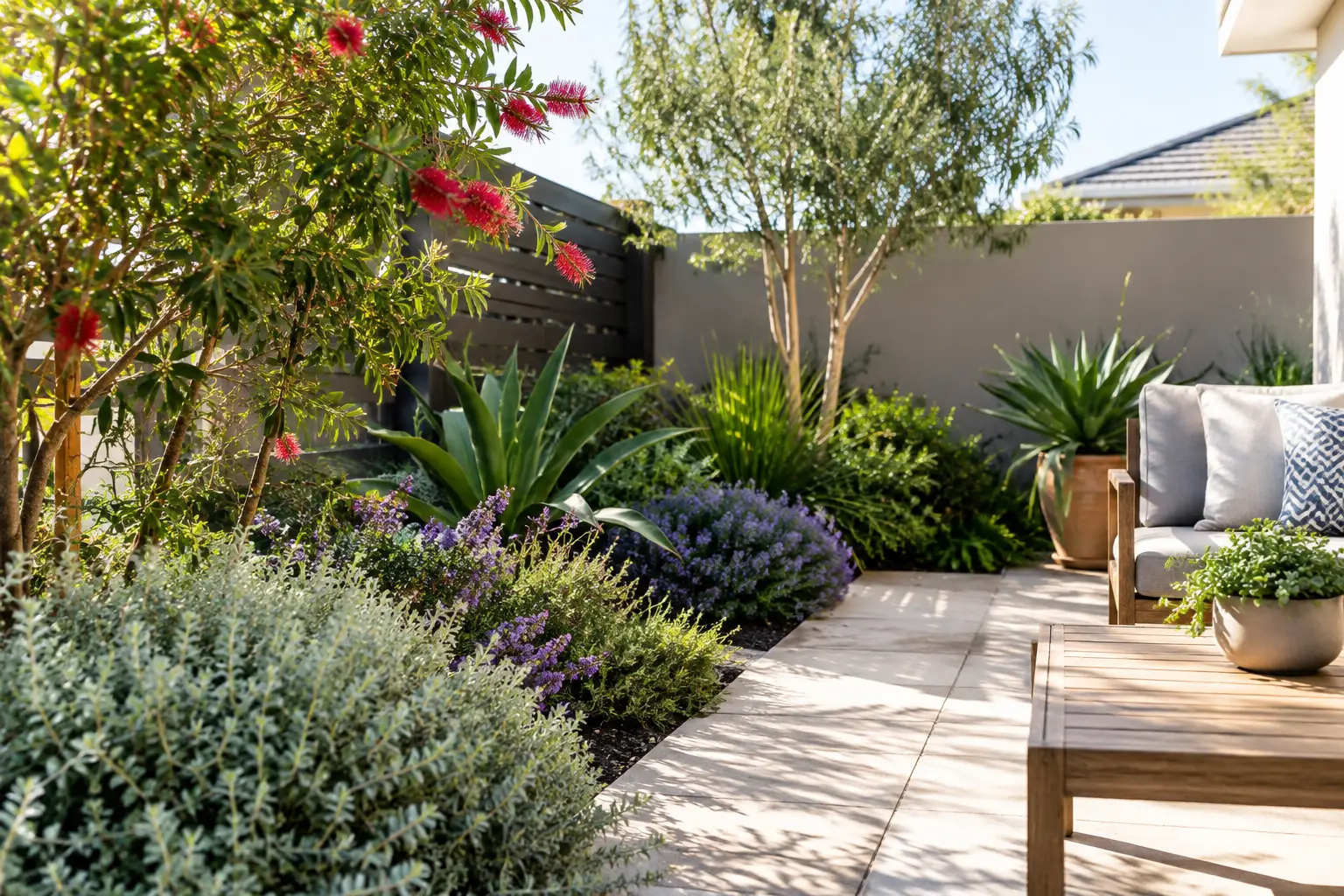
A courtyard can be one of the hardest places to plant well. It may be small, paved, hot by mid-afternoon and exposed to drying winds, yet it is also the part of the home you see most often. The right courtyard plants turn that tough space into a green, useful area without creating a high-maintenance job every weekend.
For Perth homes, plant choice comes down to more than whether something looks good at the nursery. Check how much direct sun the courtyard receives, where reflected heat lands, whether pots can be watered easily and how much room mature plants will need. Get those basics right and even a narrow paved space can support screening, flowers, foliage and a few edible favourites.
Start with your courtyard conditions
Before buying, spend a day noticing the space. A north or west-facing courtyard can receive fierce summer sun, especially beside light-coloured walls, glass fencing and paving. Plants in this position need to cope with heat and regular watering in their first growing season. A shaded courtyard, on the other hand, may be cooler but can hold dampness longer and limit flowering.
Look up as well as out. High walls can create welcome shelter, but they also reduce airflow. This matters when choosing dense hedging plants or placing pots close together. Leave enough space for air to move between plants, particularly if the area receives little morning sun.
The growing medium matters just as much. Most courtyard gardens rely on pots, raised beds or narrow planting strips. Garden soil in a small enclosed area can become compacted, while potting mix eventually breaks down and holds less water. Use a quality potting mix for containers, make sure every pot has clear drainage holes, and choose large pots where possible. Larger volumes of mix stay cooler and dry out more slowly than small decorative pots.
Best courtyard plants for sun and heat
A bright courtyard does not need to look sparse. The key is choosing plants that can take Perth summers without needing constant rescue watering. Many Australian natives, hardy flowering shrubs and succulents suit this job well.
For a low, tidy look, succulents are a practical choice. Their fleshy leaves store water, making them useful around sunny edges, steps and feature pots. They work best with sharp drainage and should not sit in saucers full of water. Mix different leaf shapes and tones rather than relying on one plant repeated everywhere.
Flowering shrubs can bring stronger colour and more structure. Compact bottlebrush varieties, grevilleas and westringia are worth considering for full sun, provided the variety selected suits the available space. Native plants generally prefer a free-draining mix and should not be overfed with high-phosphorus fertilisers. Ask for a suitable native fertiliser if you are planting Australian natives in pots.
If you want a softer, Mediterranean-style feel, rosemary and lavender can suit a sunny courtyard too. They need sun and drainage more than they need fussing. Avoid planting them in a dark corner or a pot that stays wet after watering, as this is where they often struggle.
A useful sunny courtyard planting can combine a taller screening shrub at the back, flowering plants through the middle and lower succulents along the front. That layered approach gives the area depth without making it feel crowded.
Plants for shade and sheltered courtyards
Courtyards with filtered light, morning sun or bright shade need plants chosen for foliage rather than nonstop flowers. Leaf shape, texture and green tones become the main feature, which can make a compact space feel calmer and more established.
For sheltered outdoor positions, consider shade-tolerant foliage plants that are suited to protected conditions. Some plants sold as indoor plants can work outside in a covered courtyard, but only if they are protected from harsh afternoon sun, cold winter winds and heavy rain. The label matters here. A plant that is happy near a bright window may scorch quickly in an exposed outdoor spot.
Clumping plants can be especially effective in narrow beds because they create a full look without spreading aggressively. Choose varieties based on mature width, not just their current pot size. A small plant can be tempting when you are filling gaps, but overcrowding leads to poor airflow, uneven growth and more maintenance later.
For a courtyard that gets little direct sunlight, keep the colour palette simple and use pots of different heights to add interest. One tall plant, several medium leafy plants and a few trailing plants can create more impact than trying to squeeze in a large collection.
Use screening plants without losing the space
Privacy is one of the most common reasons people buy courtyard plants. A living screen can soften a boundary fence, block a direct view from a neighbouring window or create separation around an outdoor dining area. It can also become oversized if the wrong plant is chosen.
Start by deciding whether you need height, width or both. For a narrow side courtyard, an upright plant is usually a better fit than a broad shrub that pushes into the walkway. If the screen only needs to cover one sightline, use a few well-positioned pots rather than planting an entire boundary.
Climbers are useful where floor space is limited. A grape vine can be a rewarding option for a sunny courtyard with a sturdy pergola or trellis, giving summer shade and edible fruit when conditions are right. It does need winter pruning, structural support and good sun, so it is not the no-work option. In a very small courtyard, a climber trained neatly along one wall can make more sense than a large tree in a pot.
Evergreen shrubs give more consistent cover, while deciduous vines allow winter light through. Neither is automatically better. The best choice depends on whether privacy is needed year-round and how much sun you want the courtyard to receive in cooler months.
Add edible plants where they will earn their place
Edible courtyard plants should be chosen with the same practical thinking as ornamentals. Pick plants you will actually use, then give them enough sun, root room and access to water. A productive plant tucked into a forgotten corner rarely performs as well as one placed near the kitchen or outdoor seating area.
Citrus can grow in large pots in a sunny, sheltered courtyard, but they need regular watering, feeding and room for their roots. Choose a suitably compact variety where space is tight, and do not expect a small pot to support a heavy, healthy tree long term. A large container also helps prevent the tree from drying out too quickly during hot weather.
Herbs are ideal close to the door, particularly rosemary, thyme and other sun-loving choices. Leafy herbs may need more protection from hot afternoon sun. If you are adding a grape vine, allow for its seasonal growth and pruning before committing to the position. Fruit trees and vines can be excellent courtyard plants, but they should be bought for the available conditions, not just the hoped-for harvest.
Make pots easier to manage
Container gardening is often the smartest way to plant a courtyard because pots can be moved, grouped and changed as the space evolves. The trade-off is that pots heat up and dry out faster than garden beds. Terracotta looks great but can lose moisture quickly, while glazed and lightweight pots often hold moisture for longer. Choose what suits your watering routine, not just the look.
To keep container plants performing through a Perth summer:
- Use the biggest practical pot for shrubs, fruit trees and screening plants.
- Place saucers carefully, as permanently wet roots can cause problems after winter rain.
- Water deeply at the root zone rather than giving a quick surface sprinkle.
- Apply mulch across exposed potting mix, keeping it clear of stems and trunks.
- Group plants with similar sun and watering needs together.
A simple drip system can make a major difference for courtyards with many pots. It will not replace checking the plants, particularly during heatwaves, but it makes consistent watering far more realistic.
Buy for the finished courtyard, not the empty pot
The best courtyard is not packed with plants on day one. Leave room for plants to grow, for people to move through the area and for you to reach pots with a hose or watering can. A few healthy plants in the right positions will look better than dozens of mismatched plants struggling for space.
When selecting plants, take a photo of the courtyard and note its sun direction, approximate dimensions and whether you are planting into beds or pots. That makes it easier to choose plant types with the right mature size and care needs. Buy My Plants can help Perth gardeners narrow down suitable options for sunny courtyards, shaded corners, edible pots and privacy planting.
Start with the plant that solves the biggest problem – shade, screening, colour or food – then build around it. That is how a courtyard becomes a space you want to use, not another part of the garden that needs fixing.