
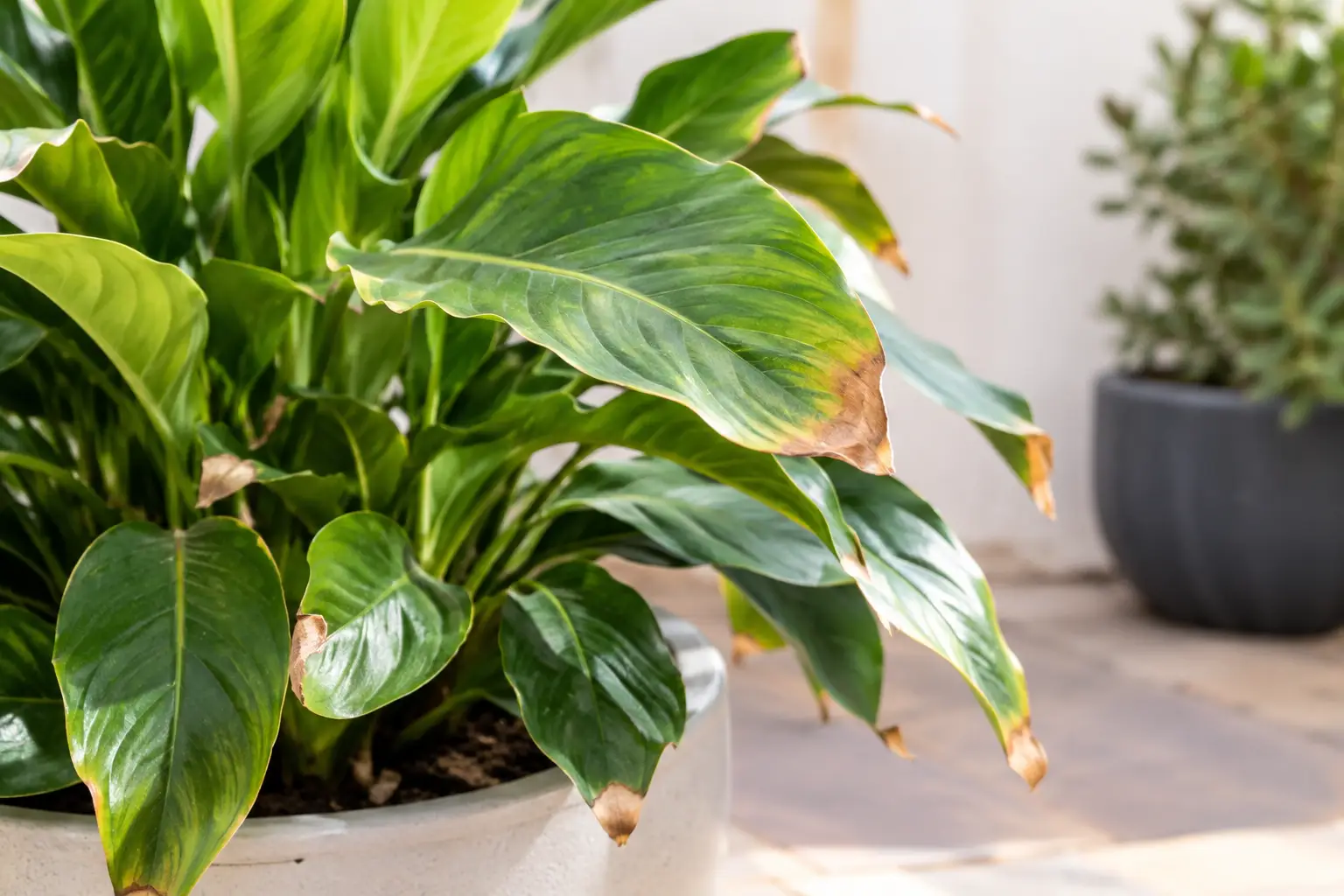
A plant can look healthy at a glance, then give itself away with dry, brown points on otherwise green leaves. If you are asking what causes brown leaf tips, the answer is usually not one dramatic disease or disaster. It is more often a plant responding to stress around its roots, its water supply or the conditions around its foliage.
In Perth, brown tips are especially common after hot, dry weather, when indoor air conditioning is working hard, or when pot plants have been watered with a little too much enthusiasm. The useful clue is that the damage starts at the leaf tip and edge. That is where a plant often shows trouble first.
The browned tissue will not turn green again, but new growth can be healthy once the underlying issue is corrected. The goal is to read the pattern, make one or two sensible changes, and avoid turning plant care into a daily guessing game.
What causes brown leaf tips most often?
The most common causes are inconsistent watering, dry air and hot conditions, fertiliser or mineral salt build-up, poor root health, and unsuitable light or wind exposure. Several of these can happen at once. A plant left too dry in a warm, bright spot may also have roots struggling in an old, compacted potting mix.
Before changing everything, look at the plant’s position, feel the potting mix and inspect the pot. A quick diagnosis is generally more useful than adding fertiliser, moving it twice, and watering again all in one afternoon.
The potting mix is drying out too much
Underwatering is a very common reason for crisp brown tips. When roots cannot access enough moisture, the plant protects its central growth first and older leaf tips may dry out. This is often most obvious on peace lilies, calatheas, palms, dracaenas and other leafy indoor plants, but it also occurs in outdoor pots that dry rapidly in summer.
Check the mix a few centimetres below the surface rather than judging by the top alone. If it is dry through the pot, water slowly and thoroughly until water runs from the drainage holes. Let the excess drain away rather than leaving the pot sitting in a saucer of water.
A plant that has gone bone dry repeatedly may shed leaves as well as develop brown tips. In this case, a regular watering routine matters more than one huge soak followed by another long dry spell.
Watering too often can look surprisingly similar
Brown tips do not always mean a thirsty plant. Constantly wet potting mix deprives roots of air, leading to root stress or rot. Damaged roots cannot take up water properly, so leaves can brown at the tips even while the mix feels wet.
Signs of overwatering include yellowing lower leaves, a sour smell from the pot, soft stems, or mix that remains damp for many days. Make sure the pot has proper drainage and is not inside a decorative cover pot holding water at the base. For indoor plants, wait until the upper layer of mix has dried to the depth appropriate for that plant before watering again.
There is no universal schedule. A plant in a small pot near a sunny Perth window can need water far more often than the same plant in a larger pot away from direct light.
Perth heat, sun and dry air can brown leaf edges
Perth summers place real pressure on plants in pots. Hot easterly winds, reflected heat from paving and afternoon sun can pull moisture from leaves faster than roots can replace it. Brown, papery tips on outdoor plants are common after a heatwave, particularly where pots are undersized or positioned against a warm wall.
Move vulnerable plants out of harsh afternoon sun where possible. Morning sun is gentler, while bright filtered light suits many popular indoor plants. Outdoors, grouping pots together and mulching the surface of larger containers can help slow moisture loss. Do not place a heat-stressed plant straight into deep shade if it normally needs sun – adjust its position gradually.
Indoor plants can also suffer from very dry air. Air conditioning and heaters reduce humidity around foliage, and plants with thin or broad leaves may show it at their tips. Keep plants away from direct blasts of conditioned air. Grouping plants can create a slightly gentler pocket of humidity, although it will not replace correct watering and light.
Misting is not a reliable cure for brown tips. The effect is brief, and constantly wet foliage can encourage leaf problems in poorly ventilated areas. Focus on root moisture, plant placement and an appropriate potting mix first.
Coastal Perth and inland conditions differ
Coastal gardens may have milder temperatures but stronger wind and salt exposure, especially in exposed locations. Inland areas can experience more extreme summer heat and, around Toodyay, colder winter nights and frost risk. A brown-tipped plant near the coast may be drying from wind, while one inland may have been scorched by heat or damaged by a cold snap.
This matters when buying plants for a particular spot. Tell the nursery whether the plant is for an enclosed patio, a windy balcony, a sunny courtyard or an inland property. The right plant for the position is easier to keep looking good than a plant that needs constant rescue work.
Fertiliser and tap-water salts build up in pots
White crust on the rim of a pot, on the surface of the mix or around drainage holes can point to mineral salt build-up. This may come from fertiliser, some water supplies, or both. As moisture evaporates, salts remain in the potting mix. High concentrations can burn fine roots, causing brown tips and edges.
Overfeeding is often the culprit. More fertiliser does not mean faster, greener growth. Apply a suitable fertiliser at the labelled rate during active growth, and do not fertilise a plant that is badly dry, heat-stressed or newly repotted. Give it time to settle first.
To flush a potted plant, water it thoroughly with clean water and allow plenty to run through the drainage holes. Repeat only if the pot drains freely. If the mix is old, compacted or water sits on the surface, repotting into a fresh quality mix may be the better option.
Sensitive indoor plants can react to accumulated salts sooner than tougher outdoor shrubs. If brown tips persist despite sensible watering, review how often you fertilise and whether the pot has enough drainage.
Root problems and pot size need a closer look
Roots are the engine room of a plant. If they are tightly circling inside a pot, sitting in soggy mix or packed into degraded potting media, water management becomes difficult. The plant may dry out very quickly after watering, or remain wet in the centre while the surface looks dry.
Slide the root ball out gently if you suspect a problem. Healthy roots are generally firm and pale or naturally coloured for the plant. Black, mushy roots suggest rot, while a dense mass of circling roots indicates the plant may need a larger pot. Choose a pot only one size up, with drainage holes. A huge pot full of wet mix can create a new overwatering problem.
For outdoor containers, use a potting mix designed for containers rather than ordinary garden soil. Garden soil compacts in pots and does not drain or aerate reliably.
How to tell brown tips from other leaf damage
Brown tips caused by water stress are usually dry and crisp, sometimes with a narrow yellow band before the brown tissue. Sun scorch often appears as larger bleached or tan patches on the leaves most exposed to direct sun. Cold damage can make leaves look dark, water-soaked or limp before they dry.
Pests are another possibility, though they more often cause stippling, webbing, distorted new growth or sticky residue rather than neat brown tips alone. Check undersides of leaves for mites, scale or other insects, particularly on indoor plants kept in dry conditions.
If only one or two older leaves have brown tips and the rest of the plant is growing well, do not panic. Leaves age, and a small amount of cosmetic damage is normal. If every new leaf is emerging brown, pale or distorted, the issue is ongoing and needs attention.
What to do with brown leaf tips
You can trim off dry brown ends with clean, sharp scissors for a tidier look. Follow the natural shape of the leaf and leave a very fine brown margin rather than cutting into healthy green tissue. Clean the blades between plants if disease is suspected.
Then make the correction that matches the likely cause: water deeply when the mix has dried sufficiently, improve drainage if the pot stays wet, move the plant away from hot afternoon sun or air-conditioning drafts, and ease back on fertiliser if salts may be accumulating. Give the plant several weeks to respond. Existing damaged leaves will not repair, so watch the new growth.
When choosing a new plant, match it to the light, wind and watering routine you can realistically provide. If you are unsure what will suit your Perth spot, contact Buy My Plants to confirm current availability and arrange collection or local delivery if available. A well-chosen plant should be enjoyable to grow, not another thing asking for emergency attention every Sunday.