
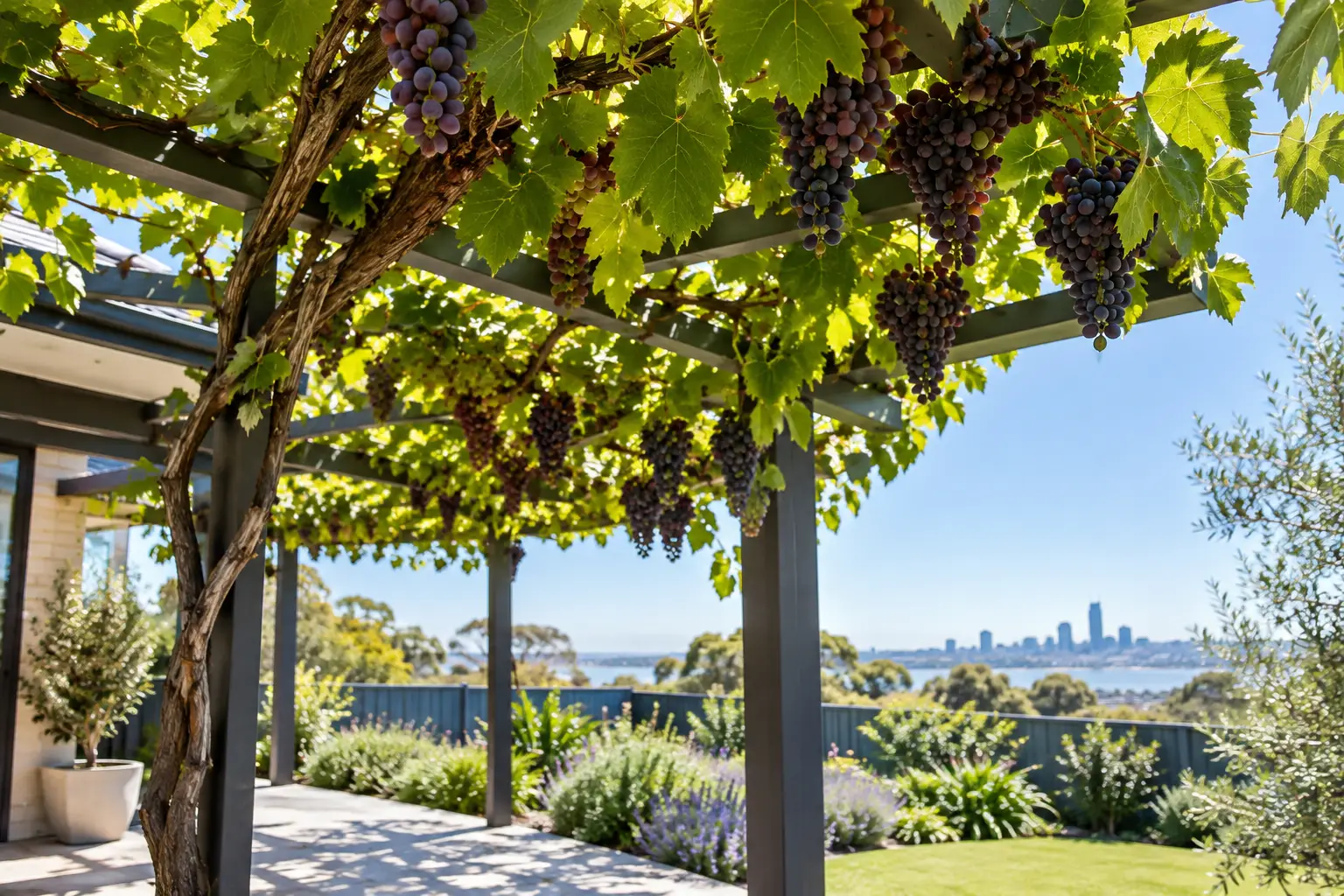
A bare pergola can look like a big job waiting to happen. A grape vine is one of the best ways to turn it into useful summer shade, but it needs direction from the start. To train grape vines on pergolas successfully, build a strong frame, choose a sensible route for the main boot, and keep young growth tied in before it tangles itself into a knot.
For Perth gardens, a pergola-trained vine can suit courtyards, patios and sunny backyards well. Deciduous grape vines leaf up for shade through the hot months, then drop their leaves in winter to let welcome sunlight back through. The trade-off is that a productive vine needs annual pruning and a structure capable of carrying substantial woody growth.
Start with a pergola that can carry a mature vine
Grape vines become heavier than many people expect. Their long canes, dense summer canopy and crop of fruit put real weight on the frame. A light decorative trellis may support a young vine for a year or two, but it is not the same as a pergola designed to carry a mature plant.
Use solid posts and firmly fixed crossbeams, with galvanised wire or strong tensioned wire running across the roof where needed. Aim for enough spacing between wires or slats that you can reach through the canopy to prune and pick fruit. A roof that is too dense makes the vine difficult to manage and reduces air movement around bunches.
Place the vine where its roots have room and where it will receive at least six hours of direct sun. Morning sun is especially useful for drying leaves after dew or rain. Avoid planting directly beside a heavily paved area if the soil is shallow and bakes hard, unless you can create a generous, well-prepared planting zone.
In coastal Perth, reflected heat from paving and walls can be intense. Grapes tolerate heat once established, but a newly planted vine still benefits from regular deep watering through its first few summers. Inland properties, including around Toodyay, may have colder winter nights and frost pockets. There, avoid low-lying frost-prone positions and give young vines some protection if a late frost is forecast.
Choose the boot route before planting
The simplest setup is one vine planted beside a pergola post, with one main boot trained vertically to the top. From there, select two permanent arms to run in opposite directions along a wire or beam. This creates a clear framework that is easy to understand when pruning time comes around.
A large pergola may need more than one vine, but do not plant too closely just to cover the space faster. Crowded vines create dense shade, poor airflow and a harder job each winter. As a broad guide, allow about 2.5 to 4 metres between vines, depending on the vigour of the variety and the size of the pergola.
Plant in winter while a dormant bare-root vine is available, or plant a potted vine when conditions are mild and you can water it consistently. Set the root ball at the same depth it was growing in its pot. Water it in thoroughly, mulch around the root zone, and keep mulch a little clear of the boot to reduce the chance of collar rot.
How to train grape vines on pergolas, year by year
The first two years are about building permanent structure, not chasing a large crop. A few grapes will not hurt a vigorous vine, but allowing a small plant to carry heavy bunches can slow boot and root development.
First growing season: make one straight trunk
After planting, choose the strongest upright shoot and tie it loosely to a bamboo stake, wire or pergola post. Use soft plant ties that will not cut into the stem as it thickens. Remove competing shoots from the base and lower boot, but leave a few leaves on the chosen shoot so it can grow strongly.
Keep guiding that shoot upwards as it lengthens. If it reaches the top of the pergola in its first season, pinch or prune the tip lightly to encourage side shoots near the roof level. If it does not reach the top, that is fine. Let it establish rather than forcing it.
First winter: tidy and set the framework
When the vine is dormant in late winter, cut back weak, damaged or misplaced shoots. If the main boot has reached the roof, retain it and select two well-positioned side shoots to become the permanent arms. Tie these horizontally along the main support.
If the boot is still short, cut it back to healthy buds and continue building height next spring. This can feel slow, but a strong boot is the backbone of the whole pergola vine.
Second and third seasons: fill the roof without crowding it
As new shoots emerge from the permanent arms, guide them across the roof at regular intervals. Tie them while they are flexible, not after they have hardened and become brittle. Keep the strongest shoots where you want cover, and remove shoots that point downwards, cross heavily or grow from the boot where they are not wanted.
At this stage, let the vine occupy the available framework gradually. A common mistake is allowing every shoot to grow. The result is plenty of leaves but a congested canopy that traps humidity, shades fruit and makes pruning confusing.
Pruning is what keeps a pergola vine productive
Most backyard grape vines fruit on shoots that grow from buds on one-year-old wood. That is why the vine cannot simply be left to cover the roof forever. Each winter, old fruiting canes must be replaced or shortened so the plant produces fresh, well-spaced fruiting shoots the following spring.
For a simple pergola system, keep the permanent boot and arms, then choose healthy one-year-old canes along those arms. Depending on the training system and variety, you may use spur pruning or cane pruning. Spur pruning leaves short stubs with two or three buds at regular intervals. Cane pruning retains longer canes and removes much more of last season’s growth.
If you are unsure which method suits your vine, start by learning to identify the permanent wood, last year’s growth and this season’s soft green shoots. Do not cut randomly. Take a photo before winter pruning each year, because it quickly shows how the framework has developed and helps prevent over-pruning.
In Perth, do major pruning while the vine is dormant, generally in late winter before buds burst strongly. Once spring growth begins, remove unwanted shoots early. This light summer thinning is much easier than trying to sort out a jungle in January.
Water, feed and manage the canopy for Perth conditions
Established grape vines are reasonably tough, but fruit quality and canopy health improve with consistent care. Water deeply around the root zone during extended dry spells, particularly while fruit is developing. Frequent shallow watering encourages surface roots and does little for a vine dealing with Perth summer heat.
A layer of coarse organic mulch helps moderate soil temperature and conserve moisture. Keep it away from direct contact with the boot. Feed in late winter or early spring with a suitable balanced fertiliser or well-rotted compost, but avoid overdoing high-nitrogen products. Too much nitrogen often produces lush leafy growth at the expense of fruit and airflow.
Once bunches form, make sure they are not buried under dense leaves. You do not need to strip the vine bare, as leaves feed the fruit and protect it from harsh sun. Instead, remove only enough growth to improve ventilation and allow dappled light around bunches. In very hot inland gardens, aggressive leaf removal can expose grapes to sunburn.
Watch for powdery mildew, especially where the canopy is crowded or watering keeps foliage wet. Good spacing, morning sun and sensible pruning are your first line of defence. Pick up fallen leaves and old bunches after harvest rather than leaving disease material beneath the vine.
Buying a vine for a pergola
When choosing a grape vine, first decide whether your priority is eating fresh grapes, drying fruit, making wine, shade, or a bit of everything. Different varieties vary in berry colour, seediness, ripening time, vigour and suitability for local conditions. The right choice also depends on how much space your pergola gives it.
Buy My Plants can help Perth buyers choose a grape vine for their available space and growing conditions. Contact Fernando to check current vine availability and arrange collection from Inglewood or Perth delivery where confirmed. Bring a photo or rough measurements of the pergola if you can – it makes choosing the right number of vines far easier.
A grape vine rewards a little discipline. Give it a solid frame, one clear route upwards and a proper winter prune, and the pergola will become something far better than a shaded structure: a productive part of the garden that changes with the seasons.