
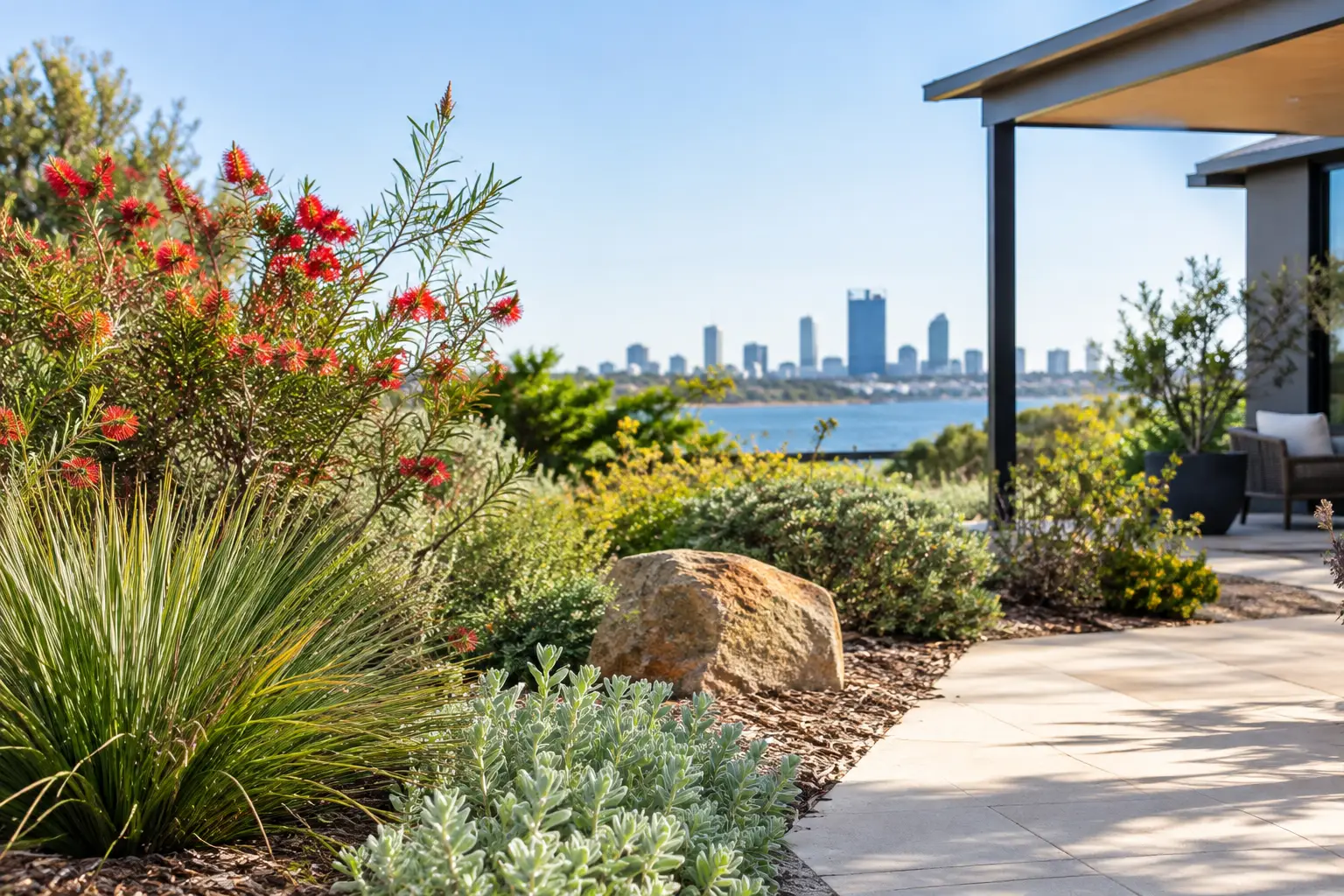
A Perth garden can look great in September, then face hot dry soil, harsh afternoon sun and weeks without useful rain before summer has properly settled in. That is why climate resilient landscaping trends are less about chasing a particular garden look and more about choosing plants and layouts that keep working when conditions turn tough.
For Perth gardeners, resilience means planning for heat, dry summers, sudden heavy rain, wind exposure and watering restrictions or rising water costs. It also means accepting that a plant suited to a shaded, sheltered courtyard in Inglewood may struggle in a sandy coastal block or a frost-prone Toodyay garden. The best gardens are not made from one magic “tough” plant. They use the right plants in the right places, with soil, shade and water use considered from the start.
Climate resilient landscaping trends in Perth gardens
The strongest local trend is moving away from gardens that depend on frequent watering and constant replacement. People are choosing purposeful planting: a shaded western wall, a privacy screen that also filters wind, productive plants placed where they can be watered efficiently, and hardy groundcovers that protect bare soil.
This does not have to mean a garden full of grey-green plants and gravel. Perth gardens can still have flowers, fruit and seasonal interest. The difference is that every plant needs a job and a suitable position. A thirsty plant can be worthwhile near a patio or outdoor living area where it is easy to water. It is less sensible at the far end of a large sandy block with no irrigation.
Shade is becoming a planting decision
Summer shade is one of the most practical forms of climate preparation. A small tree, tall shrub or well-positioned screening plant can reduce heat on walls, paving and the plants below it. This can make a surprising difference to how quickly garden beds dry out.
Choose canopy and screening plants with the final size in mind. A dense hedge against a west-facing fence may provide excellent protection, but it can also shade a vegetable patch or crowd a narrow side garden. Allow room for mature growth, keep plants clear of structures, and select a density that suits the purpose.
Layering also matters. A garden with a taller feature plant, medium shrubs and lower groundcovers gives soil more protection than isolated plants in open mulch. In exposed coastal suburbs, this layering can help soften wind as well as sun. On a smaller block, a compact shrub, grass-like plant and low succulent planting may achieve the same effect without taking over the space.
Water-wise is not the same as no-water
Drought-tolerant planting is a major part of climate resilient landscaping, but new plants still need regular watering while their roots establish. Even hardy Australian natives, succulents and Mediterranean-style shrubs can fail if planted into dry sand and then left to fend for themselves through their first summer.
A sensible approach is to group plants by water need. Put fruit trees, citrus, grape vines and other productive plants where they can receive deeper, more reliable watering. Use tougher shrubs, natives, succulents and groundcovers in outer beds, verge-style spaces and hot boundaries where watering is less frequent.
Drip irrigation or slow, deep hand watering is generally more useful than a quick daily sprinkle. It encourages roots to move down into cooler soil rather than staying near the surface. Check that irrigation is actually reaching the root zone, especially under dense mulch or on sloping ground where water can run away before soaking in.
Plant choices that handle Perth conditions
There is no single plant list for every Perth property. Coastal gardens often deal with wind, salt-laden air and very free-draining sand. Inland areas can be hotter in summer, cooler in winter and more likely to receive frost. Soil can vary sharply between suburbs too, from pale sand to heavier clay pockets.
For sunny, dry positions, Australian natives such as grevilleas, westringias, callistemons, melaleucas, lomandras and dianellas are often worth considering, provided the chosen variety suits the available space and drainage. Many offer flowers, bird interest, screening or reliable foliage without demanding rich soil. However, not every native likes the same conditions. Some dislike wet feet, while others cope with heavier soil better than sand.
Succulents can be useful in hot courtyards, raised beds and areas beside paving because they store water and cope with reflected heat. Their trade-off is that some can look sparse if planted too far apart, while others need protection from winter wet or frost. Mix forms and textures rather than relying on one type across an entire garden.
For screens, look for plants that suit the light, the width of the bed and the height you genuinely need. A fast-growing screen can be tempting, but it may become a regular pruning job and compete heavily for water. Slower, denser shrubs can be a better long-term choice where space is tight.
Fruit trees and vines can fit a resilient garden too, but they should be treated as productive plants rather than set-and-forget landscaping. A deciduous fruit tree can provide welcome summer shade while allowing winter sun through. Grape vines can cover a pergola and offer seasonal shade, but need training, pruning and a position with good sun. Citrus generally appreciate regular water, mulch and shelter from hot winds, while figs and olives are often more forgiving once established. The right choice depends on your soil, space and willingness to water during dry spells.
If you are buying plants for a new garden, start with the difficult areas first: the hot western boundary, the windy corner, the narrow screen bed or the spot that stays wet in winter. It is much easier to choose suitable plants once those conditions are clear. Buy My Plants can help Perth customers confirm current plant availability and discuss collection or delivery arrangements before making a trip.
Soil protection is back on the agenda
Bare sand heats quickly, loses moisture fast and gives weeds a head start after rain. One of the most useful climate-resilient landscaping trends is also one of the least flashy: covering and improving the soil.
Use a coarse organic mulch around established plants, keeping it clear of trunks and stems. Mulch moderates soil temperature, reduces evaporation and breaks down gradually to support soil life. It is not a substitute for watering newly planted stock, but it makes each watering go further.
In Perth’s sandy soils, compost and organic matter can improve moisture-holding capacity. Apply them thoughtfully rather than turning every bed into rich, wet soil. Plants adapted to lean, well-drained conditions may suffer if soil is heavily amended or constantly wet. For heavy clay, the priority is often drainage and avoiding compaction rather than simply adding more water.
Groundcovers and low-growing plants are another useful living mulch. They shade the soil, reduce erosion and make garden beds feel finished. Give them space to establish, particularly near young trees and shrubs, so they do not compete too hard for moisture in the first year.
Designing for changing weather, not average weather
Perth gardeners are increasingly planning for weather extremes rather than average conditions. A bed may be dry for months, then receive a sharp downpour. Make sure water has somewhere to go without washing mulch and soil onto paths. Gentle contours, permeable surfaces and planted areas can slow runoff more effectively than sending every drop straight to the street.
Avoid planting heat-sensitive plants where they receive reflected sun from pale walls, Colourbond fencing or paving unless there is shade and dependable water. Likewise, do not assume a sheltered spot is automatically ideal. Poor air movement can encourage fungal issues in dense planting, especially after rain.
Late spring is a good time in Perth to assess these pressure points before summer arrives. Watch where the afternoon sun falls, note the first areas to dry out, and check whether existing irrigation covers new planting beds. Planting can still be successful, but young plants will need closer attention through their first hot season. If you can wait for autumn, many trees, shrubs and natives establish with less heat stress and lower watering demand.
Build the garden in stages
A climate-ready garden does not need to be installed all at once. Start with the structure: shade, screening, wind protection and the plants that will anchor the bed. Then add lower shrubs, flowering plants or edible selections once you know how the area performs through summer.
Buying fewer plants and giving them the right preparation often produces a better result than filling every gap immediately. Leave room for mature growth, mulch well, water deeply while plants establish and be ready to move a plant that clearly dislikes its position. A garden that adapts to the block will stay more attractive, useful and manageable through Perth’s changing seasons.