
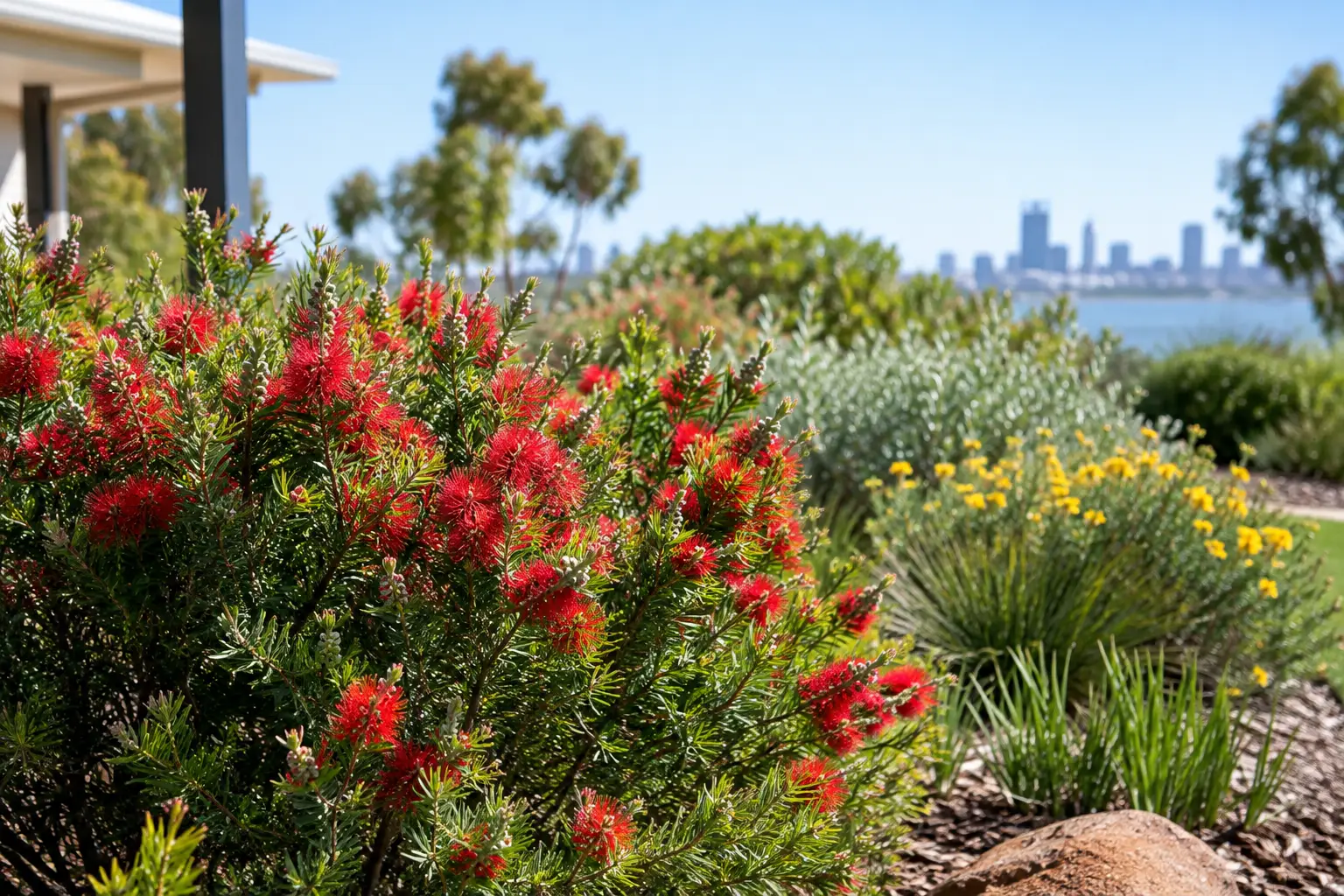
A bare fence, hot western wall or front verge can make choosing plants feel harder than it should. The right native shrubs Perth gardeners use are not simply plants with an Australian label. They need to suit your soil, summer exposure, available water and the job you need them to do – screening, flowers, bird habitat, wind protection or a low-maintenance border.
Perth has a long, dry summer, but it does not have one set of garden conditions. Coastal blocks can be sandy, salty and windy. Older inland suburbs may have compacted sandy soil or clay beneath the surface. Properties around Toodyay can be hotter in summer, colder in winter and more exposed to frost. Matching the shrub to that reality is what makes a native garden look established rather than struggle through every February.
Start with the job your shrub needs to do
Before looking at flowers, decide how much height and width you can genuinely allow. A shrub planted too close to a path, window or fence will soon become a pruning chore. Check the mature dimensions, then leave enough room for air movement and for the plant to keep its natural shape.
For a low border or open, sunny verge, compact shrubs and spreading forms are usually the better fit. For a privacy screen, look for upright or dense shrubs that will reach the required height without constant clipping. If you want to soften a fence rather than hide it completely, a mixed planting of flowering shrubs is often more attractive and more useful for wildlife than one tightly clipped hedge.
Also consider how much pruning you want to do. Some native shrubs respond well to a light trim after flowering and become denser as a result. Others dislike being cut back into old bare wood. A plant that naturally fits its space is nearly always the easier buy.
Native shrubs for Perth conditions
A good Perth native planting can include local WA species as well as Australian natives from other regions that cope well with our climate. Local-origin plants are especially valuable where you want a garden that reflects the Swan Coastal Plain or supports local wildlife. But “native” alone does not guarantee it will handle every site.
For coastal sand, wind and salt
Coastal gardens need plants that can deal with free-draining sand, drying winds and, in some locations, salt-laden air. Melaleuca nesophila, commonly called showy honey myrtle, is a useful larger shrub for sunny coastal conditions, with soft foliage and mauve flower clusters. It needs space, so it suits larger borders and screens more than narrow garden beds.
Olearia axillaris, or coastal daisy bush, is another tough option for exposed sites. Its grey-green foliage works well where heat and glare are a problem. Scaevola crassifolia can be useful for lower coastal planting, particularly where you want a relaxed, natural look rather than a formal hedge.
On very sandy ground, the biggest early challenge is often water running straight through the root zone. Wet the planting hole properly before planting, water slowly after planting, and mulch the surface. Keep mulch clear of the stems so moisture is not trapped against the base of the plant.
For hot, open inland gardens
For full sun away from the coast, look for shrubs that tolerate reflected heat and dry spells once established. Eremophila species and cultivars are worth considering for sunny, well-drained positions. Many offer soft foliage and long flowering periods, but they do not appreciate permanently wet feet.
Dodonaea, often called hop bush, can be a practical choice where you need an informal screen or backdrop. It is more about foliage and structure than showy flowers, which is exactly what some gardens need. Pair a foliage shrub with flowering plants in front rather than expecting every plant to perform every role.
Grevilleas can also work brilliantly in Perth gardens, provided their drainage and spacing are right. Their flower colour, shape and size vary widely, so choose one for its mature form first and its flowers second. Smaller grevilleas can suit borders; larger forms may be better used as a feature or informal screen.
For heavier soil and winter wet
Clay soil is not automatically a reason to avoid native shrubs, but drainage needs attention. Water sitting around roots during winter can cause more problems than summer heat. If your garden holds water after rain, plant slightly proud of the surrounding soil or create a gently raised mound rather than digging a deep, bathtub-like hole.
Avoid filling one planting hole with a completely different potting mix. The roots can stay in that soft pocket instead of moving into the surrounding soil. Improve the wider bed where needed, use mulch, and choose plants suited to the site. A healthy root system is built across the garden, not just inside the original pot shape.
For Toodyay and frost-prone spots
Toodyay conditions deserve a separate plan from coastal Perth. Summer heat can be more intense, winter nights can be colder and frost can damage tender new growth. Choose shrubs with proven cold tolerance for exposed areas, and avoid planting frost-sensitive selections in low-lying pockets where cold air settles.
A north- or east-facing position near a wall may offer protection, but walls can also add fierce heat in summer. If you are collecting for a Toodyay garden, say so when asking about suitable plants. Site details matter more than a broad WA label.
Soil, fertiliser and mulch: the native-plant trap to avoid
One of the most common mistakes with native shrubs is assuming they need no preparation and no ongoing care. They are adaptable plants, not indestructible ones.
Many Australian natives, particularly members of the banksia, grevillea and hakea families, can be sensitive to high phosphorus. Do not use a general fertiliser without checking its phosphorus level and whether it is appropriate for the plant you are growing. A low-phosphorus fertiliser formulated for natives may be suitable during active growth, but only apply it where needed and follow the label rate. More fertiliser does not mean more flowers.
Mulch is usually more valuable than frequent feeding. A layer of coarse, open mulch helps reduce evaporation, moderates soil temperature and makes it easier for water to soak in. In Perth summer, that can be the difference between a shrub establishing well and constantly sitting on the edge of stress.
If your soil repels water, do not rush the watering. Apply water slowly, allow it to soak in, then repeat if necessary. A quick sprinkle often wets the mulch and little else.
Planting native shrubs without losing them in the first summer
Autumn is generally the easiest time to plant native shrubs in Perth. Soil is still warm, rain becomes more likely and plants have time to establish roots before the next dry summer. Winter planting also works well in freely draining soil, although very wet sites should be watched carefully.
Late spring and summer planting are possible, especially when you have a reliable watering routine, but they require more attention. Newly planted shrubs have not yet explored the surrounding soil, so they can dry out surprisingly quickly even if the garden looks established.
Dig a hole about as deep as the root ball and wider than the pot. Gently loosen circling roots if they are tightly wound, set the plant at the same depth it was growing in the pot, backfill with the original soil, water deeply and mulch. Do not bury the stem, and do not leave the root ball sitting above the soil where it will dry out.
For the first summer, deep watering less often is generally better than shallow daily watering. The exact schedule depends on soil, weather, plant size and sun exposure. Check moisture beneath the mulch before watering rather than relying on the surface alone. Once established, many suitable native shrubs need less supplementary water, but no plant is maintenance-free during an extreme Perth heatwave.
Buying native shrubs with a clear plan
When you are ready to buy, take a photo of the area and note whether it gets morning sun, full sun, afternoon shade or wind. Measure the space, including the distance from fences and paths. That small amount of preparation makes it much easier to choose a shrub that will still suit the garden in three years.
At Buy My Plants, current native shrub availability can be confirmed before you arrange collection from Inglewood or discuss Perth delivery. It is worth asking about the plant’s expected size, preferred position and care after planting, especially if you are working with coastal sand, clay or a frost-prone property.
A well-chosen native shrub does more than fill an empty patch. Give it the right site, room and first-season care, and it can become the part of the garden that handles a Perth summer without making a fuss.