A plant can look perfectly happy above the soil while its roots are doing laps around the pot below. Knowing when to repot houseplants means looking beyond a droopy leaf or a growth spurt and checking whether the plant still has room, drainage and fresh mix to grow well. Get the timing right and repotting gives your indoor plant a fresh start. Get it wrong, and an otherwise healthy plant can sulk for weeks.
Most houseplants do not need a bigger pot every year. In fact, moving them too often or choosing a pot that is far too large can create more problems than it solves. The goal is not to keep sizing up. It is to give each plant enough space and suitable potting mix for its next stage of growth.
When to repot houseplants: the signs to look for
A little detective work makes the decision much easier. Slide the plant from its pot only if it will come out easily, or inspect the drainage holes and soil surface first. One sign alone is not always enough, but a few together usually mean it is time.
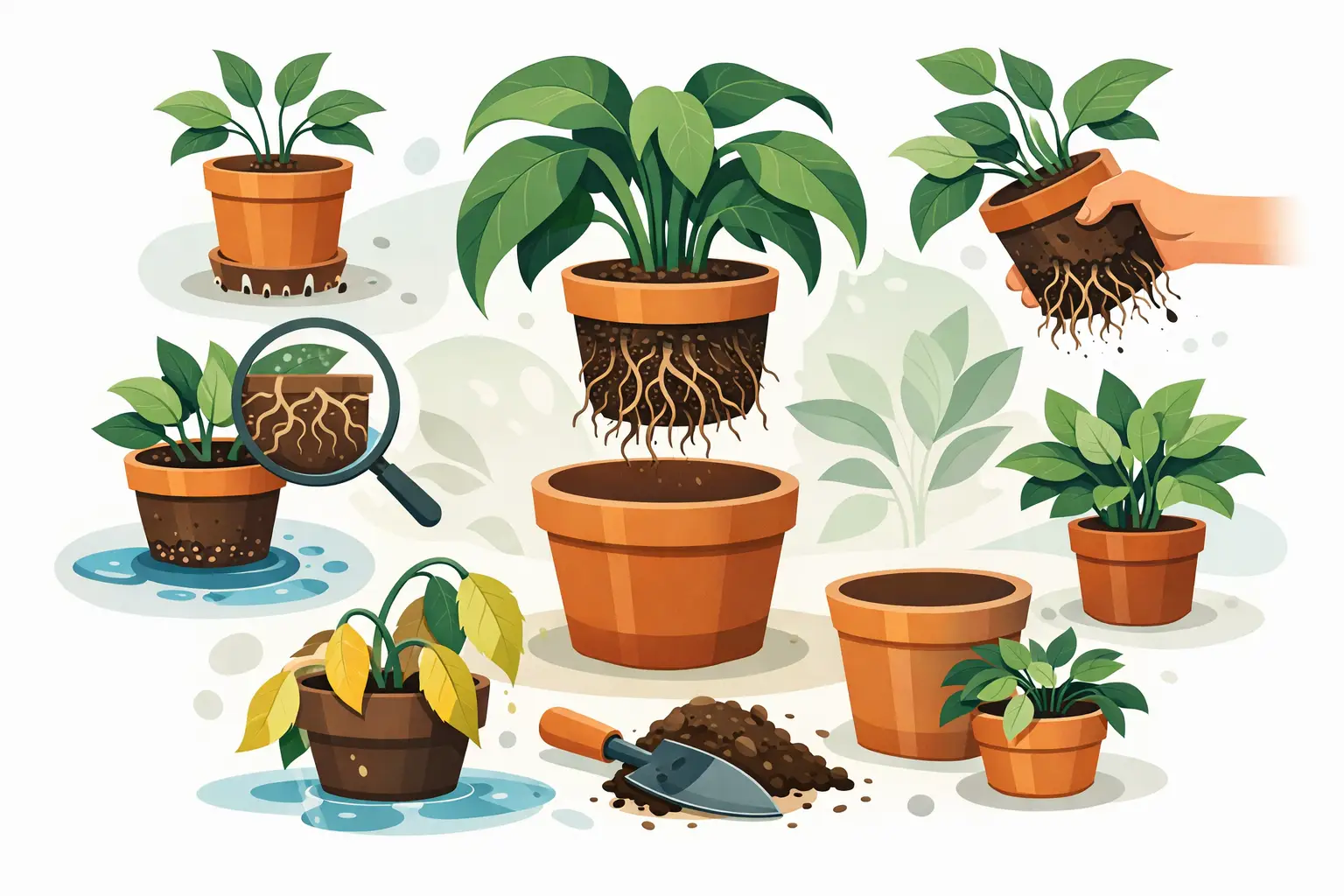
- Roots are growing from the drainage holes. A root or two is not an emergency, but a thick cluster underneath the pot means the plant has used most of the available room.
- Water races straight through the pot. When the root ball takes up nearly all the space, there is very little potting mix left to hold moisture. Water may run down the sides and out the bottom without properly soaking the roots.
- The pot dries out much faster than it used to. If a plant that once needed watering weekly now needs a drink every second day during similar weather and light conditions, it may be root-bound.
- Growth has slowed in the growing season. Slow growth can also come from low light, cool temperatures or missed feeds. But if care conditions are otherwise right, crowded roots and tired soil are likely contributors.
- The plant is pushing itself out of the pot. A raised root ball, cracked nursery pot or plant that keeps tipping over needs attention soon.
- The potting mix has broken down. Old mix can become compacted, hydrophobic or mushy. It may no longer drain well or hold enough air around the roots, even if the pot is technically large enough.
- There is a white crust on the soil or pot. This can be a build-up of minerals from water or fertiliser. Sometimes flushing the pot helps, but a full refresh is the cleaner option when the build-up is persistent.
For many fast-growing indoor plants, such as pothos, monsteras, peace lilies and rubber plants, these signs can appear every 12 to 18 months. Slow growers including snake plants, ZZ plants and many succulents may be content for two to four years. Always judge the plant in front of you rather than following a calendar alone.
The best time of year to repot in Australia
Spring is usually the best time to repot indoor plants across Australia. As days become warmer and brighter, most foliage plants naturally move into active growth. Fresh roots establish more quickly, and the plant has time to settle before winter light levels drop.
Early summer also works well, especially for plants that are actively producing new leaves. Avoid repotting during a heatwave, though. A plant that is already coping with dry indoor air, hot windows or a missed watering does not need the added stress of root disturbance.
Autumn and winter are not completely off limits. If roots are bursting from the pot, the mix smells sour, the container has cracked, or drainage has failed, repot when needed. Just keep the process gentle, use a pot only slightly larger, and avoid heavy fertilising until the plant starts growing again.
Newly purchased plants are another common question. You do not need to repot a plant the day it arrives. Let it adjust to its new home for two to four weeks, unless it is severely root-bound or sitting in soggy, poor-quality mix. A change in light, temperature and watering routine is already a big adjustment.
Choose the right pot size, not the biggest pot
The most common repotting mistake is jumping to an oversized pot. More soil holds more water, and a small root system cannot use it quickly. That leaves roots sitting in wet mix for too long, increasing the risk of rot.
For most houseplants, go up just one pot size – usually around 2 to 5 cm wider in diameter. A large, vigorous plant may handle a little more room, but there is rarely a reason to double the pot size. If you want to keep a plant at the same overall size, you can trim a small amount of the outer roots and repot it into its existing cleaned pot with fresh mix.
Drainage matters just as much as size. A decorative cover pot is fine, but the plant should stay in a nursery pot or another container with drainage holes. Never allow water to pool at the bottom of a cover pot after watering.
Material affects watering too. Terracotta dries faster and suits plants that prefer their roots on the drier side, such as snake plants, succulents and cacti. Glazed ceramic and plastic hold moisture longer, which can be useful in warm, dry homes but calls for more careful watering. Pick the pot that suits your care habits as well as your interior style.
Use a potting mix that matches the plant
Repotting is not only about extra room. It is a chance to replace tired soil with a mix that supports the way a plant naturally grows.
A standard premium indoor plant mix suits many foliage favourites, including philodendrons, pothos, peace lilies and rubber plants. For aroids such as monsteras and philodendrons, adding chunky bark, perlite or coco chips helps create the airy, free-draining texture their roots prefer. Succulents, cacti and snake plants need a grittier mix that dries quickly. Orchids need a specialised bark-based blend rather than ordinary potting mix.
Do not add a layer of rocks to the bottom of the pot. It does not improve drainage and can leave excess water sitting closer to the roots. Use a pot with holes and the right mix instead.
How to repot without stressing your plant
Water the plant lightly a day before repotting if the mix is very dry. Damp roots are easier to handle, while soggy soil is heavy and difficult to work with. Set up your new pot, fresh mix and a clean pair of snips before you start.
Gently ease the plant out of its current pot. If roots are circling tightly around the base, loosen the outer layer with your fingers. You do not need to completely shake away all the old mix. The aim is to free the roots enough that they can grow outward into the new mix.
Check for any black, soft or foul-smelling roots. Trim these away with clean snips. Healthy roots are usually firm and pale, tan or reddish, depending on the plant. If a plant is badly root-bound but otherwise healthy, make a few light vertical loosening motions around the outer root ball rather than cutting deeply into it.
Add enough mix to the base of the new pot so the plant sits at the same height it did before. Planting too deeply can cause stem rot, while setting it too high leaves roots exposed. Fill around the sides, pressing gently only to remove large air pockets. Do not compact the mix hard.
Water thoroughly until it drains from the bottom, then let the excess drain away. Place the plant back in bright, indirect light if that is where it normally thrives. Hold off on fertiliser for about four to six weeks, as fresh potting mix often contains nutrients and disturbed roots are not ready for a strong feed.
What to expect after repotting
A little adjustment is normal. Your plant may pause new growth, lose an older leaf or look slightly flat for a week or two. Keep its light conditions stable and avoid constantly moving it around to find a better spot. The biggest risk after repotting is overwatering, especially if the new pot holds more mix than the old one.
If leaves yellow quickly, stems become soft or the mix stays wet for a long time, check drainage and reduce watering. If the plant droops but the mix is evenly moist and roots look healthy, give it time. Repotting is a change, not an instant makeover.
A well-timed repot is one of the easiest ways to keep indoor plants growing beautifully for years. Check the roots when the signs appear, choose a pot only slightly larger, and give your plant a few quiet weeks to settle into its new space.