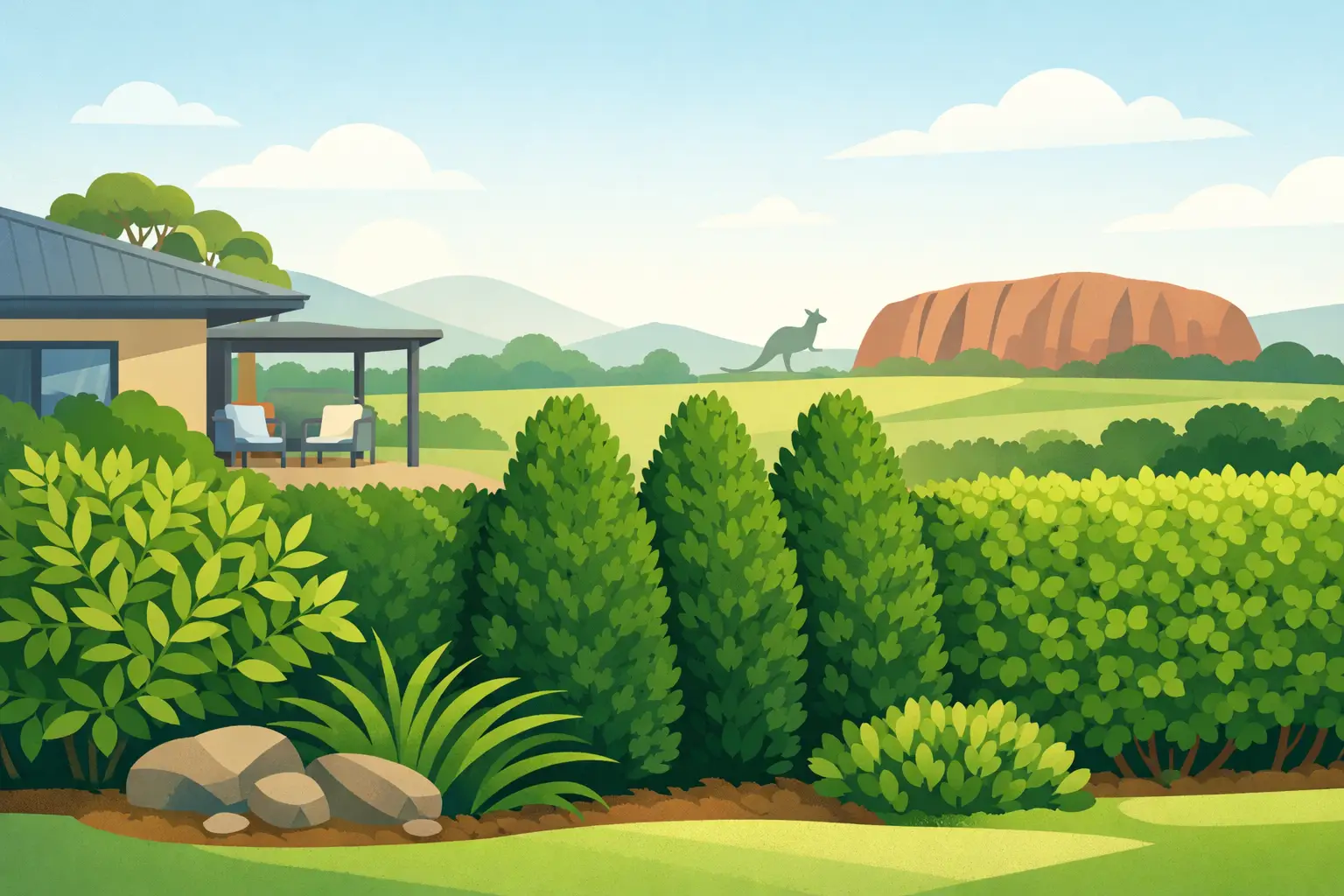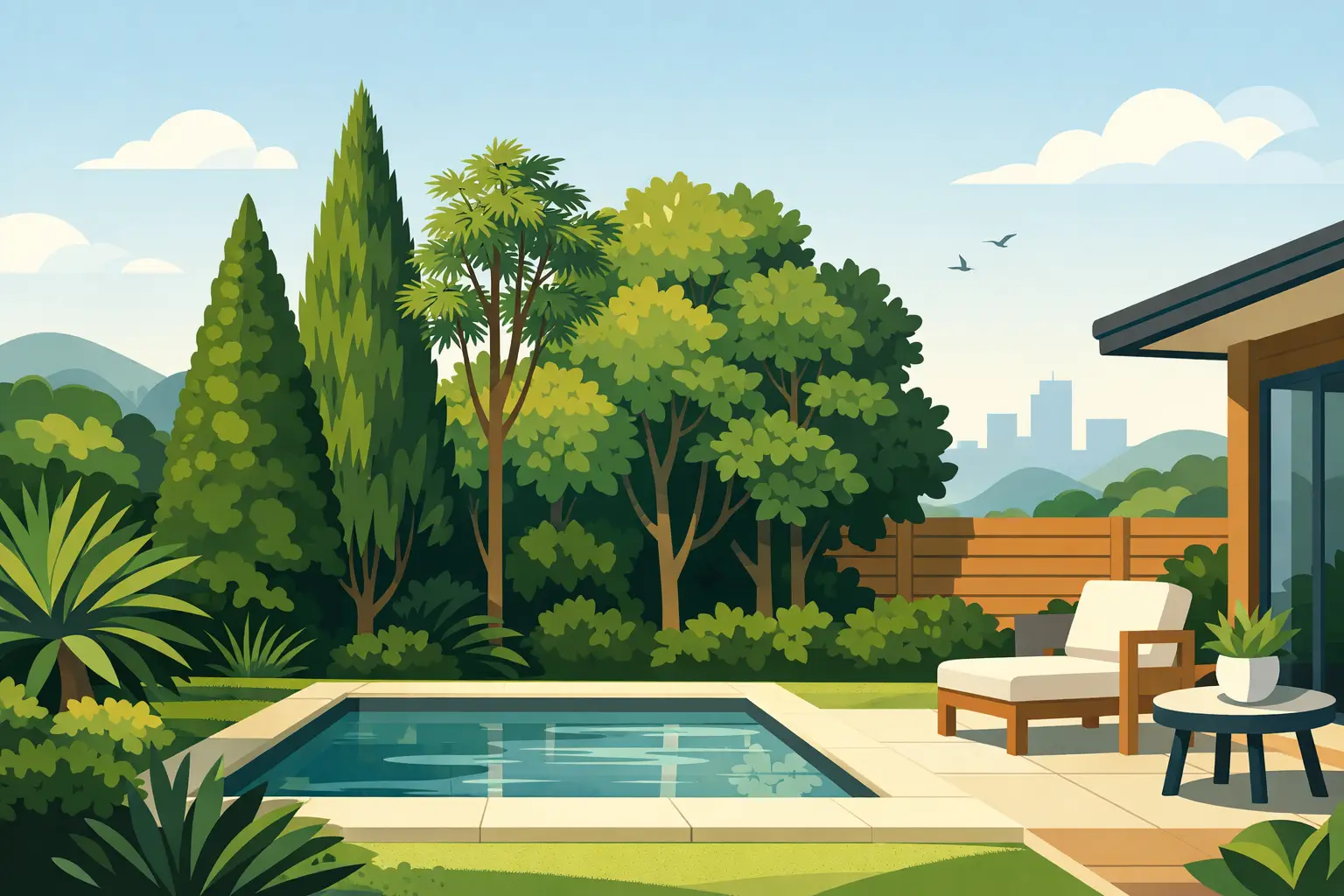
A neighbour’s new second-storey window, a busy fence line or an exposed patio can make a good backyard feel far less usable. Screening trees are one of the simplest ways to bring back privacy, soften hard boundaries and make an outdoor area feel like your own – without starting a major landscaping project.
The right choice is not always the fastest-growing plant on the label. A screen needs to suit the space it will occupy in three, five and ten years, cope with your local conditions, and fit the amount of trimming you are genuinely happy to do. Get those basics right and a line of plants becomes a living backdrop for outdoor dining, kids’ play and quieter weekends at home.
What makes a good screening tree?
A useful screen has foliage where you need it, not only at the very top. For most suburban gardens, that means a plant with dense evergreen growth from relatively low down, or one that can be lightly pruned to hold a leafy base. Deciduous trees can offer lovely summer shade, but they are rarely the best answer where year-round privacy is the goal.
Mature height and width matter just as much as speed. A tree planted one metre from a narrow side fence may look neat on day one, then become difficult to manage when its canopy wants to spread three or four metres. Before buying, measure the planting strip, check overhead wires and look for downpipes, paving, pools and sewer lines. Also consider the view you are trying to block. Screening a ground-floor fence requires a different plant from screening a balcony or overlooking window.
It is worth thinking about roots in practical terms too. Most plants need room for a healthy root system, so avoid squeezing large trees into tiny beds beside structures. A narrow-growing hedge or clumping bamboo is often a more sensible fit for a tight side passage than a large shade tree.
Popular screening trees for Australian homes
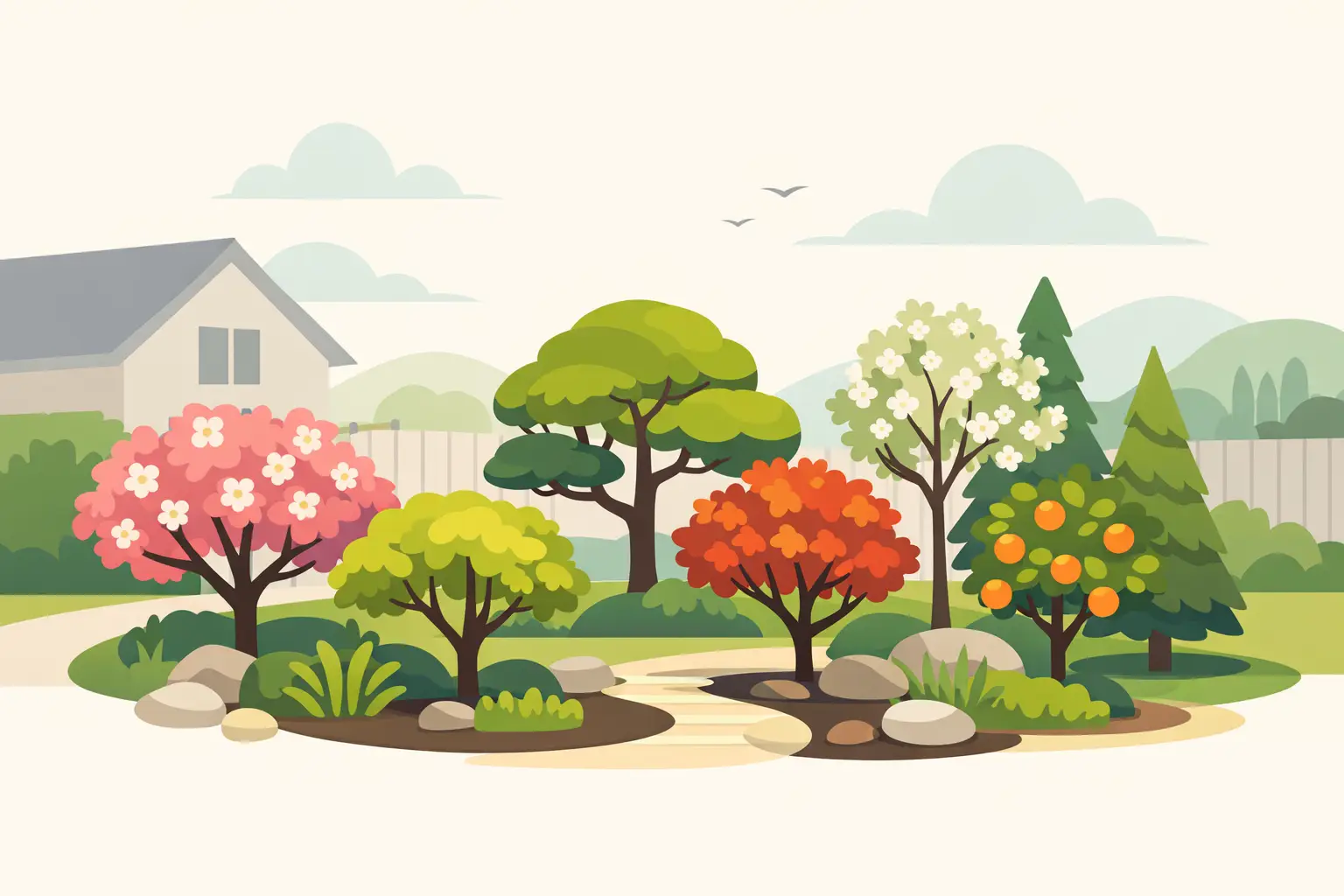
The best plant depends on your climate, soil, sun and available room. These are common starting points for Australian gardens, each with a different job to do.
Lilly pilly for a dense, leafy screen
Lilly pilly is a favourite for good reason. Many varieties are evergreen, quick to establish in suitable conditions and happy to be clipped into a formal hedge or allowed to grow more naturally. Their glossy foliage creates the full green look many people want along a fence, while new growth can add a flush of colour.
Choose a variety based on its mature size rather than assuming all lilly pillies behave the same way. Some suit lower hedges, while others can form a taller privacy screen. Psyllid-resistant selections can be a smart buy in areas where leaf pimpling has been an issue. Lilly pillies generally perform best with regular watering while establishing, mulch over the root zone and occasional feeding during active growth.
Clumping bamboo for narrow spaces
Clumping bamboo can create a tall, upright screen where a conventional tree would take up too much garden bed. The key word is clumping. Running bamboo spreads through underground stems and can become a serious management job, while clumping varieties grow in a contained form that gradually widens from the original plant.
Bamboo is particularly useful beside patios, along modern boundary fences and around pools where you want height with movement and a softer look. It needs moisture, feeding and enough sun for strong growth. In very dry or exposed spots, expect to water more often, especially through hot Australian summers.
Magnolia for an elegant evergreen boundary
Evergreen magnolias bring large, glossy leaves and a more structured look to a garden. Narrow varieties can work well as a formal row, producing a solid green wall without the very broad footprint of a traditional magnolia. The flowers are a bonus, but the foliage does the real screening work.
These plants suit buyers who want a more polished garden style and have room for a taller screen. They prefer well-prepared soil and consistent moisture while settling in. In smaller yards, always check the expected width of the specific variety, not just the height.
Native options for local character
Australian natives can make excellent screens, especially when matched to the local climate. Waterhousea and some compact callistemon varieties can provide dense foliage, flowers and habitat value. Native choices may also be a better fit for hot, dry conditions or coastal gardens, depending on the species.
Do not assume every native is low-maintenance or suitable for every part of the country. A plant that thrives in a warm, humid coastal garden may struggle through frost, while a tough dry-climate shrub may not love wet feet. Match the plant to the site first, then enjoy the lower-fuss benefits where they apply.
Choose height before you choose a plant
A common buying mistake is choosing a tall plant for a low privacy problem. More height usually means more pruning, more shade and greater competition with nearby garden beds. If the fence is 1.8 metres high and the issue is people looking in from next door, a maintained screen around 2.5 to 3 metres may be plenty.
For second-storey overlooking, a taller option may be needed, but placement becomes more important. Planting closer to the viewing angle can sometimes block the sightline with a lower plant, while planting at the far end of the yard might require much greater height. Stand where you want privacy and have someone check the view from the neighbouring window if possible. It is a simple step that can prevent buying the wrong plants.
Spacing should follow the mature width and the density you want. Plants placed very close together may give a quick result, but they can compete for water and nutrients later. A hedge can be planted closer than specimen trees because it will be pruned, yet it still needs airflow and room to develop. Check the recommended spacing for the variety you select rather than applying one rule to every screen.
How to plant screening trees for a stronger start
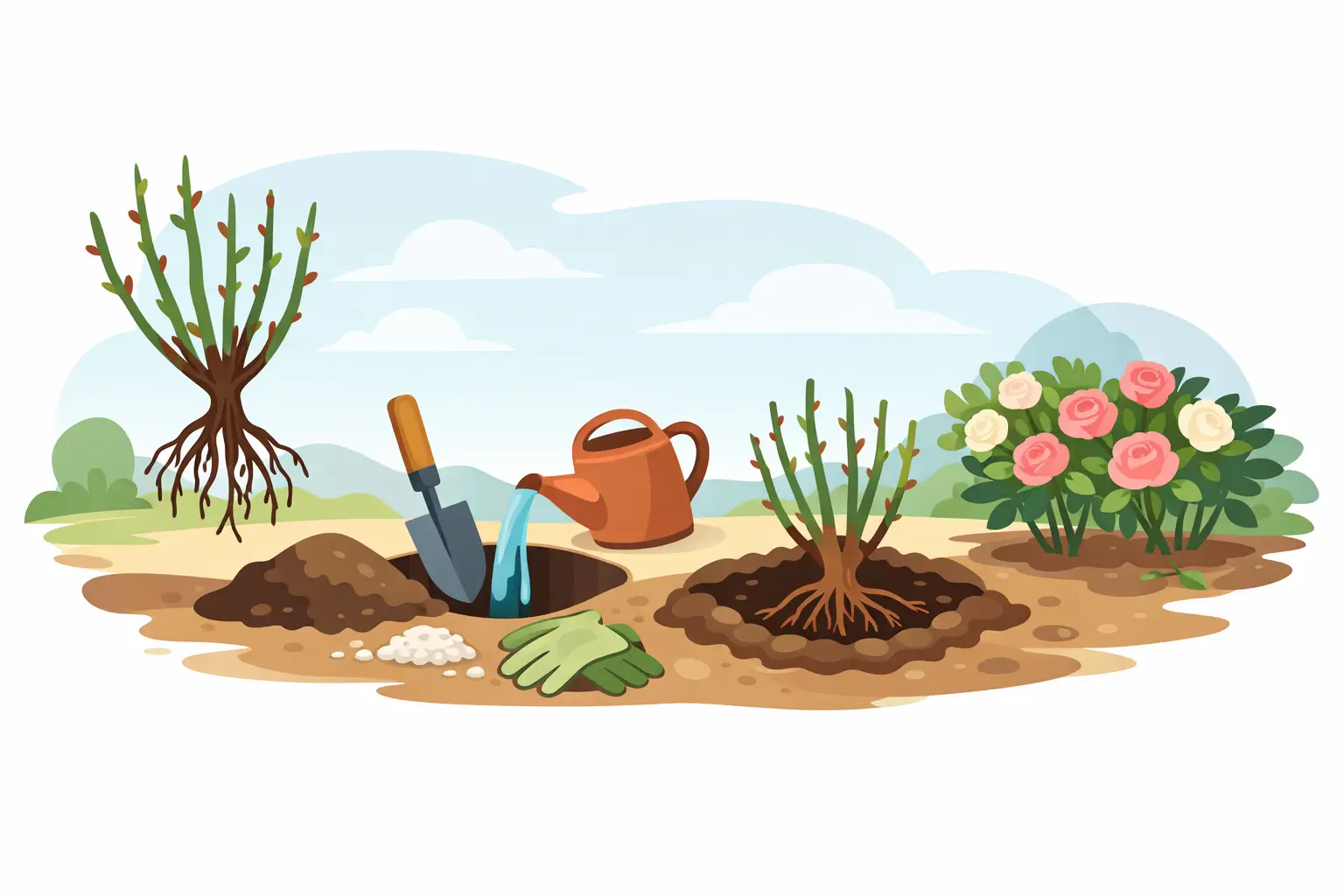
Good planting gives your screen a far better chance of filling out evenly. Start by clearing weeds and grass from a generous area, as lawn competes heavily for water. Improve very poor soil with organic matter where appropriate, but avoid creating a small pocket of rich soil surrounded by hard ground. Roots need to move beyond the original hole.
Dig a hole roughly the same depth as the pot and wider than the root ball. Planting too deeply is a frequent cause of weak growth. The top of the root ball should sit level with, or just above, the surrounding soil once watered in. Backfill, firm lightly, water thoroughly and apply mulch, keeping it clear of the trunk or stems.
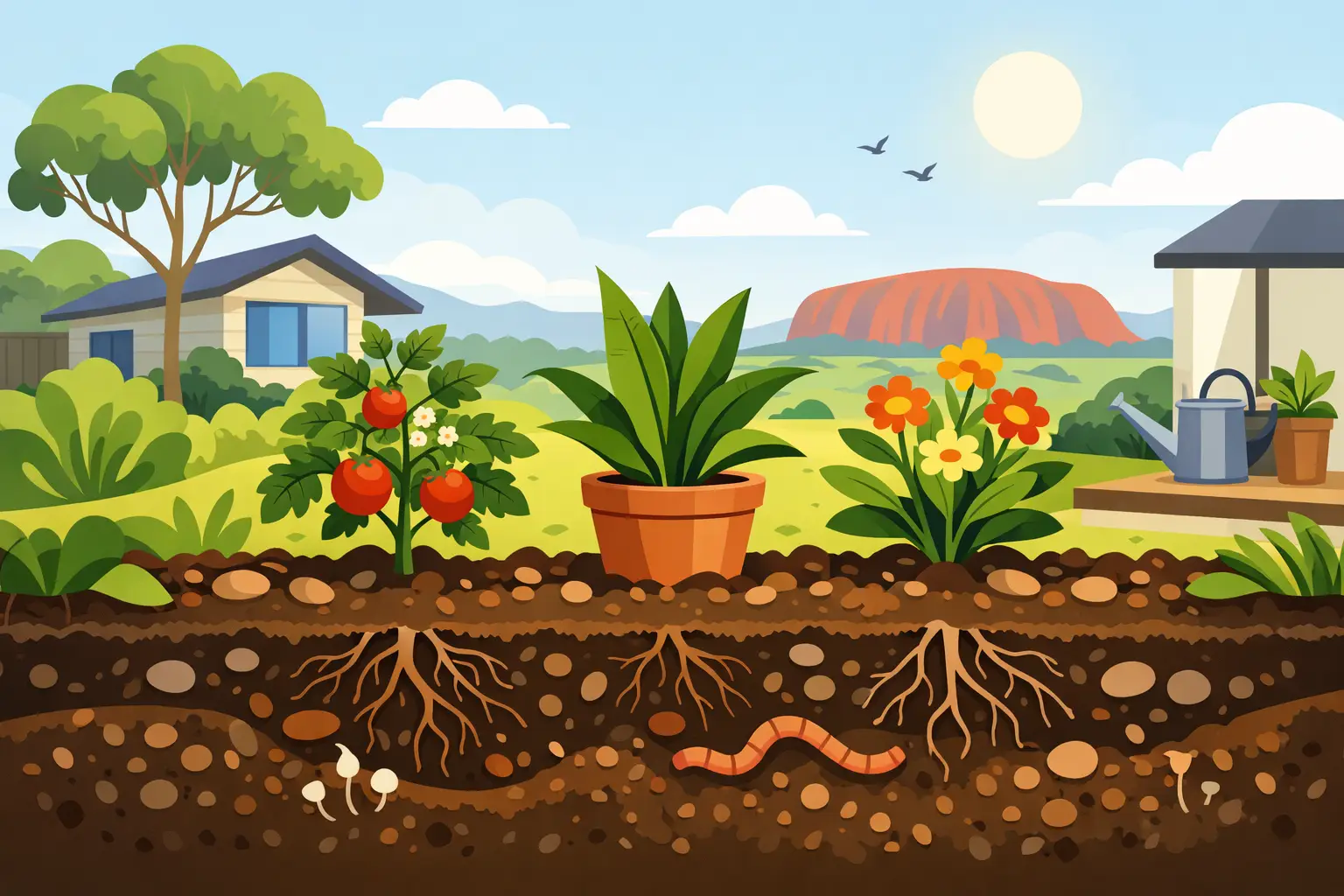
For the first growing season, deep watering is more valuable than a quick daily sprinkle. The exact schedule changes with soil, weather and plant type, but check moisture below the mulch rather than guessing from the surface. During a heatwave, newly planted trees can dry out surprisingly fast. A simple drip system can make a long screen much easier to maintain.
Pruning, feeding and realistic expectations
Fast privacy is appealing, but even vigorous screening trees need time to establish roots before they put on their best top growth. Smaller plants are often easier to transplant and can catch up well when cared for properly. Larger advanced plants give immediate impact, though they cost more and need attentive watering after planting.
Light, regular pruning is usually better than cutting a mature screen back hard after years of neglect. Start shaping once plants are established, trimming the sides slightly narrower at the top than the bottom so light reaches lower foliage. This helps prevent a bare base, which defeats the point of a privacy screen.
Feed according to the plant type and season, using a suitable fertiliser rather than treating every tree the same. Native plants can be sensitive to high-phosphorus products, while hungry hedging plants may respond well to regular nutrition during active growth. Mulch also does quiet but valuable work by moderating soil temperature, holding moisture and reducing weeds.
Buy for the garden you have
The most successful screening trees are not necessarily the tallest or cheapest available. They are the plants that fit your sun, climate, boundary and maintenance routine. If your site is narrow, choose narrow. If you need dense foliage at fence height, choose naturally bushy. If you travel often or have a dry block, prioritise plants that suit those conditions rather than promising yourself a watering routine that will not last.
When you are ready to plant, Buy My Plants makes it easier to compare outdoor options from home and choose plants with a clear purpose. A well-chosen screen will not only hide what you would rather not see – it can make every coffee, barbecue and slow Sunday in the backyard feel more private from the day it starts growing.